The Arc of a Niche: The Bowery’s Home Lighting Niche

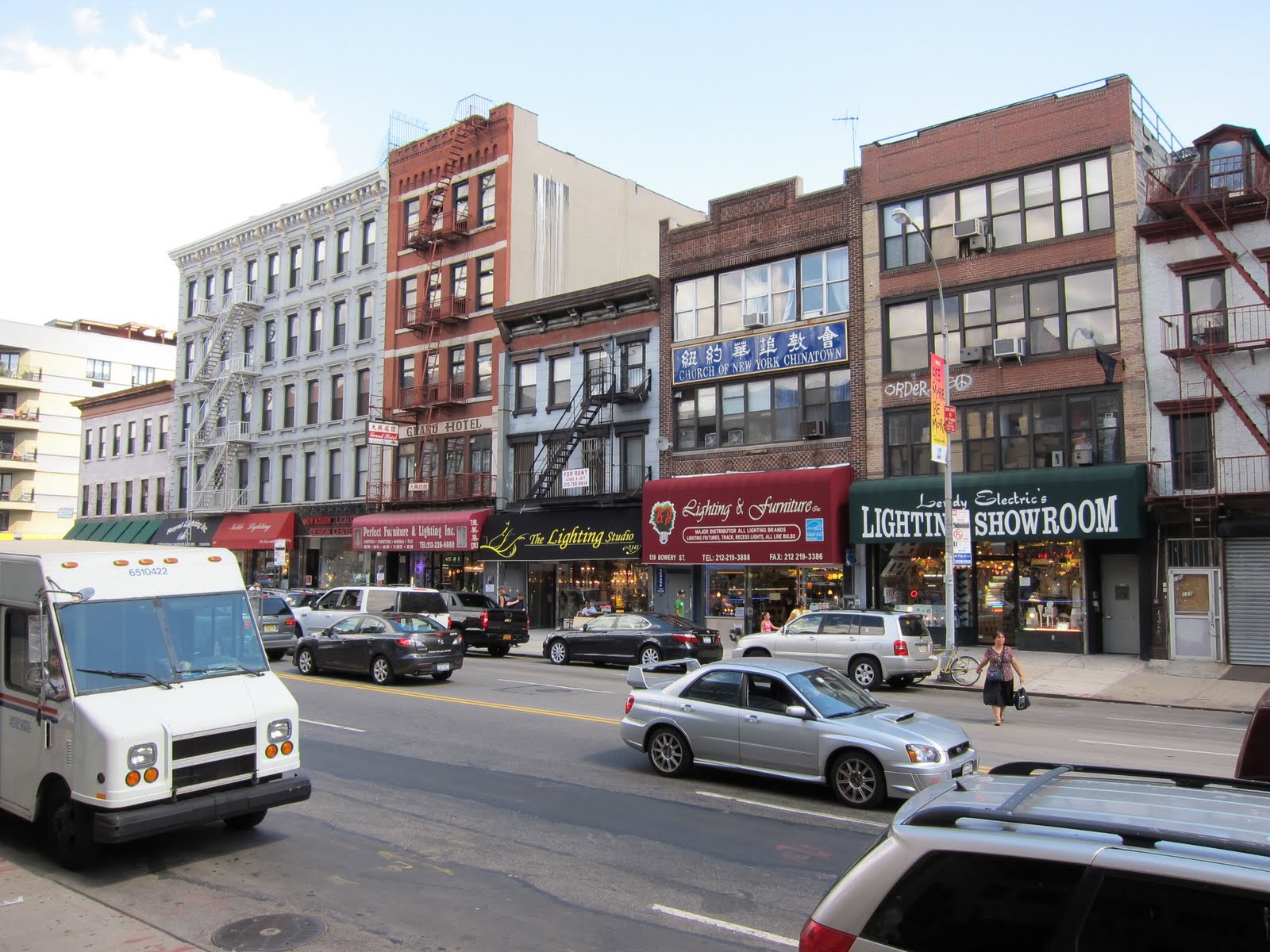
The key intersection for The Bowery’s home lighting niche, which is about 50 years old.


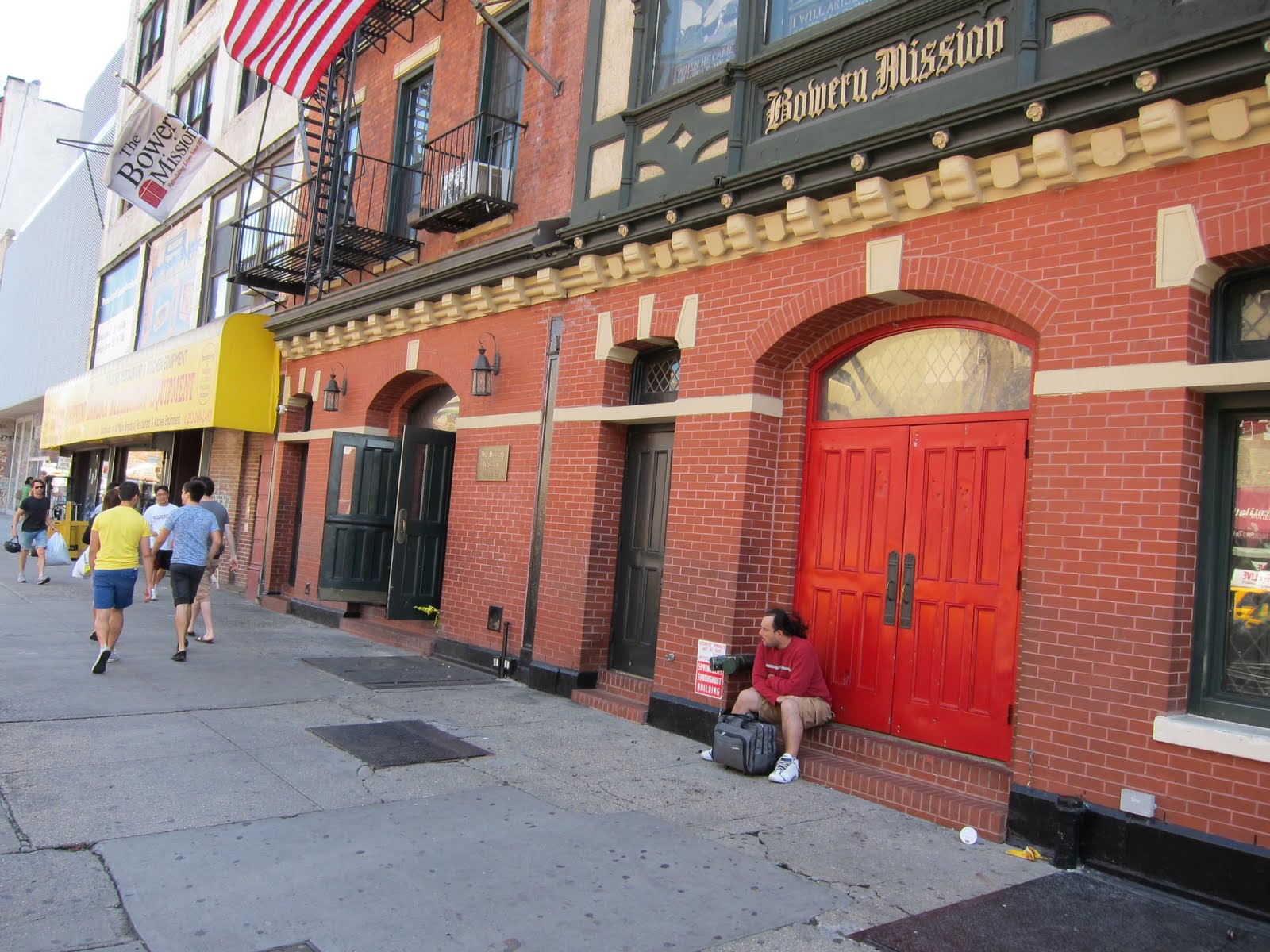
The Bowery Mission, a remnant of a famed, if unsavory, past


Some home lighting shops on The Bowery 1 


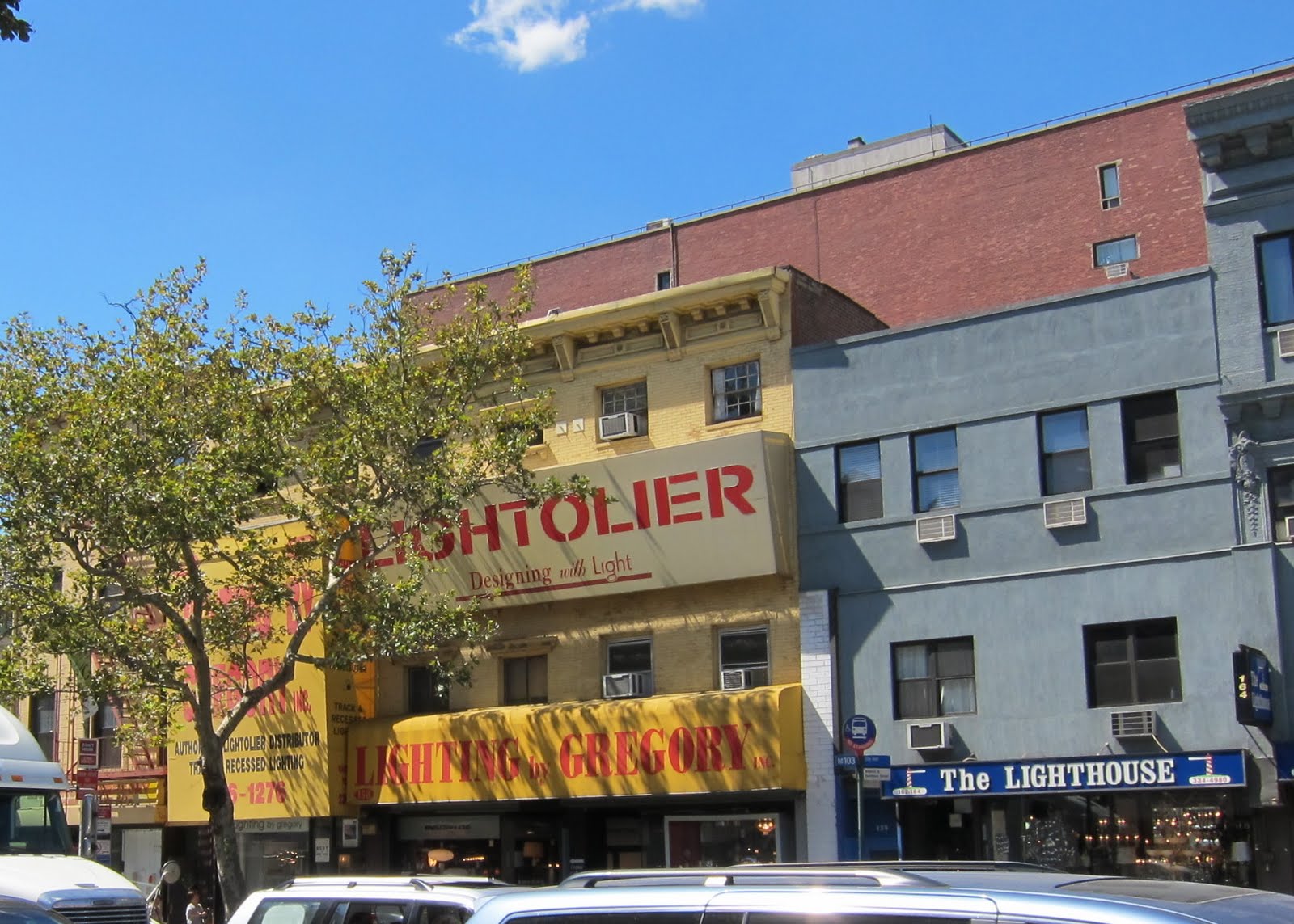
Some home lighting shops on The Bowery 2


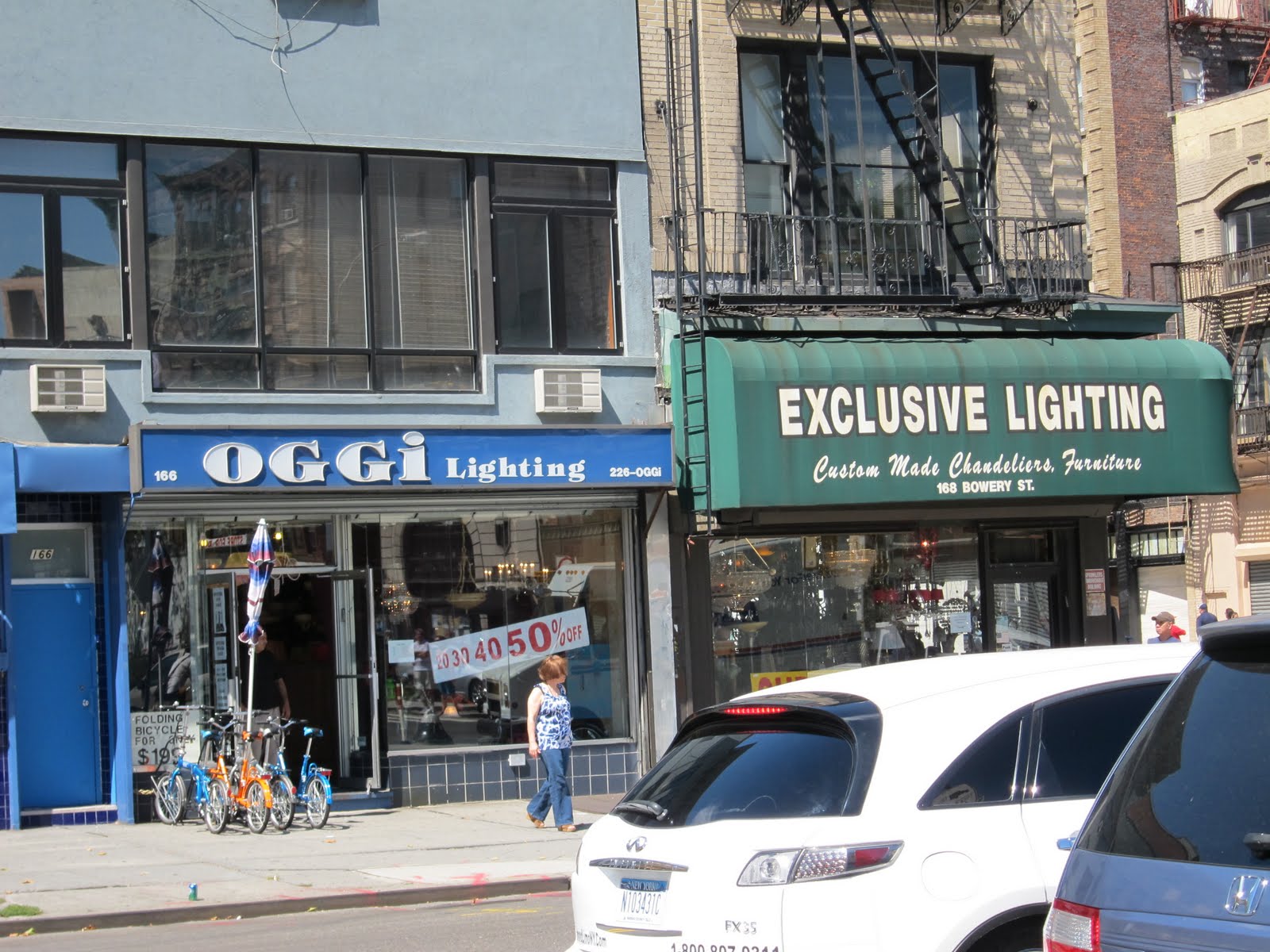
Some home lighting shops on The Bowery 3 


My initial thinking about retail niches was greatly influenced by my experiences shopping for antiques in Waynesville, OH and for lamps in shops along The Bowery in Lower Manhattan. It has been almost 50 years since I made my initial visits to these places. Their antiques and home lighting niches still exist, though they have changed over the years. 

 
Waynesville is about 600 miles away, so I have not been there in many years. But, a few years ago, I did some telephone interviews. Though the antiques niche there reportedly remains strong, it has changed because the industry as a whole has changed. Two significant changes are: 1) a lot of merchandise is sold on consignment in large antique malls, where the dealers do not have to be personally on site and 2) internet sales.
 
The Bowery is much closer to home, about an hour away via public transportation.  When I first visited the area, back in the 1950s, it was best known for its run down bars with cheap drinks, poor alcoholics down on their luck and a collection of flop houses. When I next returned to the area in the 1960s it was to look for lamps in a cluster of home lighting stores. By the late1980s,  this home lighting niche had grown enormously, with most shops between Houston Street and Canal St seeming to sell home lighting merchandise. On a visit in the 1990s I estimated there were between 75 and 100 ships in this niche. My wife and I felt that too many them appeared to be indistinguishable from each other in size and merchandise and that consequently the whole niche seemed less attractive.
 
Since then the neighborhood has changed significantly. Property values have increased and so have the commercial rents. The Bowery is showing signs of gentrification. The cheap bars and SROs are long gone. Chinatown has expanded enormously. 
 
The merchants have also changed. The number of home lighting shops is now back down to about 20 and they are clustered on a two block stretch going south from Delancey Street. A restaurant kitchen equipment niche has emerged.
 
The largest and best known home lighting shops are among those that remain. Though much reduced in numbers, the niche is still relatively strong. A 50 year run is not bad for a retail niche and it certainly is not yet over. The niche remains a regional draw for shoppers looking for home lighting.
 
I hypothesize that the contraction of this niche was due to a collection of factors:
  • Rents became unaffordable for most of the small, marginal shops. Given the huge increases in Manhattan’s retail rents it is doubtful that the borough will ever again see a retail niche of the size this home lighting niche reached.
  • Some shops just aged out — the owners retired and their businesses ended with their departures
  • Too many of the shops could not differentiate themselves except on price — and many could not afford to compete in this manner
  • A new niche was competing for the available retail spaces.

It is also fair to say that this niche has helped revitalize a badly decayed, disreputable area.


An Expanded Notion of Commercial Nodes


Over the years, I have often been analytically frustrated by geographically fragmented downtowns and neighborhood commercial districts, not knowing what to call and how to define the fragmented parts. In recent assignments in Morristown, NJ and and Long Island City, NY, I have used an expanded notion of a commercial node to address this problem and found it is a heuristically useful solution.


To my ken, the term commercial node is usually applied to a commercial agglomeration around an important intersection. While often useful for smaller districts, its application is usually more problematical in larger districts where the fragmented pieces of a district can occupy a cluster of several blocks or a substantial part of linear street corridor.

Also, since a commercial node functions as a socio-economic entity with supply and demand aspects, it often is not only useful to look at the business operations in a particular cluster, but also at their potential customers who are located within a reasonable walking distance.

The map above shows three of what we are calling extended commercial nodes in Long Island City. Each is composed of a commercial corridor, but also has a 0.25 mile band around the corridor. The corridor is where most commercial activities are located; the band is a 5 minute walk shed for residential shoppers, office workers, etc.

The three corridor segments are geographically quite detached, but the walk shed bands overlap. This shows both the overall district’s dispersion and the connections between the nodes.

3-D Television

This past Saturday my wife and I stopped by the Samsung showroom at the Time Warner Center in Manhattan. They were featuring a number of 3-D TVs and we were able, after donning the appropriate glasses, to see what their images really looked like.

I was frankly surprised by how good it was. This technology is worthy of respect.

For downtown theaters it is one more technological improvement that makes home movie viewing their most serious competitor.

That said, it also should be noted that using the glasses is a pain in the butt and one wonders just how many films and TV programs would benefit from 3-D imaging. However, technology for a 3D TV system that does not require special glasses is now in development.


The future is ever present.

Movies Update

For several years now, I have been arguing that the average downtown movie theater is in trouble as more and more people watch more and more films at home or even on their mobile devices. To counter this trend I have encouraged downtown theaters to rekindle “going to the movies” as a special occasion by adopting modern digital, 3D and IMAX projection systems and/or by integrating their cinemas with a restaurant, brew pub or ice cream parlor.

An article in today’s Wall Street Journal shows that 3D and IMAX are indeed having a positive impact on attendance:

  • “After a record-shattering year of revenues last year, when the box office soared beyond $10 billion for the first time in history, revenues are running about 10.3% ahead of the same point last year, with attendance up by more than 8%.”
  • “3-D has helped boost those figures. Last weekend, some theater owners significantly raised ticket prices—mostly on 3-D and Imax showings. In some cases, the price increases ran as high as 26%.”
  • “Consumers, so far, don’t seem to mind the higher prices, as long as they come with premium experiences.” And we are still climbing out of the Great Recession!

Article Here

AFFORDABLE DOWNTOWN RETAIL RENTS


Introduction. As we slowly emerge from the Great Recession the time has come for downtown organizations to work hard on encouraging small independent retailers to seek affordable rents and for landlords to offer them. If they do not, downtown retail will contract and street level storefronts will be occupied even more by financial and personal service operations – or remain vacant for long periods of time.

True, in many downtowns retail rents have declined during the Great Recession, often substantially. In one I recently visited, for example, asking retail rents have dropped from $45/SF to $30/SF and in some instances even $25/SF. But, as we creep out of recessionary conditions, it is critical that in most downtowns retail rents do not regain their unaffordable levels.

In the new normal, small downtown retailers will be facing increased pressures to keep their operations lean and mean because capturing sales from today’s deliberate consumers is far more difficult than from the abnormally free-spending shoppers of the 1990s and 2000s. One budget line item they can focus on is the cost of the spaces they lease for their stores. This is a major long-term business expense and it is important that these retailers do not pay more than they can afford. It is also a business cost where “newbie” retailers dominate those going astray, though badly inept or unscrupulous merchants also tend to pay a lot more than what savvy merchants would deem affordable.

Looking at the other side of the coin, it is also in the interest of landlords to offer rents competent retailers can afford. In the new normal, far fewer stores will be opened by national chains and, among those, a smaller percentage than in the past will be placed in downtowns. Landlords, as a result, will need many local independent retailers to fill their storefronts. This will also be true to a significant degree for those who have built new mixed use buildings with expensively constructed ground floor storefronts. Additionally, as their rents reach ranges considered unaffordable by savvy merchants, the more likely they are to attract incompetent or sleazy businesses and also more likely to have storefronts stand vacant for long periods of time.

Defining Affordable Retail Rents. A useful formulation for determining an affordable retail rent is roughly 15% of the shop’s annual sales. DANTH’s merchant surveys and personal interviews with merchants over many, many years as well as the work of other firms, such as Urbanomics, found that downtown merchants generally felt that they could afford total rent costs that were 8% to 12% of their annual sales. However, more recently merchants say they are OK with 15%. While there is certainly some error factor present here, 15% is probably plus or minus just a few percentage points off the correct number. The major thrust of the analysis presented below is not affected by this error factor.

In a typical medium-sized downtown, independent retailers with annual sales of $500,000 to $1 million are relatively rare. Most independent downtown retailers would be quite happy with sales in the $300,000 range and joyous with sales around $450,000. Though in large downtowns the sales happiness range can be higher, the 15% rule applies everywhere, so I’ll stick with the retailers in medium-sized downtowns to simplify my argument.

The table above depicts information about:

  • How much rent is affordable to retailers with $250,000, $300,000, $350,000, $400,000 and $450,000 in annual sales. You can do the calculations for higher annual sales
  • How many square feet of space this “rent money” can buy at various prices per square foot.

The table also shows how with increased rents more and more of a downtown’s most successful merchants cannot afford to occupy the amount of space they might even minimally need for their operations. Look at how quickly even “small” spaces in the 1,500 SF to 2,000 SF range become unaffordable. At $40/SF not even a retailer with sales of $450,000 can afford a 2,000 SF; at $50/SF even a 1,500 SF storefront becomes out of reach. Of course, for the $300,000 shopkeeper, that happened at lower rents: a 1,500 SF shop is unaffordable at rents of $31/SF and 2,000 SF at $22.50.

Affordable rents should be tied in with balloon leases, where rents increase at an agreed upon rate as the retailer’s sales grow. Some savvy downtown landlords are already using balloon leases.

To The Groaners. To the downtown managers and Main Street managers who groan that is impossible to deal with landlords:

  • Dealing with downtown landlords and doing it effectively is part of your job. If you are not doing it, start doing it. If you do not know how, learn how. If after all that you still can’t deal effectively with landlords, get another job.
  • Every occupation has jerks; but they also often have a lot of reasonable, effective and even innovative people. This applies to landlords, too.
  • Find the landlords you can work with to implement an affordable rents program, then use them as a model to recruit others
  • One thing is certain: if you do not try, nothing will happen.

To landlords and developers who groan that they need high incomes from their new and expensively constructed retail spaces to pay off their loans:

  • You are big boys, you like to brag that you are big boys, so act like big boys
  • You either goofed in your calculations or you really did not understand that in most downtown mixed use projects outside of places like Manhattan and downtown Chicago, etc., the residential and office rents, probably for some time, will have to subsidize the retail spaces. This is especially true of unproven, revitalizing downtown locations
  • Given the current economic conditions your options are really either affordable rents that will diminish your losses or long-term vacancies and continued lack of retail rental revenues

To landlords who believe they should get market rate rents as defined by the highest asking rents they’ve heard about in the district:

  • Your unaffordable rents are likely to produce vacancies, because so few accomplished retailers would be interested, or perpetual churn, because you are likely to attract inept or schlocky merchants who are prone to failing or disappearing
  • This will affect the resale value of your property and this is not a great time for any commercial property
  • Have you really calculated the difference between the income that an affordable rent will yield and the zero dollars you will likely reap from the months your stores stay vacant because you want higher rents?
N. David Milder