Slot Car Racetrack Update

In a June 2006 posting I described how the staff of the Bayonne Town Center worked with Vincent Margiotta of Pastime Hobbies to bring slot car racing to the district’s car shows.
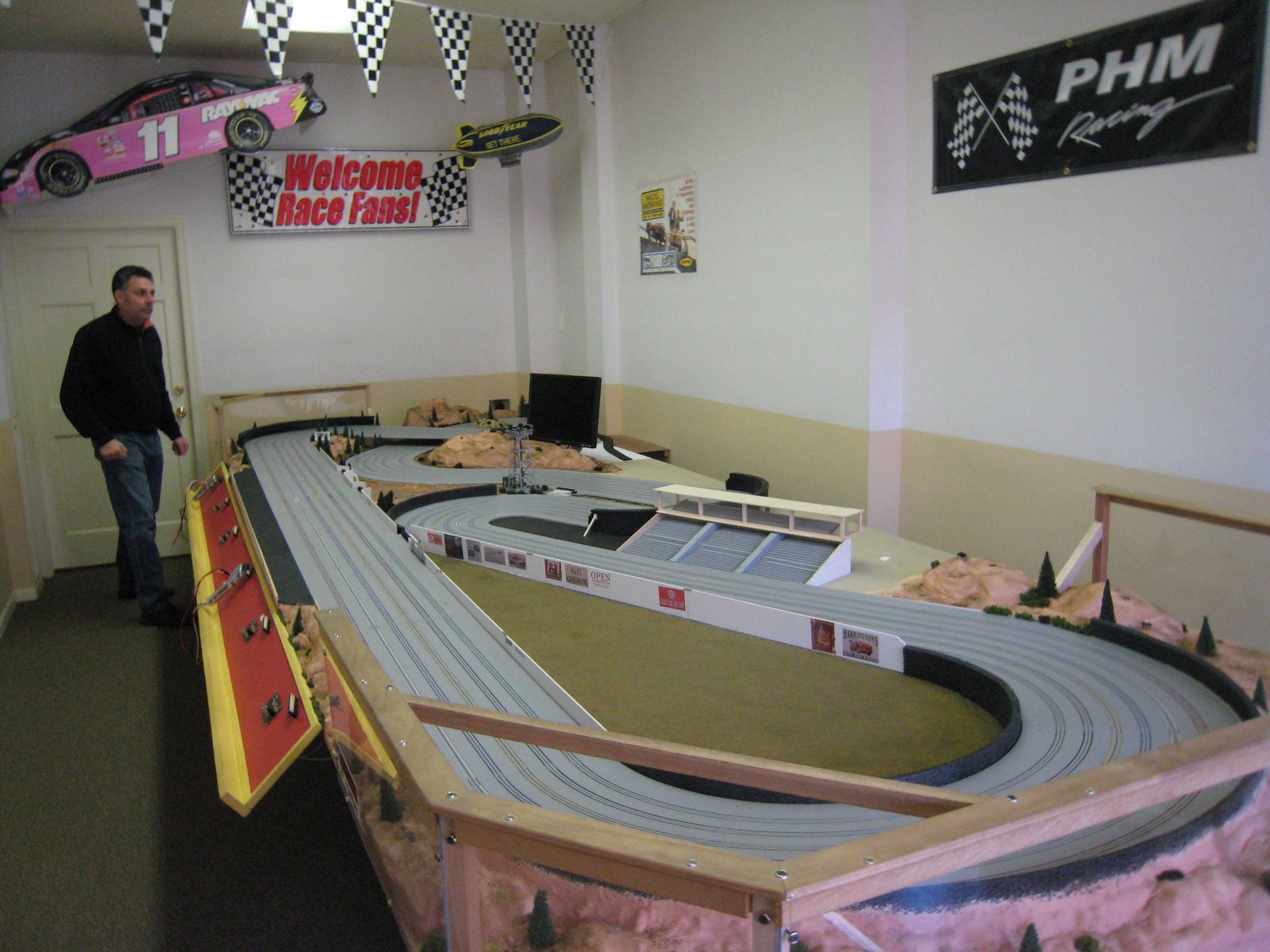
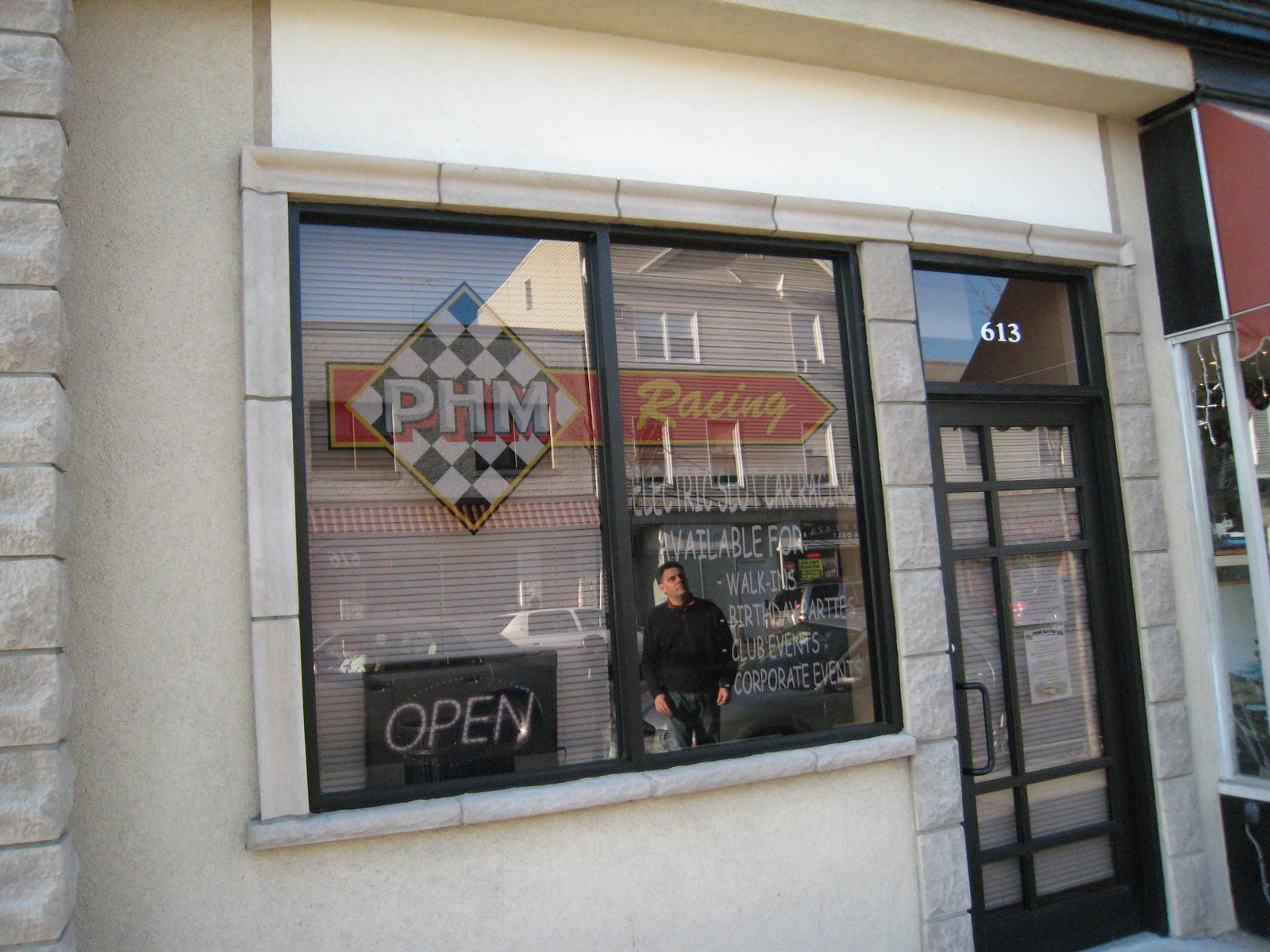
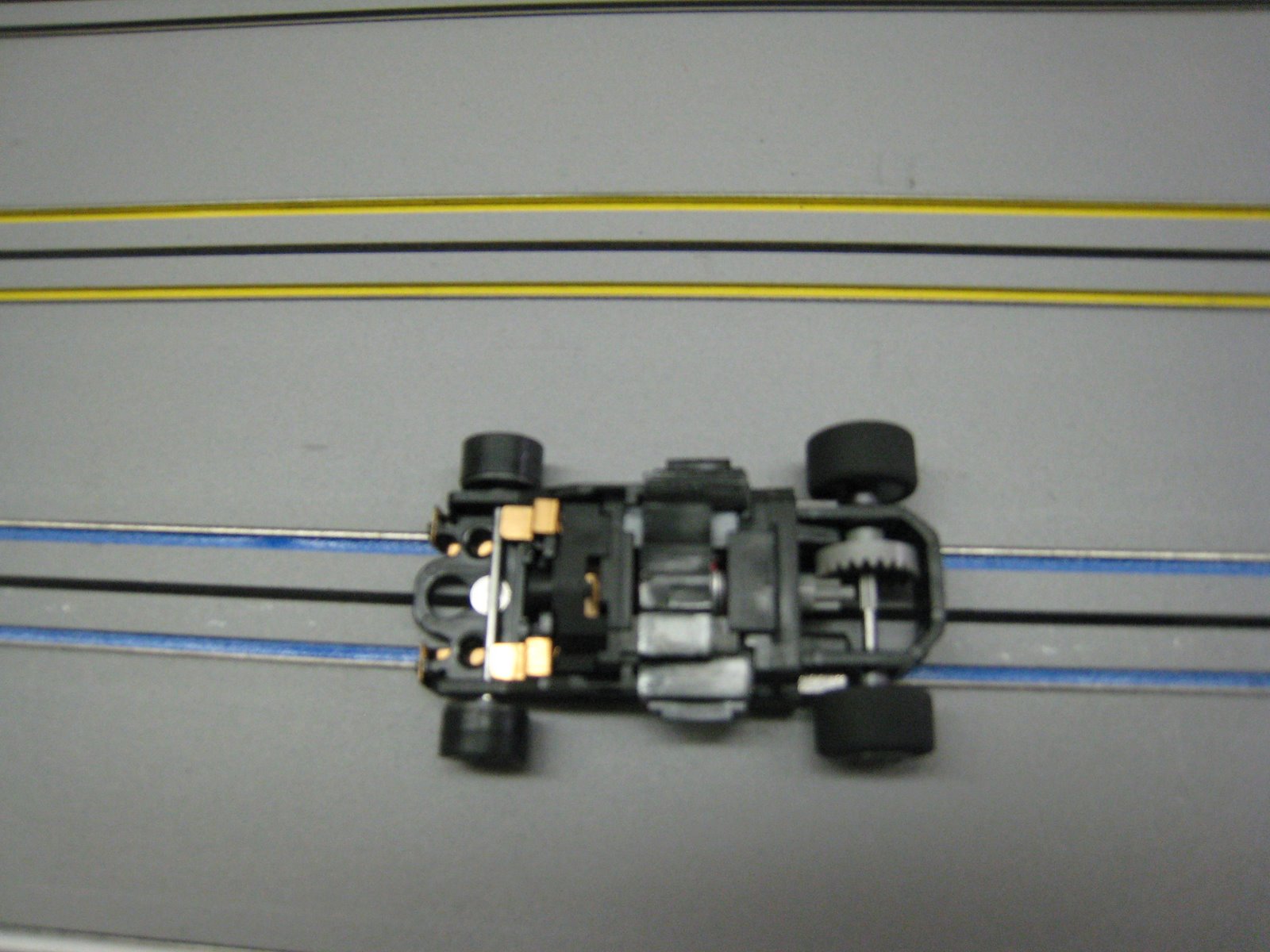
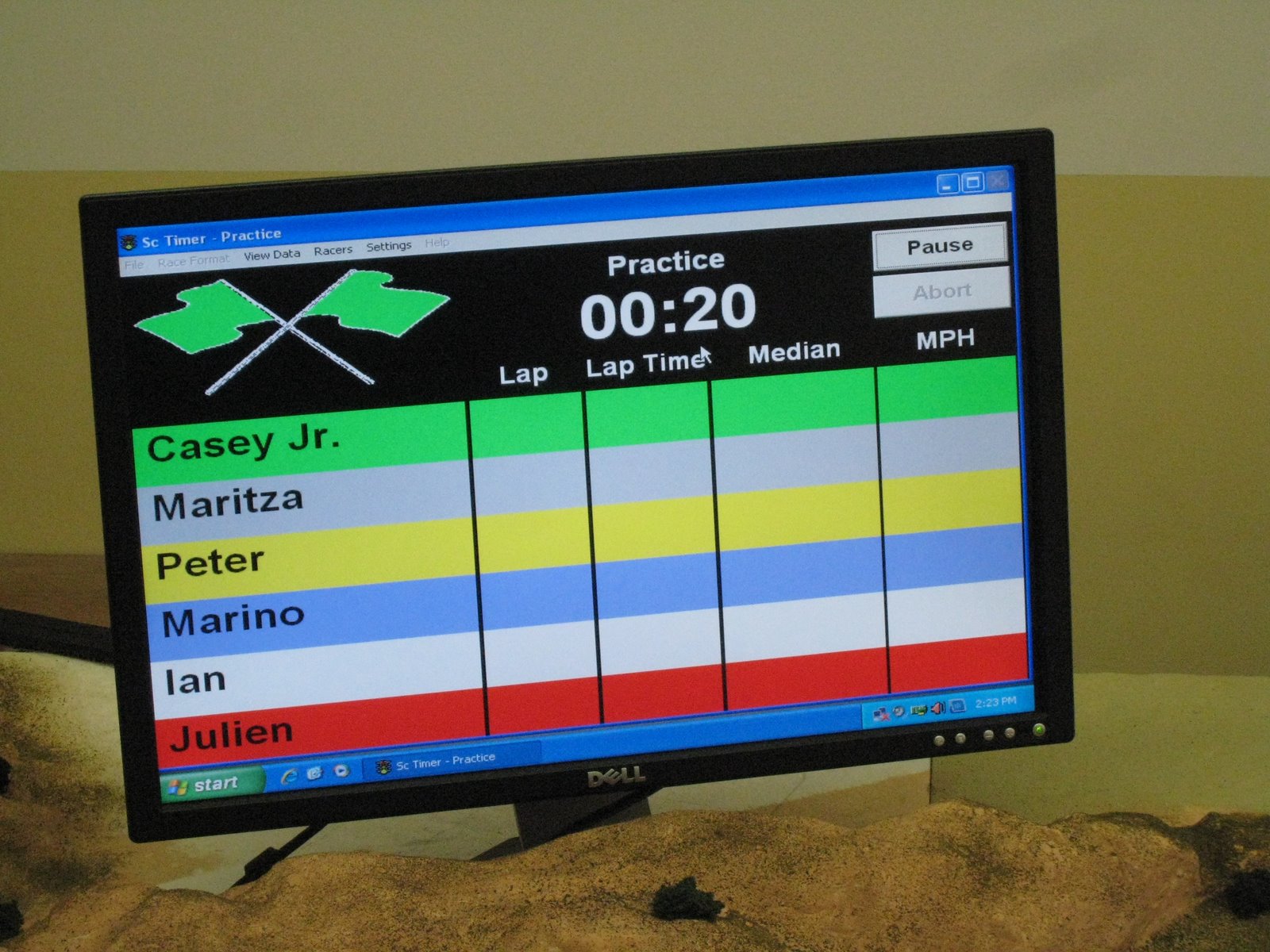
The slot cars now have graduated to their own venue, PHM Racing, next door to Pastime’s shop. There is a larger and more sophistcated layout, where four cars can race, an electronic score board and even real racetrack sponsors.

At the heart of this operation is a slot car racing club. Members pay annual dues. Parents usually accompany their youngsters as the latter participate in club racing events.

The race track can also be rented for parties. Walk-in slot car racing enthusiasts are also accommodated.

Margiotta claims the slot cars are able to draw
youngsters away from their computers and phones and out of their houses.
Entertainment opportunities like this will be increasingly important in small- and medium-sized downtowns
Posted by Picasa

The New Normal for Downtown Retailing: I. Introduction

Across the board key Federal officials, renowned economists, and powerful business leaders agree that our Great Recession finally has bottomed out. The latest GDP data support this view. For downtown leaders this is a very appropriate time to ask: “What’s next?” Are we returning to the same challenges and opportunities downtowns faced prior to the recession? Or to conditions similar to those of the earlier parts of the decade? Or are we facing a “new normal”, with its own array of fresh challenges and opportunities that we must learn about and deal with?

The evidence points toward a new normal. Responding effectively to this situation will require some insightful, hard-nosed analysis and then a lot of innovative and practical problem-solving. This is absolutely not the time for puffed-up marketing, fluffy analysis or laissez les bon temps roulez attitudes, but there are still viable paths for growth and redevelopment.

Though much remains to play out (e.g., gasoline costs and consumption), in coming email blasts and postings to my Downtown Curmudgeon blog and DANTH, Inc’s website, I will start to detail some of the characteristics of this new normal. Among the topics I will discuss are:

  • The biggest single new factor that downtown merchants have to face is the rise of the “deliberate consumer.” Americans are poorer and feel less affluent. Consumer credit is harder to get and to keep. Also, the housing piggy bank is kaput. Shoppers are more value conscious, more calculating and less impulsive. They are still buying — but differently.
  • Capturing consumer expenditures now requires an even higher level merchant skill set than before the Great Recession
  • Increasingly important to this skill set is a “social marketing” component that has face-a-face and online dimensions
  • Downtown merchants will struggle to define what “value” means to the consumer – it does not always have to be low price
  • Many retail chains that liked downtown locations have either folded, been severely weakened or stopped putting new stores in downtowns. As a result, more than ever, the strength of a downtown’s retailing will depend on high quality independent merchants.
  • Baby Boomers are now retiring in increasing numbers, but are poorer, more frugal and finding it harder to sell their homes. Those that do “gray” our downtown residential projects will likely provide less lift for nearby retailers than previous “empty nesters”
  • Even after we climb out of the recession, doing downtown redevelopment projects as we did over the past 10 to 15 years will be far more thorny because of legal constraints, political challenges and difficulty in finding tenants and financing
  • A significant number of downtowns will have their growth constrained not only by malls or big box retailers, but also by nearby downtowns that already have been successfully revitalized
  • Young single knowledge workers have ignored and will continue to ignore living in most small and medium-sized downtowns. Some of these downtowns, however, are attracting artists and crafts people because of their comparative low costs, good quality of life and decent access to major arts markets
  • A surprising new factor: the luxury retail market will be weakened for some time to come, with diminished middle class “trading up” and “treasure hunting” shopping, and guilt constrained luxury buying. Also, significantly fewer at the top of the income ladder have a positive assessment of their personal finances – it is at the lowest level in 20 years. Many of the suburban “lifestyle downtowns” are vulnerable to the impact of this trend
  • Affordable luxuries will come back first. Larger mass luxury purchases requiring new credit lines will lag
  • Home and hearth niches will recover slowly following the housing market, with big ticket items lagging the most. Nevertheless, HDTVs, other “cocooning” related merchandise and children’s furniture will do relatively well.
  • It is far more difficult for downtown merchants to finance new locations, inventory, facade improvements, etc. Retailing will be stronger in districts where downtown organizations can help merchants cope with these problems
  • Low-price powerful warehouse retailers continued, even during the Great Recession, to increase sales and their market share. Downtown merchants have typically been poor at playing the low-price game. Big box and supermarket chains are more serious about rolling out smaller stores with a scale more appropriate for downtowns. Although contrary to their commitment to small independent local operators, should downtown leaders consider recruiting some small format, national, low price retailers?
  • Through the recession sales continued to increase for food away from home establishments. Downtown eateries that provide comfort food, good value, friendly service and a venue for friends and family to meet will continue to do well. Their strength also shows the continued importance of convenience and quality family time for dual income households and those with children
  • Non-comparison, convenience retail has been a steady rock for the vast majority of downtowns – e.g., food markets, drug stores, etc. – and will continue to be in the foreseeable future
  • There has been a significant decline in Americans’ participation in the arts, especially attendance at legitimate theaters, concert halls, museums, art galleries, etc. The recession deepened, but did not induce the decline. The audiences for these arts venues have become significantly older. Middle and lower income and younger folks are increasingly “cocooning” and consuming arts performances at home electronically.
  • Shops and restaurants that featured locally grown or produced products tended to fair much better than others during the recession and they will have increasing strength as the economy improves and the sustainability movement gains traction
  • Though online retail sales tanked more on a percentage basis during the recession than regular retail sales, “backdoor retailing,” both electronic and brick, will increasingly define successful downtown merchants
  • Ethnic downtowns did comparatively well during the recession. They will continue to fare relatively well because of population growth, upward mobility, unique sourcing of merchandise, language and cultural affinity. Also, they provide access to dense populations for many retail chains that see ethnic markets as untapped growth opportunities
  • More and more communities want downtown commuter rail stations. These stations will be cornerstones for strong downtowns – and their retailers
  • Another and perhaps most important cornerstone will be establishing the downtown as the community’s central social district with well activated and attractive public spaces and popular eateries having pivotal roles


Your comments are welcome.

N. David Milder

Downtown Vacancies: Let’s Get Real

________________

A slightly different version of this article appeared as a Perspectives Column in the May 15, 2009 issue of the Downtown Idea Exchange

________________

Far too often, concern about the number of empty storefronts in a downtown reaches distorted and needlessly injurious proportions. This was true before our current recession and now it threatens to become an even more serious problem. It’s critical for downtown leaders to view the vacancy rate issue from a realistic perspective.

For example, a few years ago, when I was managing a district, the mayor and I often would go around the block about our vacancies. My protestations that our vacancy rate of 2.6% was very low, and one that most other districts would love to have, were dismissed – the mayor wanted a zero vacancy rate. I tried to explain that a zero rate actually would be unhealthy for the district because it would keep out new business blood and thus make the district stale, perhaps even ossified. This argument, too, gained no traction. And this mayor is a very bright and likeable guy.

Today, many downtown leaders and local politicians are seeing growing vacancies as omens of doom. In past recessions, DANTH Inc. had projects in downtowns where the vacancy rates were in the 18% to 20% range. Looking just at the vacancy numbers is deceiving. High numbers are not a death warrant:

  • Within a year, the downtown with the 20% rate recruited several trophy retailers and substantially reduced the number of vacancies. A few years later it was being cited as a veritable model of downtown revitalization.
  • Similarly, the other downtown reduced its rate to 12% in less than a year and to 6% after 18 months. Today it reports having few vacancies.

A recent canvass of 14 downtowns showed four with vacancy rates of 10% or higher. But:

  • Two of those downtowns had actually reduced their vacancy rates substantially during 2008 from 2007: one dropped to 11.2% from 14.1% and the other to 11% from 15%.
  • Another of the canvassed downtowns reported a 13.3% vacancy rate. On the other hand, it still had at least six new stores open, some of which promise to be strong. Moreover, a supermarket is doubling its size, a new nursing home with new ground floor retail space is about to be built, 14 residential units are being added to the floor above an existing 15,000-s.f. retail space, and McDonald’s will be renovating a 100-plus-foot façade on the main drag.
  • Most of the canvassed downtowns reported new shops were opening, even when the district managers felt the vacancy rates were much higher than they would like.

In the vast majority of downtowns a very significant proportion of the storefronts normally are occupied by marginal operations. Very often, marginal businesses are badly managed and do little to foster a positive image of the district. In a recession marginal firms have a high probability of failing. Some marginal firms are not small – many national retail chains are now out of business because mismanagement put them on the financial brink and the recession pushed them over.

The vacancies that result from this economic pruning can – and I would argue should – be viewed as opportunities. In tough times like these, there still is “creative destruction” and many district managers are reporting that some attractive new businesses are opening. If these firms survive the recession, they probably will really thrive when the economy rebounds.

Many would argue that a district is damaged more by a poor business operator who cannot garner customer support than by a vacant storefront. Let us not take our admiration of small business people to the point where we canonize all of them. By definition, half of the small business operators in this country are below average. The challenge in this recession is to fill the downtown vacancies with as many above average operators as we can. The quality of the existing tenants is more important than the quantity of empty stores!

Now is the time for downtowns to survive and reposition. Consequently, there are lots of better barometers than vacancies for judging how a downtown is doing during our current economic troubles:
• Have shops and eateries adapted to the new market realities so their owners can still make a satisfactory living?
• Are quality businesses opening?
• Are store facades being maintained and improved?
• Is land being quietly assembled for development when the economy rebounds? Better still, are projects actually going into construction?
• Are improvements being done to make the downtown a more convenient place to visit?
• Are investments being made to create terrific public spaces?

N. David Milder

More On Retailing To Teenagers

There was an interesting article by Eric Wilson in yesterday’s New York Times about retailers who target teenage shoppers. The full citation can be found at the end of this post.

Wilson notes that a recent study by the investment bank Piper Jaffray reported a 14% decline in spending by teenagers that was a “direct reflection of the economy.” Cost has become a much more important factor in teenager purchasing decisions.

Most importantly, Wilson notes that “as teenagers’ priorities rapidly shift away from brands they now perceive as too expensive, the pecking order of mall stores has changed.” Abercrombie & Fitch, for example, has held its prices during the current recession and consequently has had a significant decline in sales.

But, price is not everything., Hot Topic has increased its sales steadily during the recession largely because it sells licensed products tied to the “Twilight” vampire series. According to Betsy McLaughlin, the chain’s CEO: “There’s just so much retail out there. I think the people who will win are the ones who provide something different. It’s not just a price war.”

See: Eric Wilson, “Losing Its Cool at the Mall,” The New York Times, April 23, 2009, sec. Fashion & Style, Article.


Recession Evils: Rumors and Facile Solutions

In a recent newsletter of Red Bank’s RiverCenter, Nancy Adams properly admonished the rumor-mongers who, faster than the recession, can bring down a good business operation. I congratulate Nancy for her spunk. And in contrast to Lou Grant, a lot of us like spunk! I am so glad she told those idiots to shut up!

Let me take up a cudgel against an equal danger – the town leader, manager or guru who thinks they are on to an easy answer for coping with our Great Recession. For instance, since November I have been hearing on and off about how good the student market is for retailers. This flies directly against what I have leaned about student shoppers since I started to study them for a project in Elizabeth, NJ back in the late 1990s. Before the dot,com bubble burst, the teen/tween market was an important growth engine for many downtowns – especially in urban wear. But with the dot.com bust, these youths lost their biggest income – what mom and dad gave them. And a lot of shops that targeted this market were badly hurt. Also, this market is notoriously fickle – a shop or chain that is red hot today can be in the crapper tomorrow. Finally, the potential size of this market is limited – the amount that teens and tweens can spend simply pales in comparison to how much retail spending their mothers control!

Then, if you look closely at what is happening today, you have to wonder some more. You can bet your bottom dollar that as this recession deepens, these kids are going to get less and less from their parents. And do you really think these kids are now getting part-time jobs to cover their retail buying habits? Moreover, if you look at some recent data, the story is a mixed one; some retail chains that target the teen/tween market are doing really well, but others, many that were hugely popular with these young shoppers, are not.

Below are some same store sales comparisons for retail chains that like teen/tween customers. The data are from Barbara Farfan at About.com:

Same Store Sales –Dec 2008

+13.5% The Buckle, Inc.
+ 12% Aeropostale
+ 10% GameStop
+ 4.3% Hot Topic Inc.

– 1% Urban Outfitters
– 10% Pacific Sunwear
– 12.3% Zumiez
– 12.5% Wet Seal
– 17% American Eagle Outfitters
– 24% Abercrombie & Fitch

Same Store Sales –Jan 2009

+ 14.7% The Buckle Inc.
+ 11.0% Aeropostale
+ 6.0% Hot Topic
+ 2.0% American Apparel

– 11.0% Pacific Sunwear of California
– 14.8% Zumiez
– 20.0% Abercrombie & Fitch
– 22.0% American Eagle Outfitters

Same Store Sales –Feb 2009

+ 21.0% Buckle, Inc.
+ 11.0% Aeropostale
+ 10.8% Hot Topic
+ 4.8% Torrid (Hot Topic)
+ 3.0% Urban Outfitters

– 6.6% Wet Seal
– 9.0% American Apparel
– 13.0% Zumiez
– 23.9% Arden B (Wet Seal)
– 30.0% Abercrombie & Fitch

The Buckle, Hot Topic and Aeropostale are indeed doing well and it would be great to discern a winning formula they share. Hot Topic is hot because it sells the clothing that the vampires or zombies wear in some book series that tween and teen girls now adore. Gamestop is hot because it resells computer games to the avid gamesters. But, Ambercrombie’s, Amercian Eagle, Zumiez, Wet Seal and Pacific Sunwear are not flourishing. And Amercian Apparel and Urban Outfitters – some retail analysts thought they were immune to this recession – are up and down. This market segment still does not sound to me like a rock downtowns now can build their retail upon.