N. David Milder at DANTH, Inc.

Downtown Revitalization Specialist

Main menu

Skip to content
  • Home
  • About NDM
  • News
  • Downtown Curmudgeon
  • Reports
    • Long Island City (pdf)
    • Manhattan
    • Meredith (pdf)
    • Morristown (pdf)
    • Peoria (pdf)
    • Sherwood, WI (pdf)
  • Downtown Revitalization
  • Contact

Category Archives: Central Social Districts

Post navigation

Newer posts →

Bryant Park: The Quintessential Downtown Informal Entertainment Venue – Part 1

Posted on August 19, 2014 by DANTH

Introduction

Informal Entertainments in Public Spaces. A major goal of this series of articles on downtown entertainment venues is to demonstrate that great public spaces and third places can be very strong components of the entertainment niches that are now critical to the magnetism, health and well-being of our downtowns. Too often, when downtown leaders want to create or strengthen their entertainment niche, they look only at formal entertainment venues such as PACs, museums, concert halls, theaters, arenas, etc. Ignored are the entertainment values of great public spaces that, compared to the formal entertainment venues, often can attract larger audiences, cost less to operate and maintain and have bigger economic impacts on the surrounding downtown areas. These are especially important advantages in small and medium-sized downtowns that typically have weaker customer traffic generators and fewer financial resources.

Great public spaces are being described as informal entertainment venues because:

  • They provide opportunities for guests to engage in activities that they enjoy and that also interest and amuse nearby people-watchers. In contrast, formal entertainment venues guests are almost always a passive audience
  • Yet, informal venues often also provide a calm refuge from a downtown’s hustle and bustle
  • They facilitate conversation and social interaction among attendees. In many types of formal entertainment venues guests must act as a whispering, if not completely quiet audience
  • Their events are held in informal settings, usually outdoors or within a temporary structure (e.g., a tent), often using temporary stages and screens. In contrast, formal venues have buildings, often lavish, with a lot of fixed infrastructure such as stages, screens, seating, etc.
  • Access to them is usually free and when there are charges for such things as equipment rentals and rides, they are reasonably priced. In contrast, formal venues usually charge admission fees, and frequently they are unaffordable for 60% to 80% of American households
  • Guests usually can time their visits to informal venues to suit their own schedules; with formal venues potential guests must adjust their schedules to the timing of the event they want to attend.

The Park. I have been visiting New York City‘s Bryant Park for about 34 years. In my opinion, it is the quintessential informal entertainment venue. A lot can be learned by taking a close look at it. I certainly did.

The park was not always a success. Back in the 1970s and early 1980s, Bryant Park was such a notorious place for drug use and sale, prostitution and associated crimes that the police, at one point, completely closed it down. Landlords and real estate brokers then involved in properties facing the park reported that its problems and ill repute made leasing commercial spaces very difficult and suppressed rents (1). During those troubled days, Bryant Park stood out as the paragon of a failed public space, a stark demonstration of what can happen when a public space, even in a great location, is badly managed, poorly designed and unsuccessfully programed. In contrast, today, Bryant Park is a paragon of a successful public space, deservedly acclaimed, extremely popular and a model from which others can learn.

Many factors were involved in the park’s astonishing turn around, e.g: the involvement of important actors from the private and nonprofit sectors; the creation of a nonprofit organization with a very effective management team, under the leadership of Dan Biederman, to revitalize and manage the park; the use of novel revenue sources of which BID assessments were just one component; effective plans for both physically improving the park and programing it into an extremely attractive and very strong informal entertainment venue.

Its Strong Location
Bryant Park occupies some of Manhattan’s choicest real estate: 9.6 acres in the midtown CBD that are bounded by Fifth Avenue, Avenue of the Americas, 40th and 42nd Streets (2). The main informal entertainment functions of the park, that are the focus of this article, occur in the approximately six acres located behind the large and famous Beaux Arts building of the Main Branch of the New York Public Library. It sits on Fifth Avenue between 40th and 42nd Streets. The library annually draws about 2.3 million visitors (3). Underneath the park, the library has about 40 miles of shelf space for its books.                          
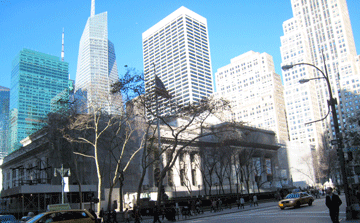
Figure 1. Major buildings near Bryant Park

Figure 1. Major buildings near Bryant Park

Three entrances to the subway system abut the park and provide access to five train lines.

The surrounding blocks are densely filled with high rise office buildings — many of architectural merit — and a large number have ground floor storefronts. About 78,000 people are employed within a 5-minute walk just of the park’s 42nd Street and Avenue of the Americas entrance; within a 10-minute walk employment reaches to about 315,000 (4). Also, there are 29 hotels within 0.2 miles of the park (5). Times Square is within a three minute walk, while the Grand Central Terminal, Macy’s and Rockefeller Center are all within roughly six minute walks (6). The park’s management estimates that, on an average weekday, about 250,000 people walk by on the sidewalks of the four streets that surround the park; a significant number are probably tourists.

The park has become so successful that the Bank of America Tower proudly proclaims its address to be One Bryant Park, and a new hotel is named the Bryant Park Hotel. Back in the early 1980s, this simply would have been unthinkable!

A strong location was not enough. Because of the park’s location, it is surrounded by a huge pool of potential visitors who are either within easy walking distances of the park or walking by its perimeter on their trips to other destinations. The flow of pedestrian traffic near the park during its troubled days was probably lower than today, but still relatively strong when compared to downtown locations in other cities. What turned the tide was not the new and renovated office buildings and hotels that have appeared since 1992 — they came after the park became a success– but what was happening in the park, the new “products” it offered and how they were “packaged.” That’s what drew all the visitors into the park and encouraged them to stay. A superb location was not enough. Obviously, few downtowns in America have similarly dense locations, certainly not those in small and medium-sized communities. Yet, the success of Bryant Park demonstrates the critical importance of the variety and quality of the products an informal entertainment venue offers, be it in dense Midtown Manhattan or in a small or medium-sized downtown.

The Park’s Informal Entertainment Venue Features

It’s an attractive and welcoming place to sit, relax and observe. Many New Yorkers and many tourists often appreciate opportunities to have a respite in a green open space from the city’s high energy and rapid pace of activities. Other park visitors may seek a pleasant place to spend their down times between appointments.  Small towns, in this respect, are like Bryant Park; they are places where people go to live or vacation in order to find refuge from urban hustle and bustle.

Bryant Park responds strongly to those needs. For example, the park’s management reports that in a “survey conducted in the summer of 2013, visitors to the park consistently noted the park’s beauty, and used words like ‘oasis,’ ‘wonderful,’ and ‘lovely’ to describe the park.” With 4,200 French park chairs, 800 French café tables, and 55 umbrellas Bryant Park offers visitors ample places for them to sit comfortably in a very pleasant green setting. Moreover, they can chose to sit on the open one acre lawn or shaded under one of the 220 London Plane trees. Visitors can also enjoy the park’s carefully designed and maintained greenery that features 75 species of plants. Visitors are also able to easily access the Internet since the park is a WiFi hotspot. Significantly, the park has a far too often undervalued urban feature: clean, safe and easily accessible bathrooms.
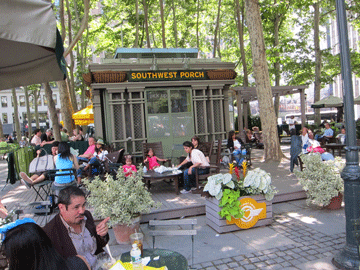
Figure 2. Sitting in the shade with places to buy food nearby

Figure 2. Sitting in the shade with places to buy food nearby

Figure 3. Sitting in the sun on The Lawn

Figure 3. Sitting in the sun on The Lawn

The people sitting will naturally be observing and probably people watching – ready to be entertained by what is happening within their view sheds in the park. This is a critical audience building step for most informal entertainment venues.
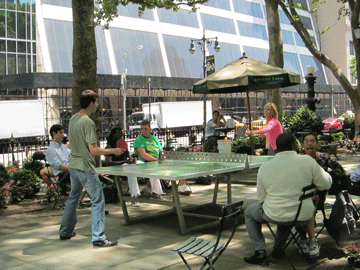
Figure 4. Ping Pong players

Figure 4. Ping Pong players

A substantial portion of the park’s infrastructure is dedicated to facilitating visitors’ engagement in activities that they can enjoy – while entertaining the people who may be observing them. Bryant Park offers an extraordinary range of activities that visitors can engage in – while others can watch them “performing:”

  • There are numerous places where people can get food and drink in the park ranging from the white table cloth Bryant Park Grill to several Witchcraft kiosks specializing in sandwiches and salads, coffee, frozen yogurt or gelato
  • Visitors can use, at no cost, 35 strategy, board, word, party and card games to entertain themselves and their friends or relatives. The park also runs “game socials” and mah jongg clinics
  • The Chess Area provides visitors with chess and backgammon boards for free
  • On The Green, visitors, at no cost, can practice their putting or play kubb, a game from Sweden that resembles lawn bowling
  • There is a playing area for pétanque, which is similar to boules and bocce. The park provides lessons and runs pétanque tournaments
  • A ping pong table is also available for visitors to use
  • The “Winter Village at Bryant Park” features a 170′ x 100′ skating rink (admission free) on its lawn and 125 boutique-style shops in the park’s tree-lined allées. The winter ice rink’s attendance peaks between Thanksgiving and Christmas, and reached over 261,000 total skaters in the 2012-13 season
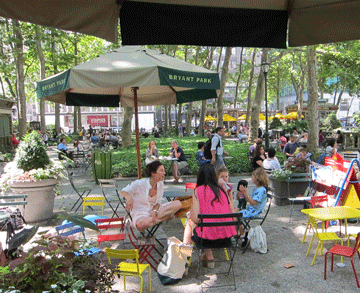
Figure 5. Children’s Reading Room (parents allowed)

Figure 5. Children’s Reading Room (parents allowed)

  • A “Reading Room” provides opportunities for visitors to find and use reading materials. There also is a special Reading Room area near the carrousel for children with appropriate books and child-sized furniture. This attention to detail in meeting potential user needs helps make the park such a standout
  • Le Carrousel is a popular ride for children and costs $3.00 per ride
  • There are also Tai Chi, Yoga, fly fishing, fencing, juggling, knitting, modern dance and language lessons. The summer yoga series attracts about 800 guests
  • NYC Audubon provides birding tours of the park. Having other expert organizations involved in an activity is a smart way to increase a venue’s attractions, while constraining costs. Small venues might want to look into this
  • Dancing in Bryant Park – A series of social dance party after work in the late spring and summer
  • The complete list of these activities can be found on the Bryant Park website at: http://www.bryantpark.org/things-to-do/grounds.html

The number, diversity and quality of these activity offerings are very impressive. Some have a uniqueness that is prone to arouse visitor curiosity. Several are sponsored, e.g., the Winter Village by Bank of America and the Reading Room by HSBC. The year round food and Winter Village retail operations also are revenue sources for the park.

As any longtime visitor will attest, the park’s management is constantly refreshing these offerings. It does not let the park’s success degenerate into a debilitating same-old, same-old staleness. Many downtown leaders elsewhere would do well to follow suit.

Numerous events are held, mostly after 5:00 pm, in Bryant Park using temporary structural assets and/or repurposing existing fixed structural features. Bryant Park’s management is masterful in the way it uses The Lawn and other parts of the park in many different ways over the course of a calendar year by deploying temporary structural assets. The Winter Village with its temporary ice skating rink and temporary boutique retail kiosk-like structures is the largest and most complex example of this.

Without having any formal permanent stage or any permanent fixed seating or a permanent movie screen, Bryant Park puts on a very diversified and appealing series of events, that includes:
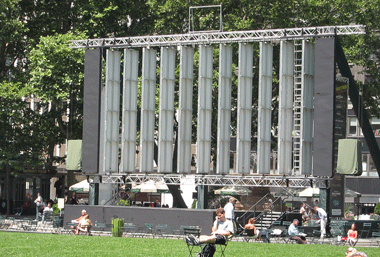
Figure 6. Temporary movie screen and stage

Figure 6. Temporary movie screen and stage

  • The HBO Bryant Park Summer Film Festival presents 10 films on the Lawn using a temporary screen. It attracts about 9,000 guests. It is sponsored by Bank of America and three other corporations
  • Several concert series over the spring and summer such as Bryant Park After Work. They use the Park’s Upper Terrace
  • Plays such as the Bryant Park Shakespeare on the Upper Terrace Steps
  • Dance recitals such as Bryant Park Presents Modern Dance on a temporary stage.

In other words, the park stages many events that are very similar in type, if not in scale, to those put on in the formal entertainment venues such as performing arts centers, theaters and concert halls, but in much more informal, lower cost to create and maintain, outdoor and temporary settings. In contrast, Millennium Park in downtown Chicago has the Jay Pritzker Pavilion designed by Frank Gehry that reportedly cost $60 million to build and includes 4,000 fixed seats plus a Great Lawn that can accommodate another 7,000 people (7). Many small and medium-sized downtowns might benefit by taking their cue from Bryant Park: to have a useful and affordable performing arts venue, they may not need to go to the expense of creating a PAC or renovating a theater if they can fully utilize their existing public spaces by multi-tasking them.

Bryant Park’s events help keep it and the surrounding area active after dark. Moreover, their diversity strengthens the park’s drawing power by offering potential visitors greater choice.

Comparing Bryant Park to Some Formal Entertainment Venues from a Downtown Economic Development Perspective

Downtown management organizations likely are interested in entertainment venues because of their abilities to attract and retain customer traffic and their positive economic impacts on their districts. These impacts may be on the demand for residential, office or retail spaces, retail and hospitality establishment sales and/or in the generation of jobs.

Attendance. The abilities of an entertainment venue to bring people into the downtown, keep them there or make them happy to be there are valuable assets for any downtown. Bryant Park is a very powerful attraction for Midtown Manhattan. According to its management, Bryant Park’s attendance now has grown to approximately 6 million users per year. Attendance peaks in the summer months and around lunchtimes. Average 1:00 pm weekday snapshot counts from April to October range from 2,100 to over 3,000 guests per day. One significant shift in attendance is that the percentage of women has come to exceed 50%, a good sign of a healthy park. A 2013 survey of park guests showed that about 30% were tourists. Given that many tourists are foreigners who may be hesitant to participate in a survey because of iffy English language skills, the park’s management prudently suggests this estimate should be treated with great caution. However, allowing for a large 33% margin of error would indicate that tourists probably account for 20% to 40% of the park’s attendance, which supports a less definitive, but still informative conclusion that tourists have a significant presence in the park. Furthermore, the park’s geographic location relative to Grand Central Terminal, the Public Library and Times Square argues strongly for a probable significant tourist presence.
Top-city-parks-in-USA-by-visits

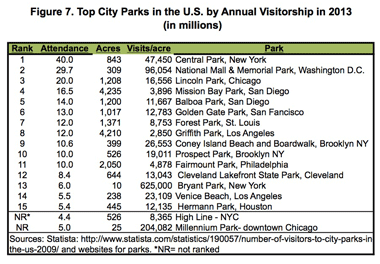
Comparisons with some other attractive and successful urban parks help show the strength and density of Bryant Park’s attendance. Among city parks across the nation, in 2013, Bryant Park was the 13th most visited. However, Bryant Park is, by far, smaller in acreage than any of the other top ranked parks in attendance (see Figure 7). Consequently, on a measure of attendance density Bryant Park far outshines all the rest with 625,000 annual visits per park acre (see Figure 7). Similar findings emerge if Bryant Park is compared to other NYC parks such as Coney Island Beach & Boardwalk, Prospect Park and High Line Park. Millennium Park in Chicago, another downtown park, comes closest, with 204,000 visits per acre, but it is still 67% below Bryant Park (8). NYC’s 843 acre Central Park (which is not in the Midtown CBD, but borders it) has many more visits than any other city park in the nation, but its ratio of 47,000 visitors per acre is 92% lower than Bryant Park’s (9).

Bryant Park’s attendance certainly more than holds its own when compared to the strongest formal entertainment venues in NYC’s outer boroughs. For, example, Yankee Stadium in The Bronx and Citi Field in Queens, homes to the Yankee and Mets baseball teams, had only 3.3 million and 2.1 million tickets sold in 2013, see Figure 8 below (10).

Looking at some of Manhattan’s strongest formal entertainment venues, Bryant Park again more than holds its own when it comes to attendance.

top-NYC-entertanments-by-visits

Madison Square Garden (MSG). Creating downtown sports arenas has often been a key objective for many big city downtown revitalization efforts, e.g., Charlotte NC and Newark NJ. Manhattan has one of the oldest, most successful and most famous: MSG. Reports indicate that attendance, after a three year $1 billion renovation, will return to the 4 million customers per year level that was reached as far back as 1995 (11). That means that Bryant Park attracts 50% more guests than the MSG.

Broadway’s Theaters. It also is interesting to compare Bryant Park’s attendance not to just one or two Broadway theaters, but to all of them. According to the Broadway League, the total attendance for all Broadway theaters in the 2013-14 season, which included 44 new productions, was 12.2 million (12). Bryant Park’s attendance equals about 50% of the patrons drawn by all of Broadway’s theaters.

Metropolitan Museum of Art (Met). The most recent attendance estimate we could find for this museum was 6.2 million visitors per year (13). That is the second highest in the world, after The Louvre, for an art museum. An unknown part of the Met’s 6.2 million visitors comes from guests  at the off-site Cloisters that is 7.8 miles to the north. The Met’s attendance statistic  is just three percent more than Bryant Park’s 6 million. This slight difference might be accounted for by, besides the Cloisters’ attendance, divergent counting and estimation procedures.

The Museum of Modern Art (MoMA). It reported about 3.0 million annual visitors, which is equivalent to about half of Bryant Park’s attendance (14).  However, a potentially important new twist just has been added. For decades, MoMA’s Sculpture Garden was a favorite refuge of knowing New Yorkers and tourists to escape the Big Apple’s hustle and bustle. Access was tied to first gaining entry to the museum, which usually involved paying an admission or membership fee. However, in recent weeks, MoMA has made the Sculpture Garden open to the public, free of charge, starting at 9:00 a.m., before the museum’s official 10:30 opening, and closing at about 10:30 p.m., well after its normal closing times. Consequently, the Sculpture Garden has been turned into an informal entertainment venue and it will be interesting to see how this will impact MoMA’s overall attendance in the coming rears.

Lincoln Center for the Performing Arts (LCPA). It claims 5 million guests per year, which is about 20% lower than Bryant Park’s attendance. However, LCPA is not a pure play cluster of formal entertainment venues, especially after its recent $1.2 billion renovation program. LCPA reported selling 3.2 million tickets in 2012 (15). That suggests that the attendance of its formal entertainment venues only equals about 53% of Bryant Park’s annual attendance. Moreover, the formal entertainment venues accounted for about 64% of the LCPA’s claimed total visits. The other 36% might be explained by:
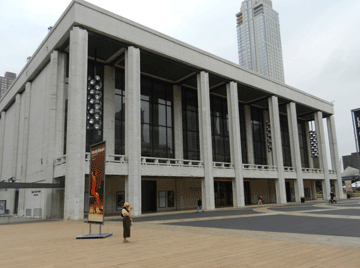
 

Figure 9. LCPA’s Koch Theater on a Friday afternoon – a lone soul in view

Figure 9. LCPA’s Koch Theater on a Friday afternoon – a lone soul in view

  • The LCPA being the venue for New York’s Fashion Week (232,000 visitors), movie premieres and high profile corporate and media events
  • The people on the 1,300 tours of the center given each year.
  • Perhaps most importantly, the LCPA’s informal entertainment attractions. For example, the David Rubenstein Atrium is an indoor public space where visitors can sit, relax, get something to eat, attend occasional free concerts, have WiFi Internet access, obtain information about the LCPA, buy tickets and get on tours of the LCPA.. It reportedly has attracted well over 1 million visitors since opening in 2009. The LCPA’s recent renovations also produced several new outdoor public space seating areas such as Barclays Capital Grove, Illumination Lawn and the Credit Suisse Information Grandstand as well as several new restaurants. The LCPA also has a summertime series of 150 free outdoor concerts that utilize temporary stages and seating and are attended by about 250,000 people.
  •  The guests drawn by its educational programs.  
Figure 10. LCPA’s “Grove” on that same afternoon – more people in view, others sitting under the trees

Figure 10. LCPA’s “Grove” on that same afternoon – more people in view, others sitting under the trees

 The Take Away. Downtowns prosper economically when they can agglomerate relatively large numbers of people. Although downtown parks are often thought of simply as attractive green places for folks to enjoy nature and get some fresh air, they also can be incredibly strong magnets that draw as many as or more guests than any PAC, arena, theater or museum. Bryant Park demonstrates this power more than any other public space I have visited. Its informal, entertainment opportunities, as demonstrated above, enable it to rival the magnetism of any world class formal entertainment venue.

Downtowns of all sizes might learn from this and ask if a public space offering informal entertainment opportunities might be a more powerful and easier to create attraction than a PAC, arena or theater they are considering.


ENDNOTES

1. During 1982-1984 I spent a good deal of time researching Bryant Park for Regional Plan Association’s Downtown Safety, Security and Economic Development Program. This research included frequent park visits, a survey of about 200 park users and interviews with park drug dealers and users, nearby landlords and commercial brokers active in the area
2. I want to thank Dan Biederman and Maureen Devenny of the Bryant Park Corporation for responding so graciously and helpfully to my request for statistical information about the park. Information about its activities and infrastructure also were garnered from its website and countless visits to the park over the past 34 years
3. Reported by library staff in a telephone interview
4. Employment data from the Census Bureau’s OnTheMap reports. The total number of people employed within five and 10 minute walks of the park is even larger because also measuring from the entrances to the east and south would include many more office buildings. Still, the numbers from just that one entrance are sufficient to demonstrate the point that a heck of a lot of people work within an easy walk of the park.
5. Based on a count of hotels reported in that ring by Yelp
6. Distances measured in Google Earth, walking time estimates based on a speed of 3 MPH
7. Wikipedia: http://en.wikipedia.org/wiki/Jay_Pritzker_Pavilion
8. Millennium’s attendance data from: MILLENNIUM PARK QUADRUAPLE NET VALUE REPORT, Texas A&M University and Depaul University, Summer 2011, pp.78, p.16. I want to thank Jamey Lundblad at the Chicago Department of Cultural Affairs and Special Events for sharing it with me.
9. Central Park Conservancy, REPORT ON THE PUBLIC USE OF CENTRAL PARK, New York, NY April 2011 pp.64, p.6
10. Attendance stats from: http://www.baseball-reference.com/
11. Thom Duffy, “Best Seats In the House: Nation’s Largest Markets Lead the Way In Venue Renovation Boom,” Billboard February 14, 2014. DANTH cited the 4 million attendance number in a report we did in 1995 for the 34th Street Partnership
12. The Broadway League, “BROADWAY SEASON STATISTICS AT A GLANCE” http://www.broadwayleague.com/editor_files/broadway_statistics_at_a_glance.pdf
13. The Metropolitan Museum Of Art, Annual Report for the Year 2012–2013, pp.153, p.6. and Hrag Vartanian, “2012 Museum Attendance Numbers Show a Diverse Global Art Scene” http://hyperallergic.com/68051/2012-museum-attendance-numbers-show-a-diverse-global-art-scene/
14. PricewaterhouseCoopers LLP, The Museum of Modern Art Consolidated Financial Statements June 30, 2012 and 2011, October 2012, pp.79 p.13 f
15. LCPA press release October 11, 2012: “Dedication of President’s Bridge on October 1, 2012 Marks Completion of Lincoln Center’s Redevelopment Project.”

© Unauthorized use is prohibited. Excerpts may be used, but only if expressed permission has been obtained from DANTH, Inc.

Posted in Central Social Districts, Change Agents, commercial nodes, Creative Class, Downtown Niches, Downtown Redevelopment, Entertainment, Entertainment niche, Formal entertainment venues, Informal entertainment venues, New Normal, Planning and Strategies, Public Spaces, Small Towns, The Arts |

DOWNTOWN FORMAL ENTERTAINMENT VENUES PART 4: MOVIE THEATERS

Posted on May 25, 2014 by DANTH

By N. David Milder

Introduction

The importance of downtown movie theaters. One of the most distinguishing characteristics of the “new normal” for our downtowns is the importance of having strong Central Social District (CSD) functions. Dynamic downtown entertainment niches contribute mightily to having a strong CSD. Movie theaters will play important roles in many of these entertainment niches, often serving as niche cornerstones in many smaller and medium-sized communities. Movie theaters usually differ from other downtown formal entertainment venues, such as theatres, concert halls and PACs, in some critical respects:

  • They show films during the daytime as well as evenings almost every day of the year – though this is less likely in very small communities
  • Their admission fees are relatively low and affordable – averaging $8.13 in the US and Canada in 2013 (1)
  • They are very likely to have a larger potential audience than the other formal performing arts venues: about two thirds of the US/Canadian population aged 2+ went to the movies at least once in 2013. This dwarfs attendance at other formal performing arts venues, theme parks and MLB, NFL, NBA and NHL games (2). For example, only about 49% of adult Americans attended a performing arts events (plays, operas, concerts) or visited visual arts venues ,e.g., museums, art galleries in 2012 (3)
  • They appeal to minority groups: for example, Hispanics represented about 17% of the population in 2013, yet accounted for 25% of the movie tickets sold that year and their attendance is growing (4)
  • More downtowns are likely to have a movie theater than a “legit” theatre, concert hall or PAC. In smaller communities they are often “…built right into the fabric of the main street, and they pretty much serve as the anchors. If those buildings were shuttered or torn down, it would affect the look and feel of the downtown area” (5).

Because of their long operating hours and ability to win an audience that is socioeconomically and ethnically diverse, movie theaters not only bring a lot people downtown through most of the day, but also stimulate their patrons to take a psychological stake in the downtown and make it their downtown.

Downtown movie theaters have long been under threat. Downtown movie theaters can be very important assets, but they have long been subject to forces pressing for their closures. When some of these forces wane, others seem to rise to take their place.

Back in the 1940s, 60% of Americans went to the movies every week. That level of attendance fell dramatically when TVs became a staple in every home during the 1950s (6). That, combined with the flight to the suburbs, led to the closure or repurposing of many downtown theaters. Nationally, though individuals went to the movies less frequently, through the 1980s and 1990s movie attendance continued to increase because of population growth until 2003 when a pattern of decline set in. By the end of 2013, attendance had fallen 13.9% from the 2002 peak. (7)

Within the movie theater industry there has long been a preference for theaters with more screens. This has led to a pattern of increasing screens, a steady decline in the number of movie theaters and larger cinemas with more screens. For example, between 2000 and 2012, the number of indoor movie theaters decreased by 18.8%, while the number of screens increased by 9.4% (8). However, this pattern was uneven. Some downtowns, usually the larger ones with some significant revitalization success stories, saw large new multiplexes open, while many others saw their 1-5 screen theaters close. The smaller theaters, with fewer screens were increasingly marginal. Even more marginal have been the smaller, few screen theaters in low population market areas.

In 2008, a DANTH, Inc. research paper summarized the challenges then facing downtown movie theaters:

  • Their hold on adult audiences was small and diminishing. Attendance was down and a Pew Research Center survey found that by a 5 to 1 ratio, Americans watch more movies on their TVs and electronic devices than in a movie theater
  • Even the most frequent moviegoers, a group whose behaviors are critical to the industry’s success, preferred home viewing
  • Many theaters had low operating margins based primarily on revenues from concession stands and screen ads
  • A relatively modest reduction in paid attendance by a small group of frequent moviegoers could easily erase these meager margins. The frequent moviegoers did not have to completely stop visiting movies theaters for the impact to be devastating. This was an important point.
  • The frequent movie-goers had demographic characteristics that highly correlated with the use of computers and other electronic home entertainment equipment. Such equipment could greatly facilitate a shift in their movie viewing from theaters to home and mobile distribution channels
  • Many theaters lacked amenities such as many screens, large screens, first run films, stadium seating, clean restrooms and clean theaters floors
  • US theaters provided a very small revenue stream for the major movie studios, e.g., an estimated 13% of their total revenues in 2003 (9). Consequently, the studios are incentivized to make decisions that will help other film distribution channels that are more profitable although this may hurt the theaters (10).

Our 2014 Deep Dive DANTH’s most recent assessment of the challenges and opportunities that downtown movie theaters now face shows that they now are probably stronger than in 2008, but still have to face significant uncertainties about both threats and opportunities. Shift to digital screens The good news: the shift to digital projection and distribution is done and very probably left a stronger group of movie theaters. The recent studio forced conversion to digital distribution and projection reportedly was going to cause a large number of closings among the smaller and financially vulnerable cinemas with fewer screens. For example, the National Association of Theatre Owners (NATO) estimated that as many as 20% of all cinemas in North America – about 1,000 — would be forced to close by the digital conversion (11). We could not find any reliable data on how many were actually forced to close by the end of 2013, though such information may become available later in 2014. NATO’s most recent data show a decrease of only 244 indoor cinemas from 2009 through 2012. However, the Motion Picture Association of America (MPAA) data in the above table show that there were still 2,981 analog screens, in an unknown number of cinemas, in 2013. If they did not convert to digital, then they would be very prone to being left out of the film distribution network and, if they have not failed, they have become even weaker. However, we have come across several reports of these small non-digital theaters still hanging on by still being able to get access to some new studio analog films, reducing their schedules and supplementing their revenues by on -stage events.

More encouraging are the unknown number of smaller, vulnerable theaters that have been saved in recent years by local communities organizing to own and/or operate them or help raise the funds needed by operators to bring them across the “digital divide.” We have come across reports of local communities organizing to save small cinemas in ND, NY, and ME. For example, of the 31 operating historic theaters in North Dakota identified by one researcher, 19 are community-run (12). In NY, the Adirondack Film Society and the Adirondack North Country Association (ANCA) created a Go Digital Or Go Dark program that won state grants and used the Razoo online crowdfunding service to raise matching funds from local residents (13). The funds raised by this program have been used to help six movie theaters in the region go digital: two have completed the conversion; four are still in the process of making the conversion, either still fundraising or awaiting the installation of the digital equipment. Three other theaters that the program initially contacted found other ways to fund their digital conversions. Only one theater has not been able to cross the digital divide; it was physically too small to accommodate the digital equipment. The owner now is looking for a new and larger location in the community for the theater (14). While the Go Digital Or Go Dark program has been very impressive in helping to raise the funds needed by many of its region’s theaters to go digital, it is probably prudent to consider it still as a work in progress until the four “in process” theaters actually complete their digital conversions. At that time it will be easier to measure its degree of success and to get a good handle on its potential transferability to other communities. Nevertheless, the proactive actions of these communities in North Dakota and the Adirondacks do demonstrate that if communities want their cinemas to be saved, their active involvement can be an important part in making that happen.

Also, we have found a few instances – in suburban and urban districts — where new theater operators, with capital and industry know-how, have been recruited by savvy landlords to upgrade troubled movie theaters – e.g., the Cedar Lane Cinemas in Teaneck, NJ (15).

Internet fundraising is an important tool that some small movie theater operators can use on their own. For example, in Westport, an entertainment district in Kansas City, MO, the owner of Tivoli Cinemas (the oldest movie theater in the city) used Kickstarter to raise $136,393 from 1,386 backers. The funds raised are to be used to make the digital conversion as well as physical improvements to the theater (16).

The downtown movie theaters that remain open today are probably stronger than their peers were five years ago because:

  • The fittest have survived and the really weak theaters and operators have largely been squeezed out by the financial pressures induced by the digital conversion.
  • Digital conversion helps theaters provide patrons with higher quality viewing experiences, an important element of making going to the movies a special occasion
  • There are interesting tools that communities now have successfully used to help save their movie theaters and that other communities might adopt or learn from. Indeed, for smaller communities that are often financially challenged, the organizational and fund raising tools used to save the movie theaters might also be effectively used to achieve other downtown revitalization objectives.

Even after the conversion to digital screens, the health of US movie theaters is mainly contingent upon the their ability to indirectly generate revenues for the movie studios. American movie studios have become increasingly focused on their international box office, because it has become much larger than the domestic box office: 70% of their film box office revenues now come from outside the US. Also, while US box office revenues only increased by 3% between 2009 and 2013 to $10.9 billion, the international box office grew by 33% to $25 billion (17). Today, most of the studios’ blockbusters earn at least two-thirds of their box office revenues in foreign markets and some producers are tailoring their films to the tastes of foreign fans” (18). It remains to be seen:

  • If the need for films to meet both American and international tastes can be accomplished without losing a significant portion of the current American audience
  • Or if the greater revenue potentials of international blockbusters substantially diminishes the production of “independent” films, such as the highly acclaimed Moonrise Kingdom, that only earned about one-third of its gross take in the international market and that targets an audience that has less interest in big action films, especially those based on comic books.

In addition, domestic movie theaters only account for a small portion of the movie studios’ domestic revenues: about 36% in 2010 according to one analyst (19). Most of their domestic revenues come from DVD sales, pay for view TV, online movie streaming, electronic games, amusement parks, franchises and licenses, etc. In recent years, DVD sales have nose-dived while increased revenues from movie downloads and streaming have not filled the gap.

Today, the importance of the movie theaters to the movie studios is not so much the dollars they bring in directly as the fact that they are the major marketing platform for generating studio revenues in the more profitable ancillary distribution channels! Domestic theater operators would be in a severely jeopardous situation should the studios find a more cost effective marketing platform for reaching their ancillary markets.

Persistent clashes between the studios and theater operators have occurred over when films are to be released into these ancillary distribution channels. Lately, the pressure for a shorter theatrical window has grown, because important movies now open in about 4,300 theaters versus about 2,000 twenty years ago and about 90% of theatrical revenue comes within the first four weeks of a film’s run (20). Distributing films earlier through the ancillary channels may not significantly hurt the revenues of first run theaters – though their operators still will fight it. However, the smaller and weaker second and third run cinemas that get the films weeks later– those that are likely to be in smaller market areas and smaller commercial districts – probably would not fare as well.

Where studios and theater operators agree: squeeze more dollars from each movie visit. Both movie studios and movie theater operators have decided that if US attendance is diminishing, then the best strategy for increasing revenues is to capture more dollars from every customer that walks through a movie theater’s doors:

  • For over a decade, the price of general admission tickets has steadily increased. In the 10 years between 2003 and 2012, ticket prices increased by 38%. In comparison the CPI increased by 25%, while, more importantly, median household incomes rose by only 17% (21). This means that ticket prices increased while the incomes of American households was not even keeping pace with inflation.
  • There has been a real push to have more films that can be shown on 3-D, IMAX and IMAX-like (e.g., in Cinemark theaters) projection systems. They command higher admission fees. Also, many industry leaders see these types of films as the best way to compete with watching movies at home or on mobile devices because of their ability to provide larger and more immersive viewing experiences. By 2013, about 36% of all movie screens in the US had digital 3-D projection capability, up from 8% in 2009 (22).
  • However, the popularity of regular 3-D movies is now in question. Several observers foresee them losing out to the large format films — about 75% them are also in 3-D (23). Smaller theaters often can accommodate 3-D projection systems and many do today after the digital conversion. However, one wonders how many could fit the large format screens into their buildings. On the other hand, one also has to wonder if smaller theaters in less densely populated areas and far from other and larger theaters, would really have to compete in this way. They had to go digital in order to stay in the distribution system, not so much because their competitors were digital. It seems doubtful that the studios similarly would force them to adopt the large screen format by refusing to distribute a lot of important films in regular digital format
  • For many years now, theater operators have been trying to provide a more pleasurable and unique experience for moviegoers. Stadium seating and Dolby sound systems are widespread. Some theaters have become dinner cinemas, where they serve viewers meals. The large AMC chain is among them. Theaters in some smaller communities also have successfully used the dinner cinema format. For example, the Gilson Cafe & Cinema in Winsted, CT, has been around for over 25 years (24). However, the large chains experimenting with this format is new. It remains to be seen if dinner cinemas will become more widespread
  • AMC is also experimenting with seating in 25 of its locations by providing each patron, for an increased ticket fee, with “ a person-and-a-half-wide, motorized, reclining, La-Z-Boy-style chair, upholstered in a glossy red leatherlike material” (25). These large recliners reduced the seating capacity in these theaters by 64%, yet attendance reportedly increased by 84% (26). Here, again, it remains to be seen if this type of seating will achieve greater adoption.

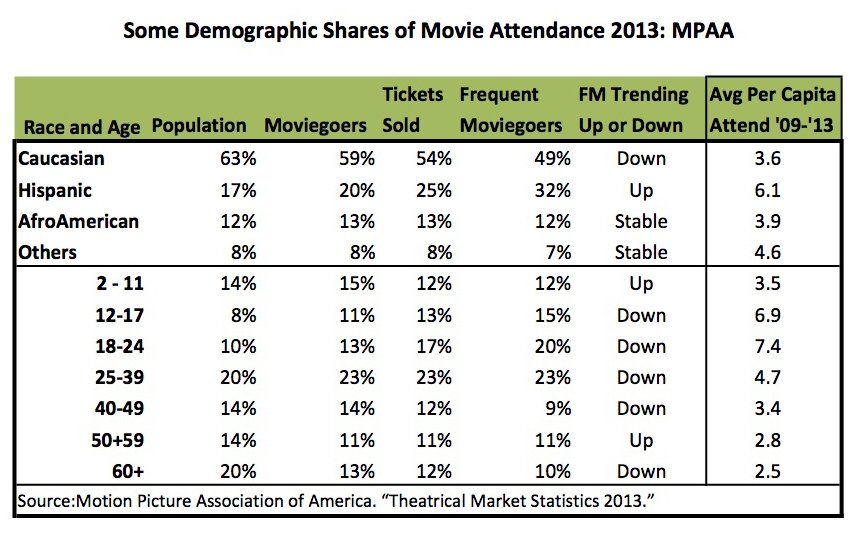
MPAA attendance table Will movie theater attendance continue to decline? Given that our current economy means middle-income households are suffering from stagnant incomes and filled with deliberate consumers, movie ticket price increases may have deterred moviegoing – especially among middle and lower middle-income households and those with children. As was detailed in an earlier article in this series on the markets of formal preforming arts venues, fewer discretionary dollars have been a major factor in lowering attendance at those venues. A few dollars increase in movie admission prices may not seem like much to those in the top two household income quintiles or to a young creative type or a teenager. However, for those with more modest incomes or a household with children, the same price increase can be much more meaningful, especially when combined with costly purchases from the concession stand. While households with children now represent just 32% of all households, they are still one third of the movie theater market. Continued ticket price increases that are substantially above rises in middle-income household spending power – not just the CPI– would be a growing threat to movie theater attendance. In some market areas, these increases could push the size of the movie audience down towards the much smaller audience sizes of the formal performing arts venues.

DANTH’s 2008 research report on downtown movies concluded that the then biggest threat to movie attendance would arise if frequent movie goers diverted more of their movie viewing from movie theaters to their home TVs and mobile devices. Since frequent moviegoers were also the highest users of mobile devices and technology products, the potential for such a diversion seemed to warrant significant concern. The MPAA’s 2013 market report indicates that not much has changed in this regard:

“Frequent moviegoers tend to own more key technology products than the general population (adults 18+). Nearly three-quarters of all frequent moviegoers (74%) own at least four different types of key technology products, compared to 51% of the total adult population” (27).

While viewing diverted to high tech ancillary channels may well substantially decrease theater attendance, it is doubtful that it would approach anywhere near a major collapse. The earlier impact TV had on attendance showed that while there was a very significant decline, Americans still liked going to the movies. Something comparable in scale may happen with the impact of the high tech gadgets and online services. Furthermore, the high tech based immersive viewing and sound experiences provided by 3-D and especially IMAX are quite popular with those who are high users of tablets, smartphones, laptops, AppleTVs, Netflix, etc., and they fit well into a high tech entertainment culture. Whether or not there will be a tech-induced attendance decline and what its magnitude might be remain unknown, but the digital-induced audience diversion must still be considered a substantial potential threat.

Some interesting changes have emerged in the demographics of the movie audience and frequent moviegoers. Caucasians are still the largest racial group among moviegoers, 59%, tickets bought, 54% and frequent moviegoers, 49%, but these percentages are below their population share, 63%. Moreover, the trend over the 2009-2013 period was for the Caucasian shares to decline across the three movie audience variables. In contrast is the Hispanic-Latino audience that now accounts for 32% of the frequent moviegoers, 25% of all tickets sold and 20% of all moviegoers, although they now comprise just 17% of the national population. Afro-Americans and other racial groups have been holding rather steady in their shares of the movie audience variables. Movie studios may well want to take this demographic composition of their domestic audience into consideration when they decide which films to green light for production and distribution.

Perhaps the most interesting column in the above table is the one on the extreme right that shows average per capita movie attendance between 2009 and 2013 for each of the demographic categories in the table. For downtown theater operators, the per capita data can be quite useful for generating meaningful estimates of what their total annual attendance will be as well as who in their trade area will be accounting for most of the tickets sold. It also should be noted that:

  • Among the racial groups, Caucasians have the lowest per capita attendance, 3.6 times a year, while the Hispanics’ rate is 69% higher at 6.1 movie visits per year. This may impact on where movie theater operators will want to locate their new cinemas as well as the revenues of existing theaters
  • The 12 – 24 age groups still have, as they have long had, the highest per capita attendance rates. Regardless of the fuss some commentators have recently made about increased attendance in the 2 -11 and 50-59 age groups, those cohorts still lag woefully behind the teenager/young adult crowd who will nevertheless command the primary attention of studio execs and theater owners (28). However, the Hispanic market is about the same size and strength and may viably compete for comparable studio and theater operator attention
  • As is well known, the Hispanic segment of the US population is growing rapidly. With the Hispanic high attendance rate, could this growth bring about an equal growth in moviegoing – and one that might actually result in a structural net increase in movie attendance?

The growing importance of making moviegoing a special event. In recent years, a number of famous and well-regarded Hollywood filmmakers, such as James Cameron and Jeffrey Katzenberg, have come out strongly in favor of 3-D and IMAX movie formats. They have done so, because they realize that the future of moviegoing in the USA is significantly dependent on cinemas being able to provide a differentiated experience that can successfully compete with watching movies on a home TV or mobile devices. They want to make moviegoing again a special event. The efforts of the movie theater operators to bring dining into the movie-going experience, to provide not only improved stadium-type seating, but large plush seating, and to make 3-D and IMAX viewing a more everyday viewing experience also have the same objective. Many savvy real estate developers also have signed on, such as Rick Caruso, who made access to a major restaurant a key design component of a large multiplex in The Grove in L.A.

Visits around the country have demonstrated the importance of easy access to food and drink as a means of differentiating and enhancing the moviegoing experience and consequently contributing to successful small movie house operations. These food and drink operations are not four or five star eateries. Nor are they pricey. Some may specialize, e.g., a pizzeria, an ice cream parlor, a sausage house or a brewpub. Affordable places, especially those that appeal to kids and families, can play strong support roles for adjacent or very nearby cinemas. They do not have to in the theater building, but having them there can strengthen the theater financially by providing an additional revenue stream.

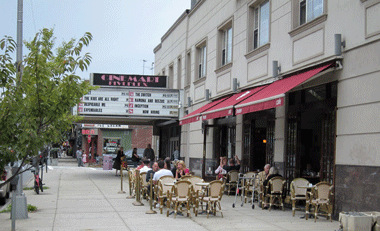
Cinemart Theater, its restaurants outdoor dining, with Eddie's in background

Cinemart Theater, its restaurant’s outdoor dining, with Eddie’s in background

One example that we know quite well is the Cinemart in nearby Forest Hills, NY. It has been in operation at least since 1949. It now is basically a second run theater. About 10 years ago it opened a casual and affordable restaurant in its building, with outdoor seating when weather permits, that can be enjoyed by moviegoers, but also attracts many other customers. The eatery both broadens the potential moviegoing experience while providing the theater operator with another source of revenue. Within 150 feet of the Cinemart is Eddie’s Sweet Shop, a 100+ year old and very popular ice cream parlor. On weekends and in the weekday evenings one can observe platoons of patrons entering Eddie’s after each movie ends.

Our field observations in recent years also suggest that a healthy, well-activated, energetic commercial district offering visitors a variety of interesting and affordable things to do can help warrant a visit to a movie theater located in it because the experience would be sufficiently special and different from home or mobile device film watching.

Unfortunately, there is a potential conflict between the need to keep the moviegoing experience affordable and the need to make that experience special, since the latter is likely to involve more expensive tickets and/or add-on costs associated with food and drink or other “special” items. Such conflicts are least likely to occur in wealthy residential areas – e.g., those where households in the top income quintile reside – since for those residents the incremental costs associated with enjoying a special event excursion to a cinema would be relatively negligible. This conflict is more likely to emerge in residential areas where household incomes are in the middle and lower middle ranges.

Implications for Downtowns

District organizations in small and medium-sized downtowns as well as in urban neighborhood commercial centers should recognize that even though their movie theaters have successfully transited the digital divide, their futures are sufficiently uncertain to warrant attention, concern and perhaps even some preliminary contingency planning (29). These cinemas are such important assets that the significant negative impacts of their closures would ripple strongly through their districts and surrounding communities. Their importance was recognized by the communities around the country that organized in some manner to help them make the digital transition and survive.

However, a number of other district organizations did not become involved because they were either unaware of their theater’s situation, or thought it was the theater operator’s role – not theirs – to make the digital transition, or felt they did not know what they could do to help. In response, one might argue that:

  • As stewards, not just of the of their district’s physical condition, but also of its economic well-being, they should have been aware of their theater’s problems and done so within an actionable timeframe – especially since a movie theater is such a strong and irreplaceable asset
  • Though a district organization obviously had no obligation or role to undertake on its own a movie theater’s digital conversion, the cinema’s strategic economic importance certainly warranted the organization helping the theater operator to do so — or to facilitate bringing in a new operator who could
  • The experiences of towns in ND and the Adirondacks show a number of tools communities and district organizations might use. Crowdfunding is certainly one of them. Also, Josh Bloom has written about a number of community enterprise tools that might be used to help keep downtown and Main Street businesses open that could be applied to a movie theater (30). Furthermore, a number of states appear to have funding programs that can be tapped to help save movie theaters. An empty toolbox is no longer an excuse for inaction.

With the digital transition almost completed, movie theater operators no longer face an immediate threat to their survival – other than those arising from normal day-to-day business activity. Nonetheless, there are uncertainties present that might soon generate new meaningful threats:

  • Will the studios and theaters continue to increase ticket prices and to the extent that there is a growing reduction in moviegoing among deliberate consumers?
  • Will improvements associated with making watching movies in a theater a stronger special occasion translate into higher ticket prices that also reduce moviegoing among our deliberate consumers?
  • Will the studios shorten the “theatrical window” and release most new films much sooner into the ancillary distribution channels?
  • Will the studios’ focus on the international box office lead to films that do not appeal to significant domestic market segments?
  • Will technology produce new gadgets, e.g., virtual reality devices, that can make home or mobile viewing similar to watching a movie in a theater? Or will the costs of cable connections and streaming services rise so much that they make theater prices more competitive?
  • How do the changing rates of moviegoing among demographic categories translate into likely attendance in a downtown’s market area?

Happily, most downtown organizations now need not worry intensely about their cinemas, yet it is not the time for them to completely look away. During a crisis is not the time to figure many things out. It might be very useful for them now to:

  • Keep abreast of their theater’s situation – including changes in attendance rates — and alert to relevant happenings in the film industry
  • Explore how existing and planned district amenities and activity offerings can be marketed to make district moviegoing even more of a special occasion. Note: this way way of improving a cinema’s ” special occasion” capability does not entail costs that have to be passed on in higher ticket prices
  • Think about what they would do if their theater became endangered to help raise money, attract patrons, find another operator or create a new form of ownership for the theater
  • Give thought to other communities, local organizations and government agencies they could work with should a threat emerge.

 ENDNOTES

1. Motion Picture Association of America. “Theatrical Market Statistics 2013.” P.10. Hereafter referred to as MPAA. http://www.mpaa.org/wp-content/uploads/2014/03/MPAA-Theatrical-Market-Statistics-2013_032514-v2.pdf

2. Ibid. and https://www.ndavidmilder.com/2014/03/the-new-normals-challenges-to-developing-a-downtown-entertainment-niche-based-on-formal-entertainments-part-2-the-audiences.html

3. See: https://www.ndavidmilder.com/2014/03/the-new-normals-challenges-to-developing-a-downtown-entertainment-niche-based-on-formal-entertainments-part-2-the-audiences.html . Hereafter cited as Part 2.

4. MPAA p13

5. Melissa Hart of the Adirondack North Country Association, quoted in Stephanie Garlock , “Why the Switch to Digital Projectors Means the End of the Small-Town Movie Theater,” Atlantic Cities, Aug 28, 2013   http://www.theatlanticcities.com/arts-and-lifestyle/2013/08/why-switch-digital-projectors-means-end-small-town-movie-theater/6625/

6. Source: Motion Picture Assn Worldwide Market Research. Cited by Edward Jay Epstein, “Hollywood’s Death Spiral: The secret numbers tell the story.” Slate, Posted Monday, July 25, 2005, at 2:48 PM ET

7. Part 2

8. Part 2, MPAA

9. See Epstein in endnote 6

10. N. David Milder, “DANTH’s FOURTH LUSTRUM DOWNTOWN TRENDS ASSESSMENT 2008 Part 1: Downtown Movie Theaters Will Be Increasingly In Great Danger,” Danth Inc., 2008, p.14 https://www.ndavidmilder.com/wp-content/uploads/2012/05/trends_p1_films_08.pdf

11. Michael Hurley, “We’re About to Lose 1,000 Small Theaters That Can’t Convert to Digital. Does It Matter?” Indiewire, February 23, 2012 http://www.indiewire.com/article/were-about-to-lose-1-000-small-theaters-that-cant-convert-to-digital-does-it-matter

12. Patricia Leigh Brown, ” Movie Houses Find Audience in the Plains,” New York Times, July 4 ,2010http://www.nytimes.com/2010/07/05/us/05theater.html?pagewanted=all&_r=0

13. Melissa Hart of the Adirondack North Country Association, quoted in Stephanie Garlock , “Why the Switch to Digital Projectors Means the End of the Small-Town Movie Theater,” Atlantic Cities, Aug 28, 2013   http://www.theatlanticcities.com/arts-and-lifestyle/2013/08/why-switch-digital-projectors-means-end-small-town-movie-theater/6625/ ; Paul Post, “Small Theaters in Adirondacks Face Choice in Switch to Digital: Pay or Perish,” New York Times, December 25, 2013, http://www.nytimes.com/2013/12/26/nyregion/in-switch-to-digital-small-theaters-in-adirondacks-face-choice-pay-or-perish.html and telephone interview with ANCA staff

14. Telephone interview with ANCA staff

15. See, for example: http://teaneck.patch.com/groups/business-news/p/teaneck-s-cedar-lane-cinemas-to-reopen

16. See: https://www.kickstarter.com/projects/613557145/tivoli-cinemas-in-westport-go-digital-or-go-dark

17. MPAA p.5

18. Richard Corliss , “Five Things We’ve Learned in Five Years of Box Office Reports.” 10:00 AM ET 040514 Time.com. http://time.com/49440/five-things-weve-learned-in-five-years-of-box-office-reports/

19. See: Information is beautiful. https://docs.google.com/spreadsheet/ccc?key=0Aqe2P9sYhZ2ndEtDWmVXNi1FWmN5ei0yMlUwdXBIZ1E&hl=en_GB#gid=1

20. Doug Stone, “How do studios decide when to release a DVD for a theatrical release_ – Quora. July 3, 2012. http://www.quora.com/Movie-Business-and-Industry/How-do-studios-decide-when-to-release-a-DVD-for-a-theatrical-release”

21. http://www.boxofficemojo.com/yearly/ and http://www.bls.gov/data/inflation_calculator.htm

22. MPAA p.26

23. Brooks Barnes, “Battle for the Bigger Screen,” New York Times, April 11, 2014, http://nyti.ms/ORPuJm

24. See: http://www.gilsoncafecinema.com/index2.htm

25. Anand Giridharadas, “The Screen Is Silver, but the Seats Are Gold: AMC Theaters Lure Moviegoers With Cushy Recliners.” http://www.nytimes.com/2013/10/18/movies/amc-theaters-lure-moviegoers-with-cushy-recliners.html?pagewanted=1&_r=0

26. Ibid.,

27. MPAA

28. See endnote 18 and MPAA

29. N. David Milder, “Many Downtown Movie Theaters Have Closed: Some Lessons For Downtown Organizations,” https://www.ndavidmilder.com/2012/12/many-downtown-movie-theaters-have-closed-some-lessons-for-downtown-organizations.html

30. Joshua Bloom, “Community-owned Businesses: How Communities Become Entrepreneurs,” Main Street Now, March/April 2010. http://www.preservationnation.org/main-street/main-street-now/2010/marchapril-/community-owned-businesses.html. See also Kennedy Smith, “Capital Thinking: Creative strategies to support at-risk businesses”, Downtown Idea Exchange, February 2012   http://www.downtowndevelopment.com/perspectives/dixperspectives020112.pd

© Unauthorized use is prohibited. Excerpts may be used, but only if expressed permission has been obtained from DANTH, Inc.
Posted in BIDs, Central Social Districts, Creative Class, Downtown Niches, Downtown Redevelopment, Economci Development, EDOs, Entertainment, Entertainment niche, Formal entertainment venues, movie theaters, New Normal, Planning and Strategies, Small Towns, Suburban Downtowns, The Arts, Trends |

Some Key Aspects of the New Normal for Downtowns: some emerging challenges ©

Posted on December 8, 2013 by DANTH

Article 1 – Part 2

N. David Milder


Author’s Note for Downtown Curmudgeon Blog and Newsletter Readers

A number of readers of the Downtown Curmudgeon blog have asked me to write an article on the new normal for downtowns that I have referred to in many of my blog postings in recent years. In response, I have planned a series of articles that will be posted over the coming six to eight months.

This is the second part of the first article in that series. It focuses on providing a description of the critical characteristics of the new normal and some of the emerging challenges downtown organizations now may face under it. Proper treatment of this subject requires sufficient space and cannot be done within the usual short take format of most blog posts and email blasts. While I have tried to be economical in my use of words, this article is almost 12,000 words long, even when I have skimped on examples and skipped using data tables and other illustrations. I have divided it into two parts. Each part will be posted to my blog and emailed separately.

Later articles in this series will cover such topics as the arc of downtown revitalization, the potential implications of the new normal for downtown development projects and BID programs.

Some of the Challenges Emerging Under the New Normal

Downtown revitalization is a process that never ends because: change is unavoidable and downtowns will consequently face new challenges; downtowns will have new assets and liabilities that will call for them to amend their strategies and visions of the “promised land.” Consequently, downtowns under their new normal can expect to face important challenges. Below are some that already have arisen. Downtown prosperity does not mean the end of downtown challenges — and it is important that prosperity’s joys do not limit downtown leaders’ awareness of the challenges. Following are some challenges that I think are among the most important. Here, again, my discussion is intended to be illustrative, not exhaustive or definitive.

1. The Deliberate Consumer. The Great Recession brought into sharp national focus consumers who act more cautiously and more deliberately in their purchasing decisions. This has impacted downtowns along every dimension where consumer behaviors and expenditures are important: retail purchases; housing rentals and purchases; entertainment admissions and equipment; transportation modes and use; healthcare, childcare and eldercare services, etc.

Deliberate consumers put needs far ahead of wants, look for value in their purchases and are much more careful about the use of credit and loans than in previous decades (19). Initially, affluent households exhibited deliberate consumer behaviors, but this eased substantially as the impacts of the recession declined. However, for the broad group of middle income households in the nation’s second, third and fourth income quintiles, this behavior has hardly eased. Indeed, it is part of a trend for a growing number of middle-income families to face strong economic stress that dates back at least to the mid 1990s and is expected to continue on to at least 2021. As Warren and Tyagi outlined in their 2004 book, median incomes for these middle income households were long stagnant, while their disposable incomes were being constantly eroded by the ever rising costs of healthcare, childcare, and education tuitions and fees as well as by substantial interest payments on mortgages and credit cards (20).

More recently, additional stress has been added by the weakening in the job market, not only in terms of the number of jobs available, but also their reduced  skill levels, lower pay. Also, the private sector has a growing reliance on freelance workers, outsourcing jobs abroad and computerizing middle level management, technical and support functions. The ability of the stressed middle-income families to find discretionary expenditure dollars has been also impeded by their reduced use of home equity loans and more conservative use of credit cards.

Post Great Recession, the impacts of the deliberate consumer are being felt unevenly by downtowns depending on the degree to which their businesses and fee charging nonprofits rely on middle-income patronage. Those with lots of affluent households living in and near the district as well as strong tourist traffic, such as Midtown Manhattan and Chicago’s Miracle Mile, are least likely to be significantly impacted. Affluent suburban downtowns, such as Greenwich CT and Wellesley MA, are also unlikely to be significantly impacted.

Similarly, in large cities, the impact of the deliberate consumer on many large low-income shopping areas, where retailers and other businesses succeed because the population density allows sufficient aggregation of low household expenditures, has been comparatively small: they have few middle income users and their low-income shoppers always have far fewer discretionary dollars to spend or lose. However, several “ethnic downtowns” I’ve visited in medium+ sized cities have been improving in recent years by attracting more of the middle income shoppers living and working in their trade areas. They are being impacted by deliberate consumers.

Bottom line: Most of our nation’s downtowns rely on middle-income shoppers. In the new normal, these shoppers are behaving as deliberate consumers. The Great Recession did not create the deliberate consumers – their household income stagnation started a decade before –though it certainly worsened their level of economic stress. For many downtowns, the emergence of the deliberate consumer:

  • Provides a constraint on economic growth
  • Impacts on the  types of retailers and service businesses that can succeed and be attracted to their districts.

2. New Dynamics in Retail Markets. A recent article from McKinsey aptly characterizes today’s retail:

“The North American retail landscape looks quite different today than it did even ten years ago….. Some predict that retail will change more in the next five years than it has over the past century and that the extinction of brick-and-mortar stores isn’t far off. Our view is less dramatic, but we do believe that big changes are inevitable and that retailers must act now to win in the long term.” (21)

Retailers are being hit by subpar economic conditions and the deliberate consumer. Again from the McKinsey article:

“Economic indicators do not paint a rosy picture for retailers: budget deficits are mounting, unemployment remains high, and the average consumer’s balance sheet—while improving—remains shaky, for it has taken more than five years to recover the $16 trillion in net worth US consumers lost from peak to trough in the recent recession.”

The other powerful factor that continues to impact on the character of retail operations is the Internet. As of June 20013, online sales only accounted for 5.8% of all retail sales, but McKinsey estimates that it will rise to 15% by 2025, with few experts doubting that it will continue to grow significantly beyond that date (22). Additionally, a 2009 report from McKinsey estimated that by 2011 the Internet would play some role in about 45% of all retail purchases (23). The Internet is influencing both how brick and mortar retail space is being utilized and how much space is needed. Increasingly, successful retailers – large and small — have adopted a multi-channel approach that integrates e-commerce capabilities with the operations of their brick and mortar stores.

Lower Growth Rate. Industry forecasts indicate that the compound annual growth rate for retail sales over the next five years will be only about 3% to 4% instead of the 5% to 7% experienced in the decade before the recession and just a bit better than the 2.4% of the 2007-2012 period. Furthermore, these limited growth opportunities are most likely to be found by tapping the Boomer, Millennial and Hispanic market segments (24).

Show me the money: I strongly believe that stronger retail growth rates will not return until the income stagnation of middle class households is eroded. Periodic expenditure surges may occur as their consumer credit is used and repaid, but not long-term higher growth.

Significantly Reduced Demand for Retail Space. Together, the deliberate consumer, the growing power of e-commerce and slowed retail sales growth are having some profound effects on the retail industry. For example:

  • Retail chains have closed many stores (e.g., 4,500 just in “post-recession” 2012) and now look for fewer locations that average about 25% less space than their existing stores (25)
  • Many use the resulting cost savings gained from fewer stores and smaller formats to pay for improvements in their own e-commerce capabilities, while several big box chains are developing the smaller formats to ease entry into tight urban contexts
  • Nationally, the amount of retail space decreased by 259 million SF between 2001 and 2011 and is expected to drop by another 210 million SF by 2016 (26).  The number of real estate experts who recognize that the nation has far too much retail space has grown substantially
  • Today, only about one-third of the 1,300+ malls in the U.S. are high-growth, investment-grade properties; another one third are in deep trouble and prone to either closing or being re-purposed. (27) The successful malls are increasingly taking on the look and functions of successful downtowns and adding many non-retail functions.

Downtowns That Want Strong Retail Will Need to Work Hard to Get It and Keep It. Overall, downtowns consequently face a future in which having a robust retail sector is certainly possible, but it has become much more challenging to achieve and maintain than it was in the 15 years prior to the Great Recession. Most downtowns that want their retail to be strong will have to work harder and more proactively than they have in decades to get it. However, there is significant variation in the degree to which downtowns will feel their retail challenged as well as in the ways the challenges are manifested. For example:

  • Most importantly, retail chains have themselves become more deliberate and cautious, avoiding consideration of locations that are not proven and deemed high risk. Looking for fewer and smaller locations, they have become much more selective. That means, for example, most downtowns that have not established themselves favorably with GAFO retail chain site selectors effectively have been further downgraded as possible retail locations. For them, having a cluster of robust GAFO retail shops will depend on attracting and/or growing attractive independent small retailers. However, they probably still have the ability to attract convenience-type retail and food related chains. Furthermore, there are some downtowns that have successfully lured retail chains, but their stores have underperformed compared to others in their chain. They, too, face a downgraded potential for attracting new retail chains
  • Retail in large, “big league,” downtowns that have affluent residents living in and near the district as well as lots of tourism and a high daytime population continue to do well as reflected in asking retail rents that can reach $3,500 PSF (28)
  • The suburbs are saturated with retail; growth opportunities are shifting to dense urban areas and possibly some ex-urban areas. However, here again, downtown retail in affluent suburban communities remains stronger than in neighboring middle-income downtowns, and they continue to be favored by retail site locators
  • In many medium and large downtowns, small independent merchants are disappearing, sometimes at alarming rates, because of unaffordable high rents, reduced consumer demand and strong e-commerce competition. For example, the average sought retail rent in Manhattan in the Spring of 2012 was $116 PSF. (29) That means for a small merchant to afford renting a 2,000 SF store, the operation would need annual sales of roughly  $1.9 million to $2.9 million per year. In a thriving NJ suburban downtown, where retail rents are about $50 PSF, a merchant would need annual sales between $0.833 million and $1.25 million to afford renting that 2,000 SF shop. Such sales numbers require an operator with exceptional core merchant skills and strong financials, a treasured find in any downtown
  • In many medium-sized downtowns, GAFO retailers were among the hardest hit by the recession, the deliberate consumer and e-commerce. The potential for this type of retailing to return increases with improvements in the downtown’s regional economy, especially its housing sector
  • Many downtowns continue to report that when storefront vacancies are filled, the likely new tenants are personal and professional service operations, not retailers. However, many downtowns have benefited from such “pamper niches” – many others might be wise to follow their example (30)
  • Downtown food related operations (e.g. groceries and restaurants) and personal services have been comparatively strong from 2007 through 2012. In many downtowns, they provide the spine for the district’s revitalization. Nevertheless, their importance is too often underestimated and far too little attention is paid by retailers to leveraging the customer traffic they draw to the district.

Under the new normal, many downtown organizations, especially those whose trade area customer bases are dominated by middle income households filled with deliberate consumers, will need to take a new, in-depth look at their current retail and its market-driven prospects for growth. They then will need to formulate a strategy to achieve that growth. Some may conclude that the strong presence of the Boomer, Millennial and Hispanic market segments or the power of their strong existing niches (e.g., entertainment, wedding, home and hearth, etc.) is sufficient not only for growth by meeting unmet demand, but also for winning market share from competitors. Other downtown organizations may conclude that while growth in neighborhood/convenience type retail remains viable, their GAFO growth potential has significantly eroded or can probably only be achieved by relying on the attraction of small independent operators. Many, especially in small districts, may decide to focus on neighborhood/convenience type retail. Still other downtown organizations may decide to make retail growth a lower priority and to focus instead on leveraging other strong downtown assets such as their entertainment and pamper niches.

The new retail assessment that many downtown organizations need to undertake can benefit from a “right fit” approach that includes:

  • Getting a good handle on the types of retail functions, e.g., niches, they can attract given the emergence of the deliberate consumer, the impact of the Internet, the altered pattern in retail chain site location decision-making and the downtown’s ability to attract or grow quality small retailers
  • Having a workable estimate of how much market-supported retail space (in SF) each of these retail functions can provide
  • Identifying the stock of probably available retail spaces and assessing their ability to compete
  • Matching the market-driven demand for retail space with the downtown’s stock of probably available commercial spaces to determine such things as which spaces are strongly competitive and those that need to be improved or converted to non-retail uses, as well as how much new space should be developed.

Perhaps, more than ever before, as the interest of GAFO retail chains in many communities recedes, downtowns will need to attract or nurture quality small merchants if they want to have a strong group of attractive retail shops. However, this cannot be easily accomplished. Successful small merchants need appropriate skills (including the ability to use the Internet), sufficient capital, affordable rents and viable locations. Today, most downtown small retailer recruitment is like throwing a bowl of spaghetti against the wall and being lucky if a few pieces stick. Most downtown recruitment programs rush to find and are proud to sign new small retailers. Too few recruitment programs vet them to assess whether they will require assistance; fewer still then can link those “indies” that need assistance to appropriate technical assistance providers. Understandably, these are complicated and resource-eating tasks and difficult for downtown organizations with budgets under $500,000 to undertake. Nonetheless, something like this will need to be done in numerous downtowns if they are to have any meaningful amount of quality GAFO retailing. Consequently, many downtown organizations may need to start thinking about expanding the range of functions that are included in their understanding of their district management mission.

While discussions about the technical assistance needed by a downtown’s small retailers often centers on finances, in today’s world their need for technical assistance that can help them gain an effective Internet presence is growing rapidly with each passing day. In many downtowns, the Internet capabilities of their small merchants will determine the attractiveness, strength and viability of the district’s retailing. If the downtown organization does not provide or facilitate the needed technical assistance, then who will? Here again, the costs in staff time and money admittedly can stress the budgets and skill sets of many downtown organizations.

So far, no model program has emerged for overcoming this impasse. Here are a few thoughts about developing one:

  • Effective downtown organizations are smart about often getting other organizations to do what the downtown needs. Can they get other organizations to help provide the needed Internet technical assistance?
  • Perhaps several downtowns can band together to reduce the costs of developing and operating such a program through the creation of a consortium or the use of an umbrella organization such as a county EDC or the local SBDC
  • However, whichever organization is the technical provider, it is essential that its program be correctly designed to avoid problems that have hindered other attempts
  • The biggest need for help will probably be with retailers having fewer than five employees
  • Many of these merchants have been scared off by overly complex and costly types of e-marketing tools or programs that consultants have offered them. Some merchants have actually tried e-commerce tools and found them ineffective and/or off-putting
  • The two basic marketing objectives the small merchants should focus on are a) being found easily on the Internet and b) cultivating existing customers
  • Many small merchants can achieve both of these objectives by using relatively inexpensive and easy to use Internet tools (31).

Bottom line: downtowns face a future in which having a robust retail sector is certainly possible, but it has become far more difficult to achieve than it was in the 15 years prior to the Great Recession.

3. Some New Dynamics in Downtown Development. On the positive side, Christopher Leinberger has made a strong case for “walkable urbanism,”, i.e., the creation of urbanized environments ”… in which most daily needs can be met within walking or rail-transit distance of one’s home,” being today’s major development trend.”

Others talk in terms of an overlapping concept, transit-oriented development (TOD), that can be defined as “higher-density mixed-use development within walking distance – or a half mile – of transit stations” (32). Walkable urbanism seems to give more emphasis to walkability while TOD pays more attention to developing around transit stations, but both approaches overlap in stressing the values of pedestrian friendly environments and easy access to transit.

Leinberger also notes that:

“Pent-up demand for this type of development has been proved convincingly during the housing collapse of the past three years (2008-2010 when) most of the housing decline occurred in the overbuilt, automobile-dependent suburban fringe while walkable urban places generally maintained their home values” (33).

A study released in 2013 — commissioned by the American Public Transportation Association and the National Association of Realtors and that was prepared by the Center for Neighborhood Technology — strongly confirmed Leinberger’s observation finding that:

“Across the study regions, the transit shed outperformed the region as a whole by 41.6 percent. In all of the regions the drop in average residential sales prices within the transit shed was smaller than in the region as a whole or the non-transit area. Boston station areas outperformed the region the most (129%), followed by Minneapolis-St. Paul (48%), San Francisco and Phoenix (37%), and Chicago (30%)” (34).

In addition to the benefits of living in more walkable, urbane communities and enjoying “more resilient residential property values,” the study found households living in transit sheds had better access to jobs and lower average transportation costs than the region as a whole” (35).

TOD has been especially of value for many suburban downtowns that have commuter rail stations.

Leinberger also presents an interesting argument that, although it is significantly harder to finance “walkable urbane” projects, they can be very attractive to investors, especially patient equity providers, because:

“…There could be significantly higher cash flows as the project matures. Unlike conventional development where cash flows have been hybridized to be loaded at the front end—the result of lower construction costs for simple commoditized product—it appears that cash flows from walkable places get better over time. Value spirals upward as the critical mass of a walkable place is achieved and enhanced. As more development takes place within walking distance, there are more people on the street and therefore rents and sales prices go up, resulting in land and building values rising, which leads to increased cash flows and so it continues upward as more development is added to the area” (36).

Economic factors combined with changes in the ways tenants want to use their leased spaces have altered the nature and strength of demand for downtown retail spaces, offices and housing units.

Retail. As mentioned above, nationally, there is significantly less demand for retail spaces and much of the current inventory needs to be repurposed. Also, significant changes are appearing in the ways that retail spaces are used because of the Internet, and their full impacts have yet to be manifested. For example:

  • There is less need for on-site space to store inventory, especially with large, low turnover items
  • There is more need for space for wrapping and shipping e-purchased items, picking up e-purchased merchandise, consumers touching and feeling merchandise
  • Sales transactions increasingly are done by self-checkouts or by salespersons throughout the store using smartphones or tablets, e.g., Apple stores, Home Depot, CVS
  • Internet searches mean that more retail stores are turned into destinations and such destinations have less need for the most prime locations

Regarding downtown development, these trends now are most visibly playing out in the reduced aspirations for retail growth found in many downtowns and the more frequent resistance to including retail in mixed-use residential projects in suburban downtowns. For example, it is causing some communities, such as Arlington County, VA, to revise zoning laws to allow other uses in addition to retail in ground floor commercial spaces, because so many retail spaces were not being leased (37). I also have either heard developers state or read about developers in CO and CA saying, that they preferred not to include retail in their downtown residential projects because it is so hard to get credit worthy quality tenants and that the revenues from residential use of the ground floor space would be greater and more reliable. Most of the projects of the developers I spoke to would be located in the downtowns of upper middle-income suburban downtowns, where they see signing GAFO retail chains would be costly, time-consuming and increasingly uncertain of success. Recently, I have also seen a mixed use project on a highly trafficked hipster street in Brooklyn in the process of converting ground floor retail spaces into residential units, though I think that ground floor retail in new mixed use projects is generally secure in dense urban locations.

In the types of downtowns where developers are showing resistance to putting ground floor retail in their residential projects, the downtown organization and, most importantly, the municipality’s leaders need to:

  • Decide if they really want more retail and not just because they and their voters might like it, but because there is good evidence to suggest that a) there is market support for this additional retail space and b) which kinds of retailers are most likely to be interested in it
  • Be prepared to offer developers incentives for embracing retail into their projects. They might include assistance in developing marketing information and collaterals, identifying qualified small merchant tenant prospects and some form of financial incentive, e.g., low cost loan, pilot, TIF, etc.
  • Develop a special incentive program to make rents in new mixed-use buildings more affordable to more small merchants.

For some time now, many downtown economic development officials have viewed mixed-use projects as the best way to provide the Class-A, vanilla box retail spaces needed to attract high quality GAFO retail chains. However, under the new normal, a significant number of downtowns may no longer have the potential for recruiting the GAFO retail chains, though there still is significant local market support for this type of retail activity. In such situations, the best path for realizing the GAFO growth potential is through the recruitment of competent small merchants. They, in turn, are unlikely to afford the rents sought for newly constructed retail spaces. In fact, they may not require such vanilla box spaces to succeed. Frequently, they probably would be best served by leasing a storefront in a competitive downtown location that is in good condition and then making such additional improvements deemed advantageous and affordable. Under such a scenario, more downtown housing will still remain highly beneficial for the downtown, but without pedestrian friendly storefronts on the ground floor, a large residential building on the main commercial street can be a pedestrian dead spot. Perhaps, such a residential building then would be best located around the corner and down a side street? In other words, in numerous downtowns, the mixed-use project model may no longer be either viable or optimal.

Offices. Under the new normal, the character of office development also appears to be changing in very significant ways because of the Great Recession and alterations in the ways people work and use office spaces. The demand for space is being reduced by large corporations, forced to cut costs by the Great Recession and then taking a much more rigorous assessment of how much office space they actually need and the rents they pay for it. As a result, they are re-signing leases for or moving into smaller office spaces. Consequently, as a 2011 article in CoStar’s e-newsletter reported,  a symposium of office development experts convened by BOMA found that we now “…have roughly all the office space (in aggregate) that we will need” (38). One expert has suggested that the industry should entertain the possibility of a 20% decrease in office space demand, because, given the current trend, that may well be the long-term implication for office building landlords and developers (39).

There is little doubt that, as a result of the new corporate leasing scrutiny, the ratio of leased space per office worker (SF/worker) has dropped significantly – employees are working in smaller offices with reduced spaces for themselves. The question is by how much? The answer is critical to assessing the scale of the downturn in demand. In discussions about it neither the previous ratio that is being used as a reference nor the current ratio are well evidenced. For example, one observer claims that that the ratio at some unspecified time in the last decade was 250 SF/worker and has dropped now to 185 SF/worker (40). It seems more likely that the 250 SF ratio was applicable to big city corporate back office operations (which have long since left our major city centers) back in the years of rapid office growth during the1980s. I believe a 200 SF/worker ratio was the more common yardstick in the 2000s. Furthermore, a 1994 Arthur Anderson report then claimed that the ratio would soon be 175 SF/worker (41). Also, there has long been a difference in space utilization between downtown and suburban locations. Finally, another observer of the current scene noted that some high tech firms in CA had seven workers per 1,000 SF, which translates into an 143 SF/worker ratio (42).

The demand for office space is impacted not only by the growth in the types of jobs that require office space, but in how the office space is used because this will influence on how much space is needed per worker. As one participant at the BOMA symposium argued:

“But to remain competitive, the existing stock of commercial real estate must be reconfigured to keep pace with an increasingly mobile, Internet-connected workforce; ongoing changes in technology, and to support the way companies are structuring their staffs to foster more collaboration and efficiency, while also addressing the values and attitudes of new generations of workers “(43).

Increased telecommuting, flexible work schedules, the untethering of workers from desks to enhance collaboration and increase face-to-face client contacts have combined to increase employee density in major office buildings and reduce the demand for office space. For today’s office worker, according to another of the BOMA symposium experts, the ideal situation may be: “(W)here you go into the office two or three days per week and work remotely the other days, which reduces our carbon footprint by 20% – 40% and has a huge impact on improved quality of life “(44).

Many of these changes in the ways office employees do their work and utilize space have been influenced by patterns developed in high tech firms such as Google and are preferred by the growing number of Millennials and the creative knowledge workers among them.

The potential negative impacts of the new normal’s altered demand for office space on development are:

  • Rather than expanding by millions of square feet in the future, experts expect the total office market size in the U.S. to remain approximately at its current size, with significant new construction to replace obsolete buildings. Fewer new downtown office buildings will be built”
  • Existing downtown office buildings that are not configured to meet the new work habits of office workers will have languishing leasing efforts. A lot of existing downtown office buildings may have to be renovated if they are to be competitive
  • Downtown retailers and eateries will have a significantly reduced office worker market because the telecommuters and flex-timers will spend much less time in the district.

However, there is a potential upside for downtowns that can provide “a dynamic, experience-rich environment,” i.e., strong CSD functions. As the CoStar article notes:

“The lesson for companies (and the investors and building owners who want to have them as tenants) is that younger workers prefer to work in a more dynamic, experience-rich environment, such as an urban- type setting offering different entertainment, cultural and transportation options (45).”

Downtowns with strong CSD functions will consequently continue to have a distinct advantage in a highly competitive office market, while listless downtowns will probably be weaker competitors than ever.

Coworking spaces are an interesting example of how the quantitative and qualitative changes in the ways people work and use office spaces also offer growth paths for downtowns — and not just for the very large ones. These shared spaces help fill the essential needs of entrepreneurs and freelancers to build their professional networks and collaborate with other small businesspeople. These shared spaces average about 6,000SF and provide such features as: desks (“hot” and dedicated), private offices, conference room(s), kitchen, lounge, Wi-Fi Internet connections, 24/7 office access, and equipment for printing, binding, faxing, scanning, photocopying, etc. Very importantly, the spaces are also programmed for: “networking events, collaboration and mentoring, one-on-one assistance, business planning topics, business management topics, B2B, B2C, B2G activities and technical skills training (46). They also can provide connections to such technical assistance providers for small firms as SCORE, SBDCs, local government agencies, local university programs, etc.

The clients for coworking spaces are most likely to be active in occupations associated with Richard Florida’s creative class construct such as: computer and mathematical; life, physical and social science; architecture and engineering; education, training and library; arts, design, entertainment, sports, media; business and financial operations; legal; healthcare practitioners and techs; high-end sales and sales management.

An international survey of coworkers by Deskmag found that, as might be expected, 85% of the coworking spaces are in cities having populations of 100,000+. The large city spaces are near colleges or universities and have other coworker spaces within their market area. The coworker spaces in the smaller communities tend to be smaller, but the desk utilization rates are similar to those of the spaces in larger cities. However, the small city coworkers are older and wealthier than their large city brethren. Also, as might be expected, the spaces in smaller cities draw from a relatively larger area in which there are no other coworker spaces. Coworker spaces apparently do no conflict, but complement with the use of home offices, probably by providing the opportunities for vital business related social interactions that working alone at home cannot: ”Nine out of ten coworkers also work outside their coworking space, regardless of the size of their city. The most popular alternative is still the home office (around 80% for both groups” (47).

DANTH, Inc., in a recent unpublished analysis, reviewed 20 suburban communities in the New York-NJ metro area and concluded that coworker spaces would be most viable towns that are true commercial centers, and they are likely to be county seats.

The Deskmag survey also found another very important difference between the coworkers in small and large communities: “In towns, one in three coworkers reported using coworking spaces to establish or grow a business. In cities, they number only one in ten.” In larger cities, coworkers are more likely to be freelancers and they do report that using the coworker spaces does increase their income. This is important because:

  • Coworker spaces may help bolster a community’s or county’s economic well being by helping freelancers get more assignments and increase their household incomes. A 2010 report by Intuit on the 20 trends that will shape the current decade predicted a strong increase in the size of our “contingent workforce” – of which freelancers and individual subcontractors are substantial components – will grow from about 25% to 30% of the workforce in 2010 to about 40% in 2020. Also, this study reported that 80% of our major corporations plan to substantially increase their use of contingent workers (48). Freelancers have unsteady incomes and no benefits and usually make less annually than someone with a full time position doing comparable work. As a result, the growth in the contingent workforce could have a significant weakening effect on many communities as a significant number of their residents are shifted into the more unstable and lower paying contingent employment. To the degree that coworker spaces can help freelancers get more projects and increase their incomes, they can be a useful tool for ameliorating this situation and thereby helping the community to maintain its economic well-being
  • Coworker spaces also may help many communities in the 20,000 to 100,000-population range to generate the jobs they are looking for. Besides their own jobs, freelancers are not job creators – they are self-employed, not employers. However, as is well known within the economic development community, small growing firms are our job creators. Furthermore, as they grow so does their demand for office or industrial spaces. Coworker spaces in these towns attract firms that want to grow and apparently do help many of them to achieve that objective.

Housing. Besides significantly reducing both demand for and the construction of housing, the Great Recession also influenced downtown projects by encouraging a shift in consumer interest from purchased units to rentals. In some parts of the country, this shift had started prior to the recession, but the strong downturn really deepened and widened the scope of this trend. Some housing experts expect it to diminish when the economy recovers; others see it as being with us for a very long time as our housing market increasingly looks like those found in Western Europe (49).

Housing in and very near to many of our downtowns is now for the affluent and financially comfortable. For example, in September of 2013, the average rent for an apartment in Manhattan was estimated at $3,862/mo; the median rent was $3,087 (50). To not be “rent burdened,” i.e., not have to spend more than 30% for the median rent, a household would need an annual income of $123,480. Googling “high downtown rents” brings up many webpages about high downtown rents and condo/coop prices in many of our larger cities. My field observations suggest that the same trend, if not to the same financial heights, is present in many of our medium-sized cities and suburban communities. While the presence of the affluent and financially comfortable is a strong asset for any downtown, the associated high cost of housing means that affordable housing has become an issue, not just for the poor, but also for the middle-income household members who are often skilled and essential workers for downtown businesses.

On the positive side, this has lead to the diversion of middle-income demand to neighborhoods that were formerly decayed and housing lower income residents and the revitalization of those neighborhoods. Some have the housing stock that makes their rehabilitation understandable, while others do not. All, however, have comparatively short commutes to the CBD that are often facilitated by easy access to a robust public transit system.

One result in both the downtown and the desirable close-in neighborhoods is the repurposing of underutilized schools, churches, office buildings, etc. for residential uses. Indeed, a recent report by the CoStar Group claims that: “more than half of office space removed from inventory returns to the market as residential” (51).

Another response to this situation, especially in cities such as Atlanta, Cincinnati, Denver, Pittsburgh, Seattle, St. Louis and Washington D.C., where the share of single person households exceeds 40%, may be the development of mini apartments that have about 350 SF. The mini apartments are not unusual in Tokyo and many European cities, and they have recently appeared in such American cities as Boston, Chicago, New York, Providence and San Francisco (52).

The popularity of downtown housing is also creating a challenge that takes form in lots of tourist residential owners who are only present for small portions of the year, even during the local tourists season, if there is one. In one Florida downtown I visited, most of the units in the district’s large residential buildings I walked by were dark. Local economic development officials lamented that this was the normal situation and one that they very much wanted to change.

UP NEXT: My next article in this series will be on the challenges facing downtown entertainment niches.


Endnotes

19.See: https://www.ndavidmilder.com/downtown-revitalization/the-deliberate-consumer
20.Elizabeth Warren and Amelia Warren Tyagi. The two income trap: Why middle-class parents are going broke. Basic Books, 2004.
21.Ian MacKenzie, Chris Meyer, and Steve Noble, “How retailers can keep up with consumers,” Insights & Publications, McKinsey & Company, October 2013 http://www.mckinsey.com/insights/consumer_and_retail/how_retailers_can_keep_up_with_consumers
22.See http://www.census.gov/retail/mrts/www/data/pdf/ec_current.pdf for current e-commerce stats
23.Steve Noble, Amy Guggenheim Shenkan, Christiana Shi, “The promise of multichannel retailing,” McKinsey Quarterly, October 2009.
24. See endnote 21. Two of these market segments are not new: the Boomers have been impacting retail for decades and DANTH was dealing with very large Hispanic markets back in the 1990s in the Bronx, West New York NJ and Elizabeth NJ. Back in the 1980s  and 1990s.
25. See endnote 21
26.Cited in: https://www.ndavidmilder.com/2012/10/the-new-normal-requires-more-dynamically-managed-downtown-organizations.
27.See endnote 26
28. Stephanie Clifford, “Street’s Sunny Side Costs Retailers More in Rent” New York Times, September 24, 2013 ttp://www.nytimes.com/2013/09/25/realestate/commercial/streets-sunny-side-costs-retailers-more-in-rent.html
29. N. David Milder, “Nail, Hair and Skin Salons: Bane or Boon?”  Downtown Idea Exchange. October 2005
30.See endnote 28
31. N. David Milder. E-Marketing: How EDOs Can Help Independent Downtown Merchants Engage Effectively in E-Marketing. Economic Development Journal (IEDC), Summer 2013, pp. 34-40.
32. See, for example, Center for Neighborhood Technologies, “Center for Transit-Oriented Development,” http://www.cnt.org/tcd/projects/ctod/
33. Christopher Leinberger, “A Model for Growth: Walkable Urbanism,” Urban Land,  September/October, 2010,  http://www.urbanland.uli.org/Articles/2010/SeptOct/Leinberger
34. Center for Neighborhood Technologies, “The New Real Estate Mantra: Location Near Public Transportation,” March 2013,    http://www.cnt.org/resources/the-new-real-estate-mantra/
35. See endnote 34
36. Christopher B. Leinberger, “Financing Walkable Urbane Projects,” Urban Land, January 2007 http://www.chrisleinberger.com/docs/By_CL/Financing_Walkability_0107.pdf
37. Rebecca Cooper, “Arlington looks to ease up on retail rules,” Washington Business Journal, Sep 26, 2013, http://www.bizjournals.com/washington/blog/top-shelf/2013/09/arlington-looks-to-ease-up-on-retail.html?ana=RSS&s=article_search&page=all
38. Tim Trainor, “Do We Need Any More Office Space? Experts examine far-reaching impact from changing demographics and ever-pervasive technology on the workplace of the future.” CoStar Group. http://www.costar.com/News/Article/Will-We-Need-Any-More-Office-Space-/134483?ref=100&iid=261&cid=DC6077B43E67ACADB224FF6D0AF89AB6;  I have taken much of this section from what I wrote in 2012: N. David Milder, “Office Development — We now have all the office space we need,” https://www.ndavidmilder.com/2012/01/office-development-we-now-have-all-the-office-space-we-need.html
39. Mark Heschmeyer, “Changing Office Trends Hold Major Implications for Future Office Demand: pioneered by tech firms in California, communal workspace model becoming more mainstream among big office firms.” CoStar Group. March 13, 2013. http://www.costar.com/News/Article/Changing-Office-Trends-Hold-Major-Implications-for-Future-Office-Demand/146580
40. See endnote 39
41. Arthur Anderson. “Draft Report: City of White Plains Comprehensive Plan, Economic Futures: The Alternatives.” 1994 – p.4
42. See endnote 39
43. See endnote 38
44. See endnote 38
45. See endnote 38
46. Place Dynamics, “Igniting an Idea:THE CREATIVE SPARK,” www.placedynamics.com, p.12. This is one of the best sources on this topic and I thank Mike Stumpf for so graciously sharing it with me.
47. “Coworking in Big Cities vs. Small Towns,” Deskmag, January 17, 2011  http://www.deskmag.com/en/big-city-vs-small-town-coworking-182
48. Intuit,  “Intuit 2020 Report?:Twenty Trends That Will Shape The Next Decade”    October 2010, http://http-download.intuit.com/http.intuit/CMO/intuit/futureofsmallbusiness/intuit_2020_report.pdf
49. Stacy Proebstle December 30, 2011   More NJ Families Will Rent Instead Of Own,” (Audio), http://nj1015.com/more-nj-families-will-rent-instead-of-own-audio/
50. See: http://www.elliman.com/pdf/57c5541a5c29aef8d1914567e1af02b593b23069
51. Randyl Drummer; Developers Increasingly Find It Can Pay To Convert Office Buildings Into Apartments and Condos: More than Half of Office Space Removed from Inventory Returns To the Market as Residential, October 29, 2013, CoStar Group Newsletter, http://www.costar.com/News/Article/Developers-Increasingly-Find-It-Can-Pay-To-Convert-Office-Buildings-Into-Apartments-and-Condos/153853?ref=100&iid=361&cid=DC6077B43E67ACADB224FF6D0AF89AB6
52. Wendy Koch, “Mini-apartments are the next big thing in U.S. cities,” USA TODAY,  August 1, 2013. http://www.usatoday.com/story/news/nation/2013/07/30/tiny-apartments-apodments-catch-on-us-cities/2580179/

Posted in BIDs, Business Recruitment, Central Social Districts, Downtown Merchants, Downtown Redevelopment, downtown retailing, Economci Development, multichannel retailing, New Normal, Office Development, retail chains, Small Merchants, Small Towns, Suburban Downtowns | 1 Comment |

Post navigation

Newer posts →

Recent Posts

  • Now is the Time for Many Downtowns to Grow Older Adult Member Communities
  • How downtown multifunctionality is packaged is a key to its success
  • “How Our Downtowns’ Three Most Important User Groups Can Help Their Sustained Recoveries”
  • The Cockamamie Conclusions andAssumptions of the Downtown Doom Loop Analysis
  • More Visitors, Not the 100% Return of Office Workers, Are the Key to the Full Recovery of Our Downtowns

Labels

  • 15 minute neighborhoods (2)
  • automated cars (4)
  • backdoor retailing (5)
  • BIDs (27)
  • Business Recruitment (29)
  • Captive Markets (10)
  • Central Social Districts (38)
  • Central Social Functions (6)
  • Change Agents (24)
  • clean sidewalks (2)
  • clean streets (2)
  • commercial nodes (11)
  • Contingent workers (4)
  • convenience (6)
  • Creative Class (31)
  • Crime (8)
  • CSDs (7)
  • DANTH (13)
  • Deliberate Consumer (13)
  • Downtown Garages (4)
  • Downtown Merchants (30)
  • Downtown Niches (64)
  • Downtown Redevelopment (70)
  • downtown retailing (66)
  • Downtown Visitors (5)
  • driverless cars (4)
  • E commerce (27)
  • Economci Development (54)
  • Economic Development (8)
  • EDOs (27)
  • Entertainment (44)
  • Entertainment niche (35)
  • Entrepreneurship (14)
  • fear of crime (9)
  • Financial tools (5)
  • Formal entertainment venues (28)
  • Formats Facades Signs (6)
  • Functional Diversity (2)
  • Housing (11)
  • Informal entertainment venues (26)
  • Innovations (33)
  • Jamaica Center (3)
  • Jobs (7)
  • Leakages/gaps (7)
  • Live-Work (6)
  • Living donor (1)
  • Luxury retail (7)
  • Market research (7)
  • movie theaters (23)
  • Moving People (3)
  • multichannel retailing (20)
  • Multifunctionality (2)
  • New Normal (50)
  • Office Development (11)
  • Older Adults (1)
  • Pamper Niche (9)
  • Parking (5)
  • Parks (3)
  • Parksmand public spaces (6)
  • Pedestrian traffic (19)
  • Planning and Strategies (52)
  • Public Spaces (25)
  • Remote work (4)
  • Remote working (2)
  • retail chains (30)
  • self-driving cars (4)
  • Seniors (1)
  • Small Merchants (36)
  • Small Town Entrepreneurial Environments (8)
  • Small Towns (36)
  • Social Media (3)
  • Sprawl (3)
  • Suburban Downtowns (21)
  • Superstar downtown (2)
  • technology (11)
  • teenagers (4)
  • The Arts (28)
  • time pressure (5)
  • Tourism (10)
  • Trends (50)
  • Uncategorized (34)
  • Up for Grabs shoppers (2)

Links

  • CCED
  • Planetizen

BACK TO TOP

83-85 116th Street, Ste 3D
Kew Gardens, NY  11418
Phone: (718) 805-9507
[email protected]

Copyright © ndavidmilder.com