The Arc of a Niche: The Bowery’s Home Lighting Niche

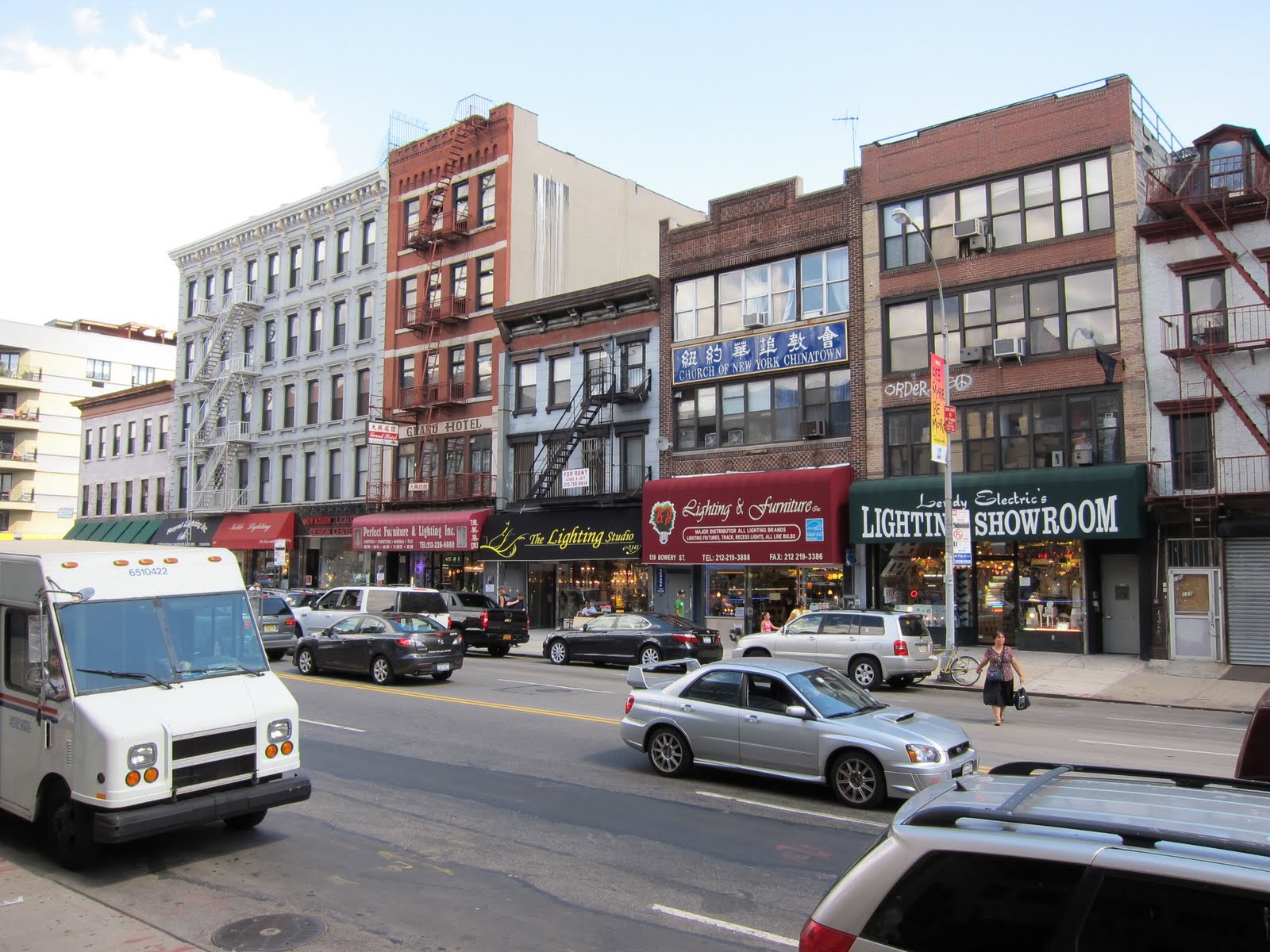
The key intersection for The Bowery’s home lighting niche, which is about 50 years old.


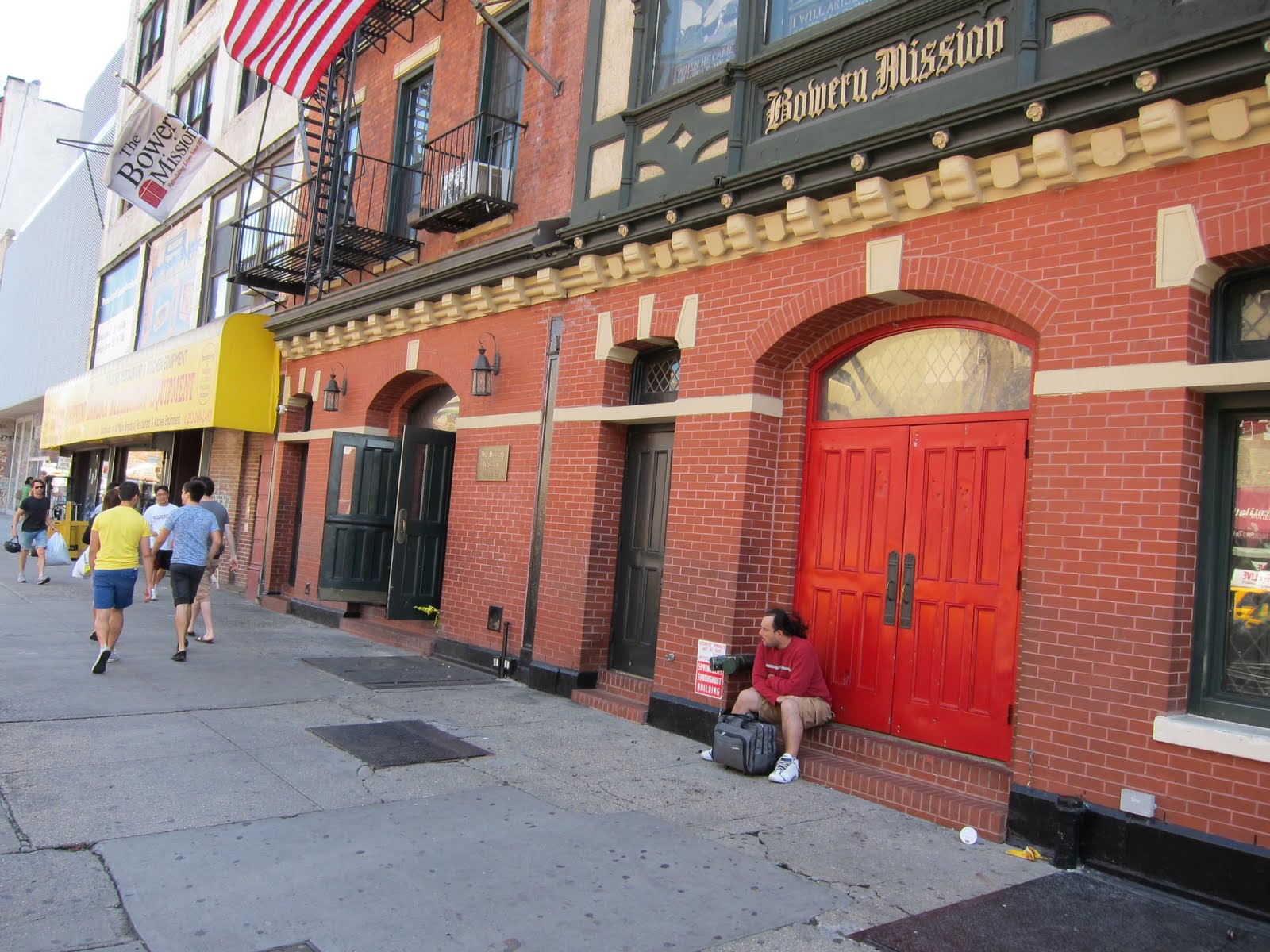
The Bowery Mission, a remnant of a famed, if unsavory, past


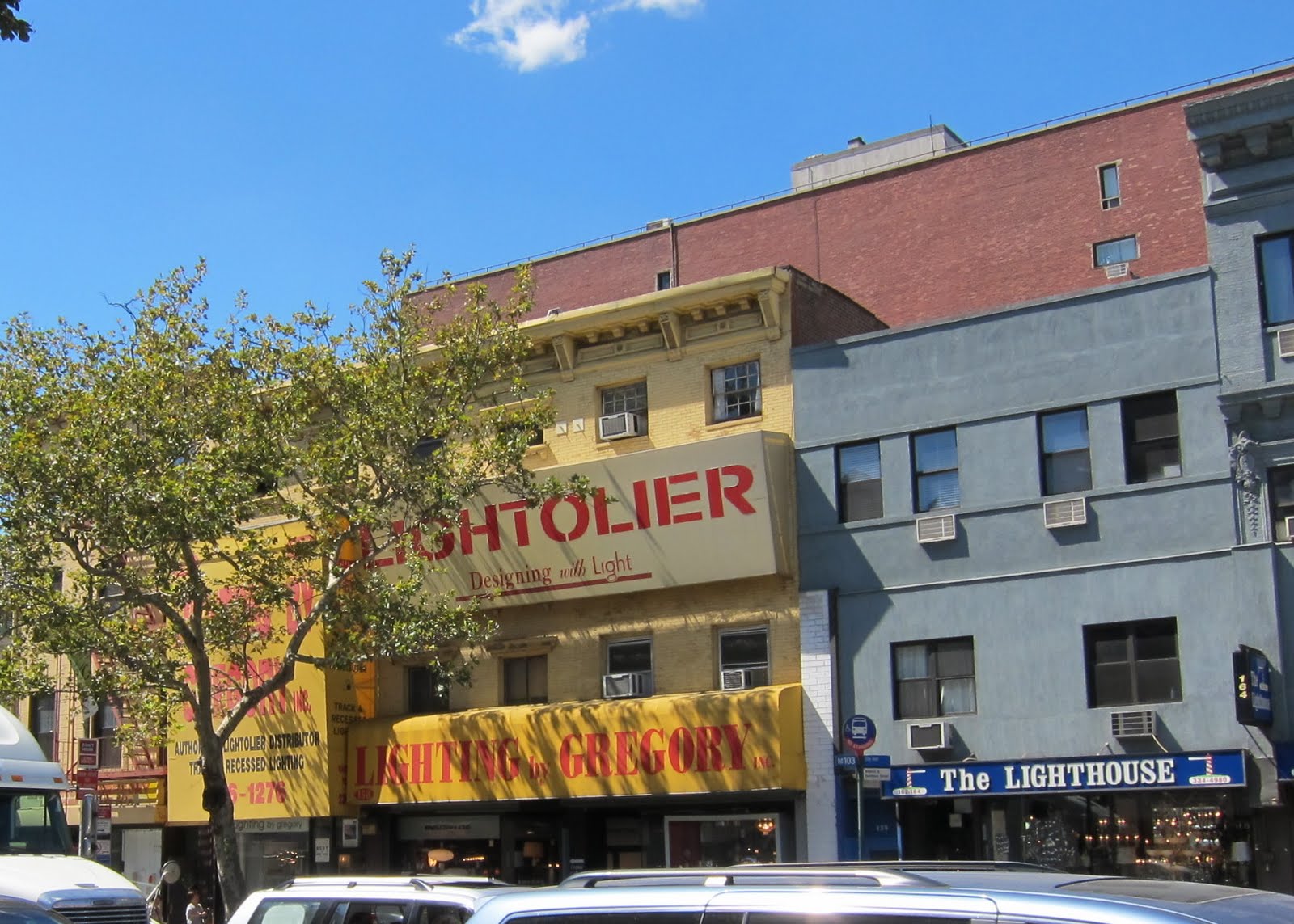
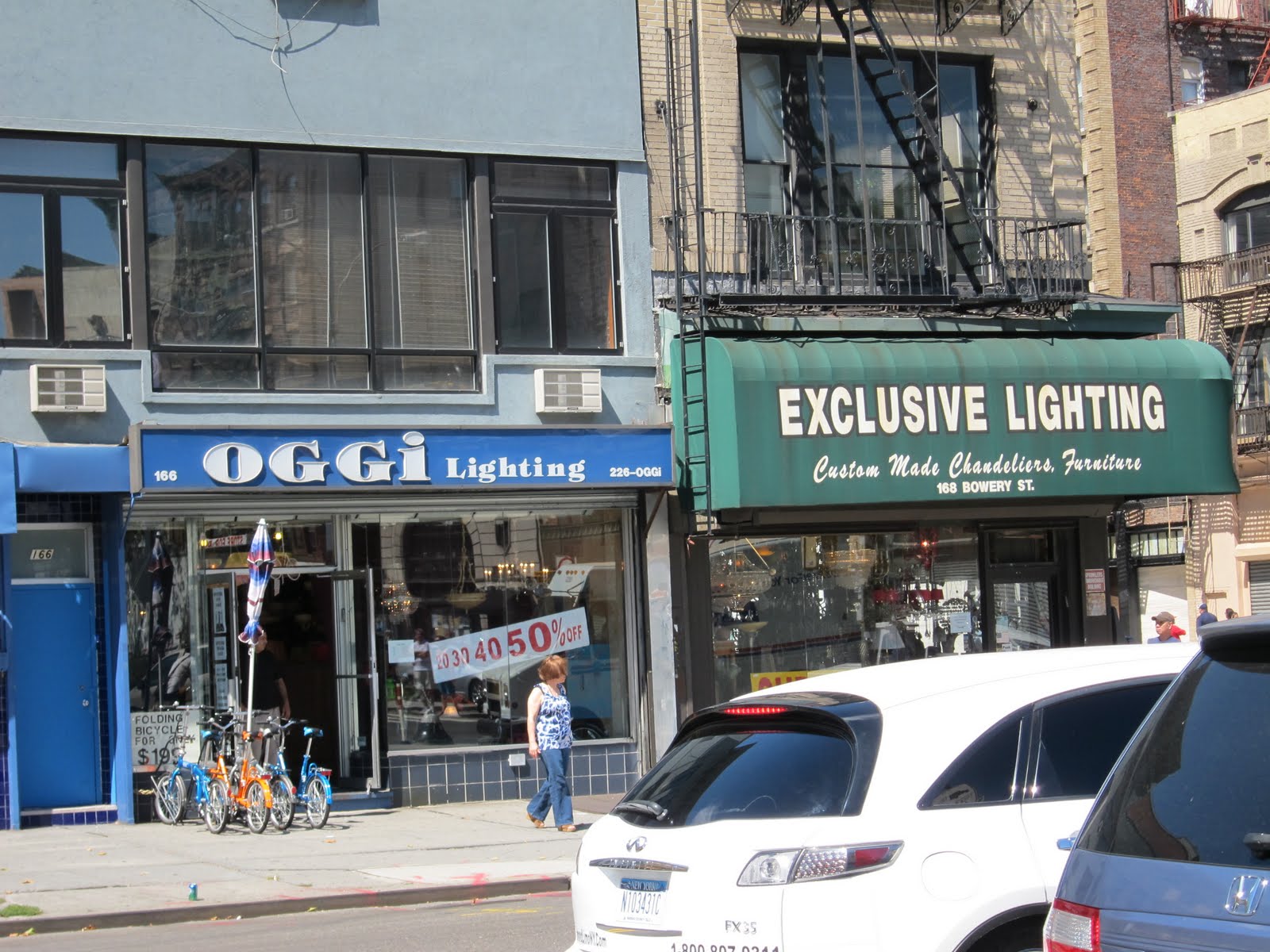
Some home lighting shops on The Bowery 1 


Some home lighting shops on The Bowery 2


Some home lighting shops on The Bowery 3 


My initial thinking about retail niches was greatly influenced by my experiences shopping for antiques in Waynesville, OH and for lamps in shops along The Bowery in Lower Manhattan. It has been almost 50 years since I made my initial visits to these places. Their antiques and home lighting niches still exist, though they have changed over the years. 

 
Waynesville is about 600 miles away, so I have not been there in many years. But, a few years ago, I did some telephone interviews. Though the antiques niche there reportedly remains strong, it has changed because the industry as a whole has changed. Two significant changes are: 1) a lot of merchandise is sold on consignment in large antique malls, where the dealers do not have to be personally on site and 2) internet sales.
 
The Bowery is much closer to home, about an hour away via public transportation.  When I first visited the area, back in the 1950s, it was best known for its run down bars with cheap drinks, poor alcoholics down on their luck and a collection of flop houses. When I next returned to the area in the 1960s it was to look for lamps in a cluster of home lighting stores. By the late1980s,  this home lighting niche had grown enormously, with most shops between Houston Street and Canal St seeming to sell home lighting merchandise. On a visit in the 1990s I estimated there were between 75 and 100 ships in this niche. My wife and I felt that too many them appeared to be indistinguishable from each other in size and merchandise and that consequently the whole niche seemed less attractive.
 
Since then the neighborhood has changed significantly. Property values have increased and so have the commercial rents. The Bowery is showing signs of gentrification. The cheap bars and SROs are long gone. Chinatown has expanded enormously. 
 
The merchants have also changed. The number of home lighting shops is now back down to about 20 and they are clustered on a two block stretch going south from Delancey Street. A restaurant kitchen equipment niche has emerged.
 
The largest and best known home lighting shops are among those that remain. Though much reduced in numbers, the niche is still relatively strong. A 50 year run is not bad for a retail niche and it certainly is not yet over. The niche remains a regional draw for shoppers looking for home lighting.
 
I hypothesize that the contraction of this niche was due to a collection of factors:
  • Rents became unaffordable for most of the small, marginal shops. Given the huge increases in Manhattan’s retail rents it is doubtful that the borough will ever again see a retail niche of the size this home lighting niche reached.
  • Some shops just aged out — the owners retired and their businesses ended with their departures
  • Too many of the shops could not differentiate themselves except on price — and many could not afford to compete in this manner
  • A new niche was competing for the available retail spaces.

It is also fair to say that this niche has helped revitalize a badly decayed, disreputable area.


AFFORDABLE DOWNTOWN RETAIL RENTS


Introduction. As we slowly emerge from the Great Recession the time has come for downtown organizations to work hard on encouraging small independent retailers to seek affordable rents and for landlords to offer them. If they do not, downtown retail will contract and street level storefronts will be occupied even more by financial and personal service operations – or remain vacant for long periods of time.

True, in many downtowns retail rents have declined during the Great Recession, often substantially. In one I recently visited, for example, asking retail rents have dropped from $45/SF to $30/SF and in some instances even $25/SF. But, as we creep out of recessionary conditions, it is critical that in most downtowns retail rents do not regain their unaffordable levels.

In the new normal, small downtown retailers will be facing increased pressures to keep their operations lean and mean because capturing sales from today’s deliberate consumers is far more difficult than from the abnormally free-spending shoppers of the 1990s and 2000s. One budget line item they can focus on is the cost of the spaces they lease for their stores. This is a major long-term business expense and it is important that these retailers do not pay more than they can afford. It is also a business cost where “newbie” retailers dominate those going astray, though badly inept or unscrupulous merchants also tend to pay a lot more than what savvy merchants would deem affordable.

Looking at the other side of the coin, it is also in the interest of landlords to offer rents competent retailers can afford. In the new normal, far fewer stores will be opened by national chains and, among those, a smaller percentage than in the past will be placed in downtowns. Landlords, as a result, will need many local independent retailers to fill their storefronts. This will also be true to a significant degree for those who have built new mixed use buildings with expensively constructed ground floor storefronts. Additionally, as their rents reach ranges considered unaffordable by savvy merchants, the more likely they are to attract incompetent or sleazy businesses and also more likely to have storefronts stand vacant for long periods of time.

Defining Affordable Retail Rents. A useful formulation for determining an affordable retail rent is roughly 15% of the shop’s annual sales. DANTH’s merchant surveys and personal interviews with merchants over many, many years as well as the work of other firms, such as Urbanomics, found that downtown merchants generally felt that they could afford total rent costs that were 8% to 12% of their annual sales. However, more recently merchants say they are OK with 15%. While there is certainly some error factor present here, 15% is probably plus or minus just a few percentage points off the correct number. The major thrust of the analysis presented below is not affected by this error factor.

In a typical medium-sized downtown, independent retailers with annual sales of $500,000 to $1 million are relatively rare. Most independent downtown retailers would be quite happy with sales in the $300,000 range and joyous with sales around $450,000. Though in large downtowns the sales happiness range can be higher, the 15% rule applies everywhere, so I’ll stick with the retailers in medium-sized downtowns to simplify my argument.

The table above depicts information about:

  • How much rent is affordable to retailers with $250,000, $300,000, $350,000, $400,000 and $450,000 in annual sales. You can do the calculations for higher annual sales
  • How many square feet of space this “rent money” can buy at various prices per square foot.

The table also shows how with increased rents more and more of a downtown’s most successful merchants cannot afford to occupy the amount of space they might even minimally need for their operations. Look at how quickly even “small” spaces in the 1,500 SF to 2,000 SF range become unaffordable. At $40/SF not even a retailer with sales of $450,000 can afford a 2,000 SF; at $50/SF even a 1,500 SF storefront becomes out of reach. Of course, for the $300,000 shopkeeper, that happened at lower rents: a 1,500 SF shop is unaffordable at rents of $31/SF and 2,000 SF at $22.50.

Affordable rents should be tied in with balloon leases, where rents increase at an agreed upon rate as the retailer’s sales grow. Some savvy downtown landlords are already using balloon leases.

To The Groaners. To the downtown managers and Main Street managers who groan that is impossible to deal with landlords:

  • Dealing with downtown landlords and doing it effectively is part of your job. If you are not doing it, start doing it. If you do not know how, learn how. If after all that you still can’t deal effectively with landlords, get another job.
  • Every occupation has jerks; but they also often have a lot of reasonable, effective and even innovative people. This applies to landlords, too.
  • Find the landlords you can work with to implement an affordable rents program, then use them as a model to recruit others
  • One thing is certain: if you do not try, nothing will happen.

To landlords and developers who groan that they need high incomes from their new and expensively constructed retail spaces to pay off their loans:

  • You are big boys, you like to brag that you are big boys, so act like big boys
  • You either goofed in your calculations or you really did not understand that in most downtown mixed use projects outside of places like Manhattan and downtown Chicago, etc., the residential and office rents, probably for some time, will have to subsidize the retail spaces. This is especially true of unproven, revitalizing downtown locations
  • Given the current economic conditions your options are really either affordable rents that will diminish your losses or long-term vacancies and continued lack of retail rental revenues

To landlords who believe they should get market rate rents as defined by the highest asking rents they’ve heard about in the district:

  • Your unaffordable rents are likely to produce vacancies, because so few accomplished retailers would be interested, or perpetual churn, because you are likely to attract inept or schlocky merchants who are prone to failing or disappearing
  • This will affect the resale value of your property and this is not a great time for any commercial property
  • Have you really calculated the difference between the income that an affordable rent will yield and the zero dollars you will likely reap from the months your stores stay vacant because you want higher rents?
N. David Milder

Backdoor Retailing

My October 29, 2009 posting on the new normal for downtown retailing prompted a number of requests for additional information about “backdoor retailing.” I am very happy to comply since, for some time now, that has been a topic I have wanted to write about, but just never got to.

Advantages and Disadvantages

Downtown merchants with backdoor operations have two customer streams and revenue sources. First are the walk-in shoppers they draw from the downtown’s pool of visitors. Every downtown business can draw from this visitor pool. Firms with backdoor operations also:

  • Sell to local businesses, organizations and even municipal agencies. These transactions and relationships fit in well with downtown sustainability strategies.
  • Sell to consumers, but out of their stores, and independent of walk-in traffic.

My observations suggest that firms with significant backdoor operations are usually stronger and stay in business longer than other firms in their downtowns. Moreover, these merchants are not inclined to passively sit on their duffs and just wait for shoppers to come to them, but they are more inclined than other merchants to be savvy about social marketing, both face – a -face and online (the subject of a future article).

This is not to say that they are untouched by economic downturns, as restaurants in NYC with large corporate catering businesses have recently demonstrated. In addition, the reduced dependency on downtown customer foot traffic potentially makes these firms less tied to their downtown locations as their backdoor operations grow. However, favorable downtown quality- of- life conditions can reduce the proability that they will actually relocate.

Traditional, Non-electronic, Backdoor Operations

Today, there are electronic and non-electronic variations on backdoor operations. But, the best way of conveying what these operations are like is to provide some examples of the traditional, non-electronic variety:

  • A retail tobacco shop in downtown Rutland, VT, that also was a distributor of tobacco products to merchants in Rutland and the surrounding region
  • A vitamin shop on Bergenline Avenue in West New York, NJ that both manufactured and distributed vitamins to merchants in the region
  • Paint stores in Englewood, NJ and West New York, NJ that have very large building contractor clienteles
  • A women’s clothing shop that took its wares to model and sell at local women’s clubs, PTAs, etc. (Unfortunately, while I remember reading about this on the web, I can’t find the citation in my files.)
  • Sporting goods shops here in Kew Gardens, NY and elsewhere that sell equipment to sports teams, leagues and schools
  • The plethora of restaurants in most downtowns doing off site catering
  • The Carvel in Bayonne, NJ – and I image elsewhere — that sell desserts to local schools, social clubs, etc.
  • A bakery in Woodbury, NJ, that supplied many local eateries with donuts, danishes, etc.
  • A well-known fish market in Maplewood, NJ that supplies over 40 restaurants
  • Nevada Meat Market that supplied many restaurants in Manhattan
  • A fruit and vegetable shop in Kew Gardens, NY that supplied local restaurants

Many downtown service operations also have backdoor components:

  • A dry cleaner in Kew Gardens does uniforms and work clothes for businesses throughout NYC
  • An upholstery shop in Washington, NJ that does work for well-known furniture stores in Northern New Jersey
  • Some hair salons and barber shops that serve non-ambulatory clients in their homes, nursing homes and hospitals

This list of examples of back door operations, though limited in length, is sufficient to show the broad gauge of their potential– and that such operations are certainly not confined to food products.

Online Backdoor Operations

The internet has brought a new dimension to backdoor operations. Merchants that have online storefronts with shopping carts and actual sales are engaging in electronic backdoor operations. The individual shoppers need not ever come to their stores. They are not walking in from the street. They may live in different states or even other nations and never have visited the merchant’s downtown.

On a more modest scale eBay allows downtown merchants to sell online a few items or groups of items without having to create and maintain a storefront of their own.

According to reports in the media and from downtown managers, a properly functioning web store can definitely strengthen some downtown merchants. I have seen a women’s apparel shop thrive because of their online store and I know of a collectables shop that survived through tough times because of its eBay sales.

But some perspective is needed here. Foremost, online sales make up only about 4% of retail sales. Also, most of our downtowns fall in the small and medium-size category and the overwhelming majority of their shops have modest annual sales revenues and very small staffs. Many of them may be able to create and maintain an inexpensive, uncomplicated website that provides simple information about the shop, its location and the types goods and services it sells. That might help drive some more customers into their shops. However, most cannot mount, operate and maintain a web store. Keeping the online inventory current and product shipment too often become killer tasks for small merchants. Some can do better by selling in a controlled manner on eBay. Most are probably best off not attempting electronic backdoor operations because they lack the computer skills, staff and money needed to succeed.

Cultivating More Backdoor Operations – Planting The Seed And Networking Local Businesses

While most merchants will not develop backdoor operations, my sense is that most downtowns have the potential for doubling or tripling their number. Over the years, my informal discussions with merchants suggest that more of the innovative types would try to develop backdoor operations if they simply had thought about them. This suggests that seeding the idea in the minds of the right merchants and then perhaps hooking them up with district merchants who already have successful backdoor operations might be a fairly simple and low cost way of starting to make it happen. Face to face meetings are probably a sure way to go. A low key workshop also would probably produce results – if the right merchants attend.

Also, a good starting point for many merchants is to explore what they could sell to the other businesses and organizations located in or near to their downtown. Downtown organizations can provide real help here by developing a “matchmaker” role. For example, the Long Island City Business Development Corporation’s staff has developed a role of matching the needs for goods and services of their district’s industrial firms with local suppliers.

The Takeaway

Increasing the number of strong stores is always an important objective of a sensible downtown organization. Growing the number of firms with backdoor operations can help make that happen. It should be an essential cog of your organization’s business retention program.

N. David Milder

Downtown Vacancies: Let’s Get Real

________________

A slightly different version of this article appeared as a Perspectives Column in the May 15, 2009 issue of the Downtown Idea Exchange

________________

Far too often, concern about the number of empty storefronts in a downtown reaches distorted and needlessly injurious proportions. This was true before our current recession and now it threatens to become an even more serious problem. It’s critical for downtown leaders to view the vacancy rate issue from a realistic perspective.

For example, a few years ago, when I was managing a district, the mayor and I often would go around the block about our vacancies. My protestations that our vacancy rate of 2.6% was very low, and one that most other districts would love to have, were dismissed – the mayor wanted a zero vacancy rate. I tried to explain that a zero rate actually would be unhealthy for the district because it would keep out new business blood and thus make the district stale, perhaps even ossified. This argument, too, gained no traction. And this mayor is a very bright and likeable guy.

Today, many downtown leaders and local politicians are seeing growing vacancies as omens of doom. In past recessions, DANTH Inc. had projects in downtowns where the vacancy rates were in the 18% to 20% range. Looking just at the vacancy numbers is deceiving. High numbers are not a death warrant:

  • Within a year, the downtown with the 20% rate recruited several trophy retailers and substantially reduced the number of vacancies. A few years later it was being cited as a veritable model of downtown revitalization.
  • Similarly, the other downtown reduced its rate to 12% in less than a year and to 6% after 18 months. Today it reports having few vacancies.

A recent canvass of 14 downtowns showed four with vacancy rates of 10% or higher. But:

  • Two of those downtowns had actually reduced their vacancy rates substantially during 2008 from 2007: one dropped to 11.2% from 14.1% and the other to 11% from 15%.
  • Another of the canvassed downtowns reported a 13.3% vacancy rate. On the other hand, it still had at least six new stores open, some of which promise to be strong. Moreover, a supermarket is doubling its size, a new nursing home with new ground floor retail space is about to be built, 14 residential units are being added to the floor above an existing 15,000-s.f. retail space, and McDonald’s will be renovating a 100-plus-foot façade on the main drag.
  • Most of the canvassed downtowns reported new shops were opening, even when the district managers felt the vacancy rates were much higher than they would like.

In the vast majority of downtowns a very significant proportion of the storefronts normally are occupied by marginal operations. Very often, marginal businesses are badly managed and do little to foster a positive image of the district. In a recession marginal firms have a high probability of failing. Some marginal firms are not small – many national retail chains are now out of business because mismanagement put them on the financial brink and the recession pushed them over.

The vacancies that result from this economic pruning can – and I would argue should – be viewed as opportunities. In tough times like these, there still is “creative destruction” and many district managers are reporting that some attractive new businesses are opening. If these firms survive the recession, they probably will really thrive when the economy rebounds.

Many would argue that a district is damaged more by a poor business operator who cannot garner customer support than by a vacant storefront. Let us not take our admiration of small business people to the point where we canonize all of them. By definition, half of the small business operators in this country are below average. The challenge in this recession is to fill the downtown vacancies with as many above average operators as we can. The quality of the existing tenants is more important than the quantity of empty stores!

Now is the time for downtowns to survive and reposition. Consequently, there are lots of better barometers than vacancies for judging how a downtown is doing during our current economic troubles:
• Have shops and eateries adapted to the new market realities so their owners can still make a satisfactory living?
• Are quality businesses opening?
• Are store facades being maintained and improved?
• Is land being quietly assembled for development when the economy rebounds? Better still, are projects actually going into construction?
• Are improvements being done to make the downtown a more convenient place to visit?
• Are investments being made to create terrific public spaces?

N. David Milder

Downtown Retail Part II. Survive, Manage Effectively and Reposition

It is essential for downtown retailers to keep the proper perspective. While the media frequently ask and answer the recession question, no one to our ken has suggested that we are entering a depression resembling what this nation experienced during the 1930s. Consumers have not stopped shopping, though they may be spending less, purchasing a different basket of merchandise and making consumer purchases based on new weights for the variables in their decision-making calculations. The consumer expenditure pie has shrunk, not disappeared, and merchants will be facing tougher competition to capture their individual slices. Some retailers will close, while others are likely to open, though overall vacancies may increase.

Although it is true that a few firms can grow during a recession — e.g., MTV, Silhouette Blinds, Trader Joe’s, and the iPod were all launched during economic downturns – most retail experts recommend a more prudent response to tough economic times that emphasizes three key objectives: survival, effective management and repositioning. For some downtown retailers, effective management and repositioning will be essential to their survival.

A. Effective Management
To get through the stressful economic conditions anticipated for the coming five years downtown retailers will definitely need to carefully manage their resources. This may require more inventiveness than just making across the board cuts. For example, the need for some form of effective and affordable advertising will be greater than in fat economic times, but finding the money for it and deciding how to advertise can be a real challenge for small merchants when newspaper readership is in a steady decline, print advertising is losing both its effectiveness and popularity, and ad clicks on Google have flattened. 1

B. Repositioning
Tough economic times create good opportunities for downtown retailers to take stock and rethink their businesses. For example, instead of making a 20% across the board cut, a merchant could reposition by cutting out an entire underperforming line and using the money saved to introduce a new one that is better suited to the current economic conditions.

Or the merchant might develop a stronger, yet affordable customer service program to counter his customers’ increased desire for low prices. Along these lines a merchant might devise a program to encourage “customer advocacy.” Advocates – some experts call them Store Apostles — will “like your store, recommend you to others, buy from you and stay with you.” 2 Whether a shop has customer advocates or customer antagonists can have a big impact on its bottom line, especially in tough economic times: a small core group of customer advocates may account for as much as 50% of a store’s sales and profits. 3 A recent study of customer advocates among apparel shoppers found that the two characteristics that were most important to them were that the shopping experience be pleasant and enjoyable and that it is easy to do. 4 The biggest attitudinal difference between an apparel store’s advocates and its antagonists was on their perceptions of whether or not the store had an “always fresh and new product selection.” 5

Customer antagonists can pose a real problem: about 31% of shoppers tell many people about their bad experiences and 48% of customers will avoid a shop because someone told them about having a bad experience there. 6

C. Strengths Of The Unscathed
A recent magazine article identified some retailers that appear to be weathering the current recession unscathed. It is probative to review the explanations given for their enviable situations: 7

• Tiffany & Co.: “… wealthy folks still have Valentine’s Day and wedding gifts to buy. Luxury retailers without an international presence are the ones struggling. ‘Tiffany’s end results were pretty good because they don’t only sell to clients looking for affordable luxury but to very rich customers who are not necessarily impacted by the U.S. dollar’ says Dave Sievers, retail practice leader at Archstone Consulting.”
• Wal-mart: “…on the other hand, does better with sales of food and nondiscretionary items, which continue to perform solidly.”
• Urban Outfitters. “No other store looks like them. The catchy windows draw people inside. The funky clothes sell themselves.”
• Costco: “They offer constant newness and incredible value.”
• Walgreens: “…leads the drugstore sector in sales and profits with 1,600 24-hour stores (out of their 6,237 outlets), convenient locations and easy online access.”
• J.Crew: “… made the designer business affordable through brilliant product development. Now customers get cashmere sweaters and tailored suits for less than high-end labels.”
• Kroger: “The largest traditional food retailer in the U.S. is doing well because its stores are convenient and people still need to eat.”

The following factors can be distilled from the above comments:
• A focus on non-discretionary consumer items
• A very upscale customer base
• Convenience
• Value through price alone or a high design quality per dollar ratio
• Merchandise and shopping environments that are unique and frequently refreshed

The discussion above is not exhaustive, but it is hopefully a good place for many downtown merchants to start when thinking about how to adapt their operations to the economic conditions that are likely to dominate their downtowns over the coming five years.

————
Endnotes
1. Julia Angwin and Joseph Hallinan, “Newspaper Circulation Continues Decline, Forcing Tough Decisions – WSJ.com,” Article Here.
Louis Hau, “Newspaper Ad Decline Accelerates – Forbes.com,” Article Here. Robert Hof, “Google: What Goes Up…,” Article Here.
2.Melody Badgett, Maureen Stancik Boyce and Jeffrey Hittner, Why advocacy matters to apparel retailers :Customer focus requires apparel retailers to dress for success, IBM Institute for Business Value, 2007, pp.14, p.2
3. Michael J. Silverstein and Neil Fiske, Trading Up: The New American Luxury, Penguin, New York, 2003, pp.305, p. 18
4. IBM Institute for Business Value, “Customer Focused Apparel Retailer Study.” 2007
5. Melody Badgett, Maureen Stancik Boyce and Jeffrey Hittner, Why advocacy matters to apparel retailers :Customer focus requires apparel retailers to dress for success, IBM Institute for Business Value, 2007, pp.14, p.8
6. Ibid. p.2
7. Kristina Dell, “Retail Stars of the Recession – TIME,” March 18, 2008, Article Here.