Small Business Operators Are Slow To Adopt Changes
At conferences and other events where downtown managers congregate, the conversation at some time usually turns into a group therapy session focusing on the seemingly intractable, but certainly dysfunctional attitudes and behaviors of downtown business operators and landlords. Some of the dysfunctional behaviors raised might include deteriorating facades and signs, poor market research, lousy merchandising, “wrong” business hours, inadequate customer service, high rents, poor building conditions, harmful tenant selection, etc. Many readers, I am sure, know the rest of the litany.
Many downtown managers also consider it almost impossible to “re-educate” most downtown business operators and landlords or to otherwise induce them to improve their business behaviors. Years ago, based on my own management experiences and field observations as well as reports from friends managing downtown districts across the country, I came to a kind of Bayesian subjective probability estimate that only about five to seven percent of downtown business operators and landlords can be retrained or otherwise induced to innovate.
However, more recently, based on my program development experiences in the Bayonne Town Center (NJ), I have come to believe that significantly more downtown business operators can be induced to change, if, and this is a critical if, downtown leaders, acting as change agents, can help make it easy for them to change.
How To Get Existing Merchants To Renovate Their Facades?
About four years ago I took on the management of the Bayonne Town Center Special Improvement District. The previous executive director had done a great job of getting a highly respected architect, Walter Chatham, to write design guidelines, which were then adopted by the city as an ordinance. The city was offering then, as it still offers today, strong financial incentives to stimulate façade and storefront renovations in the district: a shop with a frontage of 25 feet can get a grant for as much as $10,000; a corner shop can get up to $15,000. However, while new businesses in the district were improving their facades, none of the existing street-level business operations were doing so, though many storefronts badly needed renovation. Officials in city hall as well as the Town Center board of directors could not understand why the city’s generous financial incentive package was not stimulating more façade improvements in the district.
While I quickly ascribed this situation to the typical change -adverse way I believed small downtown business operators behaved, my intellectual curiosity and feeling of management responsibility led me over the next year to talk informally to many merchants about why they were not improving their facades. Here are the surprising conclusions I reached as a result of those discussions:
- A lot more merchants than I expected were interested in improving their facades. My rough estimate would be somewhere between 20% to 25%, not my expected 5% to 7%.
- Merchants who owned their buildings were more apt to be interested in renovation than those who leased their spaces. This was understandable since they had more to gain and one less decision-making gatekeeper to deal with
- Almost no one had any idea of what kind of new façade they might want!
- No one felt they had a good idea of how much a façade renovation might cost!
- Few knew an architect or contractor who might help them! Most small business people will not have architects or contractors in their social networks. They often work long hours and lack the opportunities to establish such contacts on their own
- There was wide spread concern about getting city approvals for their projects!
- Almost everyone knew about the city’s façade improvement financial incentives.
- A minority of those interested in doing a facade improvement felt that even with the city’s financial incentives, they still could not afford to renovate
- Most of those interested in improving their facades felt that, with the city’s financial assistance, they probably could afford to renovate. They were not moving forward because they did not know how to proceed and lacked the time and energy to remedy this situation!
Facilitating Change
As I mulled about these findings some research I had done in 1989 came to mind. Back then I was trying to find out why manufacturing firms were moving out-of-state from the Bronx, a borough of New York City. My research indicated that:
- These firms were successful, expanding and needed more space
- They were too small to have a real estate specialist on staff
- Management was too busy with their growing business to look for a new location
- They often need specialized training for their blue collar workforce
- They had concerns about high crime
- Recruiters from out-of-state economic development organizations had come in and offered turn-key solutions that included low-cost new space, manpower training, low crime, etc. The recruiters made it very easy for the Bronx firms to move to their states. In other words, the recruiters had facilitated change.
A program that could facilitate change seemed precisely what was needed to unleash façade improvements in the Bayonne Town Center.
The Jump Start Façade Improvement Program
Consequently, I designed the Town Center’s Jump Start Façade Improvement Program sm.
This program provides each participating business operator with the following products and services:
- A well-known architect in the field, Margaret Westfield of Westfield Architects visits with them to listen to any ideas they might have about their new façades
- She comes back several weeks later with a rendering of their new façade, cost estimates for the improvement project and samples of the materials that should be used
- The façade design, because it is done by one of the Town Center’s architect’s in conformance with its design guidelines, has assured acceptance by the city
- The Town Center’s staff, if necessary, helps participants with the paper work for the city’s incentive program and provides them with contact information about contractors who have done successful façade projects in the district.
Of the five storefronts in the initial round of the program, two renovations have been completed and three are in process, with completions expected by August 2007. The second round of Jump Start has been completed recently. One entire building façade has been renovated; action on six other storefronts is awaited.
The slide show below shows three of the improved building facades, before and after their renovations.
The Kick Start Building Renovation Program
Based on the success of the Jump Start program, the management of the Bayonne Town Center leaped at the opportunity to obtain a technical assistance grant from the Community Preservation Corporation (CPC) to create the Kick Start Building Renovation Program sm. Kick Start is aimed at stimulating district landlords to renovate the upper stories of their buildings and create market-rate residential units.
The CPC is a very large and successful nonprofit that uses CRA funds from over 80 banks and insurance companies to fund housing projects in NY, NJ and CT.
The Kick Start “treatment strategy” is again to facilitate change, this time by having the CPC’s architect-engineer provide each participating Town Center landlord with a feasibility study that describes how many residential units might be built on their property, the types of units that should be created and cost estimates for the project. The CPC also will be ready to finance feasible projects. Furthermore, because of the CPC’s reputation, it is anticipated that the feasibility studies will help ease their associated renovation projects through the city’s permissions and approvals process.
At the time of this blog posting, Kick Start is underway, but none of the three initial feasibility studies have been completed.
Facilitating One Change Can Help Facilitate Other Changes
As consultants have long known, developing a client’s trust and confidence in you and your firm is essential for having your recommendations implemented. Downtown managers, when acting as change agents, face a similar challenge with the business operators and landlords in their district. The Jump Start Program has helped to significantly increase the trust and confidence that district business operators and landlords have in the Town Center’s management team. This is true even among those who have not participated in Jump Start, but knew what happened in it. This has stimulated not only interest in participating in Jump Start and Kick Start, but it has also made some landlords more willing to work with us on business recruitment and redevelopment projects.
Some Additional Observations
My experiences with Jump Start strongly suggest that money, while not a negligible factor, is certainly often not the prime factor that impedes change and innovation among small downtown business operators. Knowing what can be done and easy access to needed professional assistance are also very strong factors.
The city’s permissions and approvals process also can have an enormous impact on downtown change and innovation. The Town Center has city legitimated design guidelines and its architect determines whether or not submitted designs are in accordance with them. The Town Center is thus able to provide designs for renovated facades that are guaranteed to be accepted by the city. This factor alone reduced anxieties about delays and escalating costs among the participating business operators.
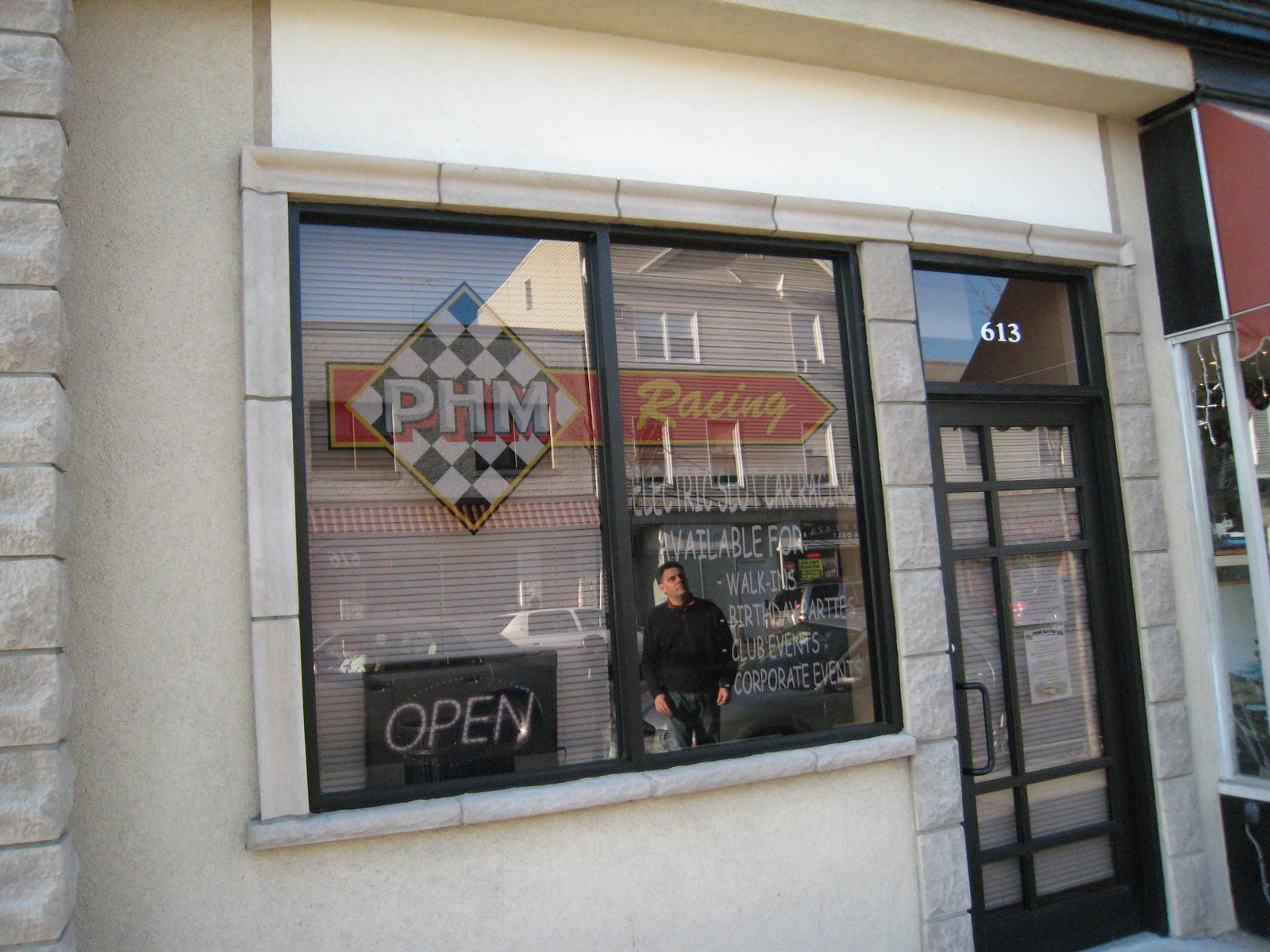 In a June 2006 posting I described how the staff of the Bayonne Town Center worked with Vincent Margiotta of Pastime Hobbies to bring slot car racing to the district’s car shows.
 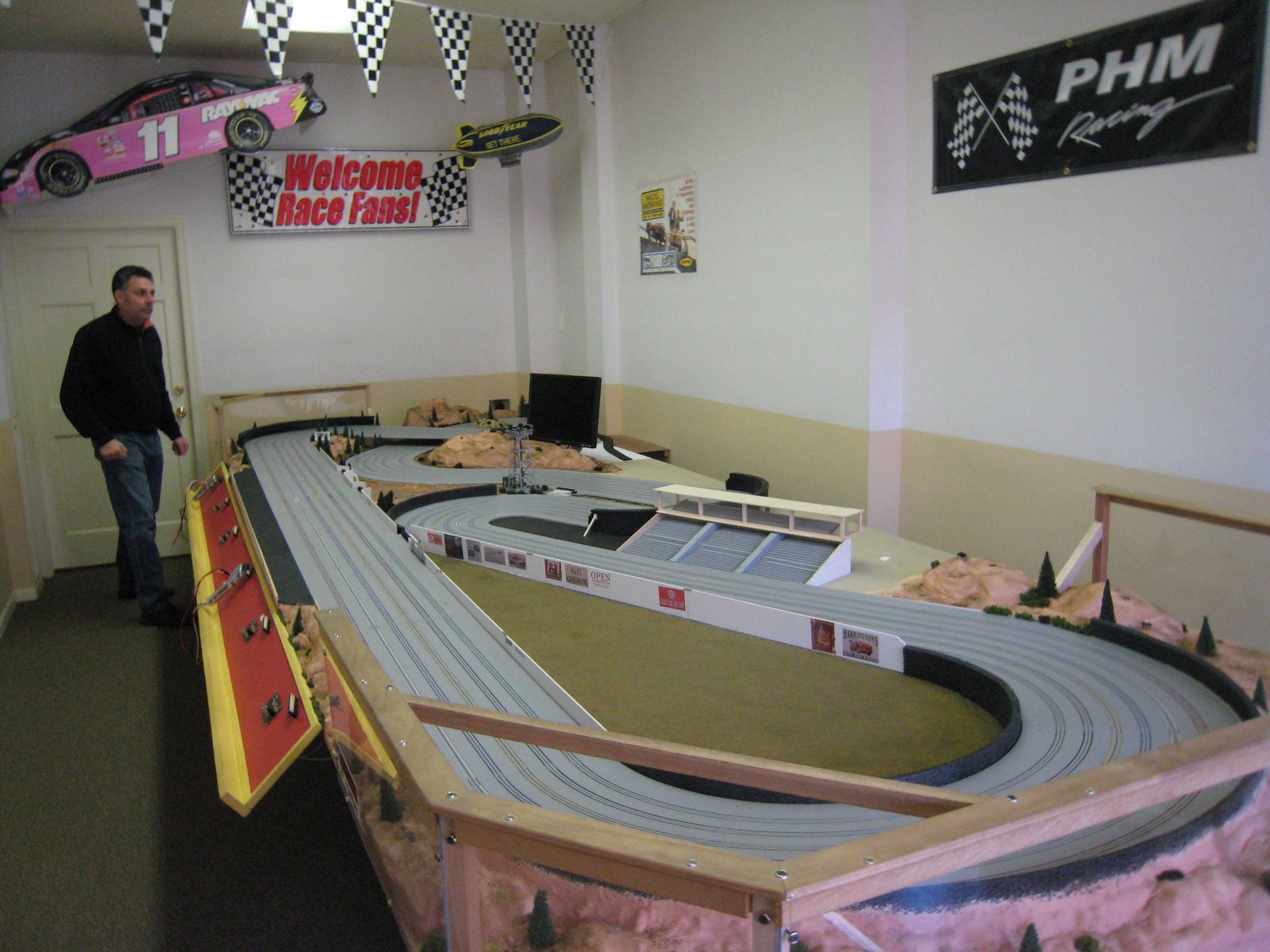 youngsters away from their computers and phones and out of their houses.
 Entertainment opportunities like this will be increasingly important in small- and medium-sized downtowns