Is Our Great Recession Saving Downtown Movie Theaters?

About a year ago, I wrote that downtown movie theaters were increasingly in jeopardy because people were more and more watching movies at home. Lately, I have been asked if I still believed downtown cinemas were in trouble, since recent media reports indicated that:

  • Nationwide, movie attendance was up 21% in the first seven weeks of 2009
  • The National Association of Theatre Owners claims box office numbers climbed in five of the seven economic downturns that occurred over the past 40 years.
  • It is well-known that movie attendance rose sharply at the height of the Great Depression
  • The stocks of the movie theater chains lately have risen substantially.
First, it should be noted that a seven week attendance pattern ought to be treated with caution, especially when it is contrary to a longer term trend.

Total U.S. & Canada Admissions
Year Admissions
2008 1.363
2007 1.400
2006 1.395
2005 1.376
2004 1.484
2003 1.521
2002 1.599
2001 1.438
2000 1.383
1999 1.440
1998 1.438
1997 1.354

Source: National Association of Theatre Owners

Total admissions in the USA and Canada for the full year of 2008 – when we where already in recession – was the lowest since 1997.

But, the primary reason that I still think downtown cinemas are in trouble is the behavior of highly regarded Hollywood moguls such as James Cameron and Jeffrey Katzenberg and the movie theatre chains. Cameron and Katzenberg both believe that the future of the movie theater business rests on 3-D movies because “going to the movies” has to once again become a special occasion, quite different from watching a flick at home. The movie chains have been investing a lot of money in more IMAC screens and now they are trying to raise between $700 million to $1 billion to convert enough screens—at $100,000 a shot –- to 3-D.

Some smaller, but savvy movie theater operators are doing such things as running “dinner cinemas,” where you get both a good film and a quality meal. Others are opening restaurants or brewpubs next door.

The downtown movie theaters that are really endangered – regardless of how they are drawing now – are those that cannot turn watching a movie into a special occasion. That is the key for the future. Dirty sticky floors, uncomfortable seating, inadequate restrooms, uncivil patrons, run of the mill films, etc., are not characteristics of a special occasion that will draw film viewers from their homes, but far too many downtown cinemas have them. Improving these theaters will not be cheap. Nor will it be cheap to provide them with 3-D equipment.

I do not know whether 3-D is the silver bullet. Here in Kew Gardens, we have a six screen cinemaplex that has absolutely no off-street parking, but it has been packed every weekend for many years. It is located in a densely populated neighborhood and features current “indy” films to an audience that rarely has a teenager in it – I’d say most patrons are over 40. Larry Houstoun reports similarly successful small cinemas near him in downtown Philadelphia. Indy flicks for seniors or IMAC or 3-D or whatever that makes going to the movies a special occasion is what counts!

If downtown organizations want their independent cinemas to survive they will have to help the operators again provide a venue where going to the movies is a special occasion.
RETHINKING DOWNTOWN ENTERTAINMENT NICHES: Non-Formal Entertainment and Work-as-Entertainment

Thesis: In a contracting economy populated by time-pressured consumers, downtowns need to rethink their entertainment niches to include and foster informal entertainments that are low-cost and convenient.

Most economic development experts have come to agree that entertainment niches are good fits with the assets of many downtowns and such niches have indeed flourished across the nation.

While “formal” entertainment facilities such as concert halls, legitimate theaters, rehabilitated movie theaters, sports stadiums and arenas can generate subsidiary economic benefits and make towns more attractive to residents, visitors and workers, they are often expensive to build and many small and medium downtowns do not have the means or the capacity to develop such large-scale formal entertainments.

In addition, data from the Bureau of Labor Statistics indicate that most American households began reducing their expenditures for formal entertainments even before the current economic downturn. With the vise closing on the discretionary income of most American households, it is reasonable to assume that entertainment expenditures may be among the first to be reduced. When you factor in the time pressures experienced by the modern household (and detailed in previous reports), formal entertainments seem likely to get further squeezed. In addition, as DANTH noted in our assessment of the future of downtown movie theaters, watching films at home and other home entertainments are eroding the downtown movie theater audience.

The good news? Downtowns of all sizes can develop vibrant niches based on informal entertainments to capture the potential lost audience for these formal entertainments. In a contracting economy populated by time-pressured consumers (research indicates that time –pressed families are increasingly looking for entertainment opportunities that last about 45 minutes rather than the two to four hours usually demanded by formal entertainments), downtowns can compete for time and dollars by providing low- or no-cost entertainments that are close by and do not require long car trips and expensive amounts of gasoline. This entails “rebranding” entertainment as something other than – or in addition to – theaters, arenas and the like. In this scenario, entertainment is “anything that amuses observers.” Reinforcing such informal entertainments can help to bolster the economic health of downtown – its housing, retail, office, and, yes, its formal entertainments.

Public Spaces

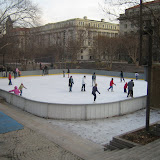
Great public spaces provide opportunities for people to engage in activities that they enjoy and that also interest and amuse nearby people-watchers. Think of the ice skaters drawing the ever-present crowds above the rink in Rockefeller Center. Similarly, in Manhattan’s Bryant Park, lounging patrons watch chess players – as well as each other. In Greenport, NY, a much smaller community, a carousel and waterfront location create a wonderful public space where people can watch and be watched by other people. Other downtowns have fostered entertainment with facilities such as:

  • model boat ponds
  • children’s pony rides
  • tables where people can play chess, checkers, or dominoes
  • Wi-Fi hotspot to access and cruise the Internet on laptops
  • places to catch the sun — a favorite pastime for office workers and young tourists in the spring and summer
  • places to buy food and eat lunch alfresco
  • outdoor cafes for sipping coffee and eating snacks
  • slot car racing for kids
  • interactive art installations that capture and play with people’s images, make music or move


Visitors will “perform” if the opportunities are there. Informal entertainments are usually public and usually priced right – either free or, when there are fees (e.g., to ride a carousel), affordable. They are also “sticky” activities. Retailers can feed off of the traffic the informal entertainments bring in, as demonstrated by the busy pedestrian traffic on the street next to Mitchell Park in Greenport, NY. Informal entertainments are also liable to be open when the public would want to use them as opposed to theaters, concert halls, etc. Most often they are child-friendly – and therefore mommy-friendly, too.

Work-as-Entertainment

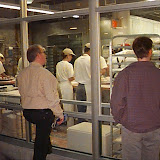
Often overlooked is the delight and amusement people can derive from simply watching other people do their jobs. In particular, people have shown a great interest in watching craftsman and artists at work. Historical villages such as Williamsburg (VA), Sturbridge (MA) and Old Town (San Diego, CA) have long had many “demonstrations” by blacksmiths, glass blowers, bakers, weavers, etc. The Miami Ballet rehearses in a ground floor studio with a storefront window, which always attracts crowds of passersby and helps build the company’s audience. At the Torpedo Factory in Alexandria, VA – one of the most successful and innovative downtown retail projects in the nation – each artist and craft studio has windows and often open doors, so the public can watch the artists and craftsman as they create. At the Simon Pearce retail store at The Mill in Quechee, VT, visitors to this converted mill/retail location can watch glass being blown, ceramics being thrown and decorated and fabrics being woven, and then enjoy a meal with views of a waterfall.

This posting was condensed from my longer report by Mary Mann. To read the full report and find the complete sources for “Rethinking Downtown Entertainment Niches,” visit www.ndavidmilder.com.

In addition, DANTH has created photo albums relevant to informal entertainments and work-as-entertainment that can be downloaded now, free of charge, from the Internet:

For the album on informal entertainments, visit:
Article

For work as entertainment, visit:
Article

For photos of the Torpedo Factory, visit:
Article

DOWNTOWN MOVIE THEATERS WILL BE INCREASINGLY IN PERIL

Our Lustrum Trends Assessments.

For the past 20 years, about every five years (a lustrum) DANTH, Inc. has engaged in a review of the social, economic and political trends that are — or soon will be– affecting the health and well-being of downtown, urban neighborhood and Main Street commercial districts. We do this because it is an essential asset when we work on any kind of revitalization strategy for our clients.

Being a curmudgeon, I must also strongly opine that being aware of these trends and their potential effects is an essential component of any district manager’s job. Unfortunately it is a job function that too many managers ignore.

The results of DANTH’s last trends assessment in 2003 are available free of charge at: https://www.ndavidmilder.com/pdf/trends_3_25_05.pdf

Below is a “tease” excerpt from the first installment of the 2008 assessment.

Downtown Movie Theaters Are Very Vulnerable.

Downtown movie theater closures are bad news because:
• They are usually important downtown assets
• Closed cinemas are usually large, highly visible spaces, occupying considerable frontage and consequently a huge negative for a downtown’s image. It is also usually very hard to re-tenant an empty cinema — too many stay vacant for numerous years, often for decades. Some of the conversions, e.g., bingo halls and flea markets, are often less than desirable for spaces having prime locations and large size.

Movie theaters are in an increasingly weakened position because:
• Their hold on adult audiences is small and diminishing. By a five-to-one ratio Americans view films more at home than they do in movie theaters. Move theaters account for only about 12% of the movie industry’s revenues.
• Even the most frequent movie goers prefer home viewing
• Many theaters have low operating margins based primarily on revenues from concession stands and screen ads. Just a small drop in the paid attendance can be devastating financially: a mere six percent drop in attendance in 2000-2001 put most of the theater chains into bankruptcy.
• A relatively modest reduction in paid attendance by a small group of frequent moviegoers could easily erase these meager margins. The frequent movie goers do not have to completely stop visiting movies theaters for the impact to be devastating. This is an important point.
• The frequent movie-goers have demographic characteristics that highly correlate with the use of computers and other electronic home entertainment equipment
• Many theaters lack amenities such as many screens, large screens, first run films, stadium seating, clean restrooms and theaters floors. This is especially true of cinemas in small and medium-sized downtowns
• Theaters provide a very small revenue stream for the major movie studios. Consequently, the studios are incentivized to make decisions that will help other film distribution channels although they may hurt the theaters

Rival Home Film Distribution Channels Are Poised To Grab Market Share.

Competing film distribution channels have been improving, many finding formulas that are aimed straight at the three key variables that most impact film viewer behavior — convenience, film selection and cost:
• On-demand cable TV has great convenience, wide household penetration, competitive prices and indications that some large operators will be offering significantly greater film selections. The introduction of HD broadcasts will also improve product quality and enhance competitive strength
• Apple TV and Vudu have a strong films service formula that could really grab market share if they can offer sufficient film variety. They, too, already offer on-demand convenience and competitive prices. Apple, because of iTunes, has a large amount of household penetration and brand loyalty.
• The competitive strengths of the brick and mortar DVD shops and the mail delivered DVD services versus movie theaters has been improved recently by the growing presence of large HD TVs in American households and the final victory of the Blu-ray HD DVD format.

Tipping Point Scenarios.

Below are some scenarios under which a tipping point might occur:
• The cable TV and Internet film services improve their film libraries sufficiently to become real competitors with movie theaters.
• Real household incomes erode to the point that the cost of movie consumption grows in importance in consumer decision-making. The cost advantage of home viewing, popcorn, sodas, baby-sitting, etc, is substantial. Given the recent low growth in median household incomes and the soaring costs of medical services, energy, college educations, etc. and the reduced values of private homes, this scenario is likely to have substantial impact.
• The convenience and comfort of home movie theaters increase to the point that consumers prefer the home viewing experience even more than reported in the 2006 Pew survey. This is occurring now; the question is how big its impact will be.
• The major studios finally go for “simultaneous releases.” In 2006 and 2007 there was a lot of discussion within the major movie studios about releasing films to theaters, cable TV and Internet film services at the same time, with DVDs being released three months later. A major survey of movie audiences in the USA, Japan and Germany, which account for over half of the world’s film market, found that simultaneous releases would enable the studios to increase their revenues by 16%, but cause the revenues of movie theaters to shrink by 40%. More recently there has been some discussion of simultaneous releases for a limited number of films.
• An accumulation of impacts from all of the above.

The Complete Report

DANTH’s complete assessment of the dangers that downtown movie theaters will be increasingly facing will be posted on our website www.ndavidmilder.com and publicly available by March 24th, 2008. As our current work on trends progresses, I plan to periodically post the complete reports of our findings on our website and excerpts on this blog. Here are some of the other topics we’ve been looking at in our assessment:
• Time-pressured people continue to be downtowns’ best friends
• Retailing is in for much tougher times
• Post-Kelo redevelopment
• Boomers are now seniors and a great market segment for downtowns
• Green redevelopment
• Owners or renters: downtown residential redevelopment
• Downtown crime redux
• Downtown solution trends:
— Mixed-use projects
— Transit-oriented development, getting more important every day
— Place-making
— Niche development
• Downtown organizations: a time to alter missions, roles and responsibilities
• The internet and downtown revitalization

Unfortunately, some of the trends DANTH identified suggest that downtowns will soon be confronting major new challenges. DANTH believes that being forewarned enables downtown organizations to be forearmed. Although proven solutions to these emerging threats do not exist, I will try in my postings to outline some approaches to finding them, while welcoming other members of the downtown revitalization community to share their solution suggestions.

Strong Downtown Entertainment Niches

Increasingly, downtown and Main Street commercial districts are finding strength through the establishment or expansion of an entertainment niche. This is happening in communities of all sizes. The theater district around Times Square in Manhattan has long been world famous. At the other end of the scale are communities as small as Weston, VT, with a population of 630, that is home to The Weston Playhouse Theatre Company, the oldest professional theater company in the state. Every summer it presents Broadway plays and musicals in a beautiful white-columned building on the village green. In between are literally hundreds of communities with theaters and performing arts centers for staging plays and concerts such as Carlisle, PA; Rahway, NJ; Englewood, NJ and Rutland, VT.

In most small and medium-sized downtowns, reliance on such formal entertainment venues will result in an entertainment niche that is, perhaps, moderately strong. The problem is that such formal venues, at best, are “lit” a few nights a week and dark during most days. Really strong downtown entertainment niches utilize other resources to attract and amuse visitors throughout most of the day and almost every day of the year.

Informal Entertainments

Entertainment essentially involves people being amused by something. In formal venues, they can be amused by plays, movies, concerts and dances — all requiring some kind of formal organization (a theater company, dance troop, orchestra) that is scheduled and “performs” the entertainment. However, strong downtown entertainment niches rely on the fact that people also are entertained when they are amused or pleased by observing other people — who, at the same time, may be amused by watching them. Great public spaces provide opportunities for “informal entertainments” that occur when people engage in activities that they enjoy and that also interest and amuse nearby people-watchers. Think of the ice skaters drawing the ever-present crowds above the rink in Rockefeller Center. Similarly, in Manhattan’s Bryant Park, you’ll find young men and women seated and watching each other and chess players, who always attract an audience. Greenport, NY, has used a carousel and waterfront location to create a wonderful public space where people can watch and be watched by other people. Other downtowns have fostered entertainment with facilities such as: a model boat pond; a children’s pony ride; a Wi-Fi hotspot to access and cruise the Internet on laptops; a place to catch the sun — a favorite pastime for office workers and young tourists in the spring and summer; places to buy food and eat lunch alfresco; outdoor cafes for sipping coffee and eating snacks; slot car racing for kids, playing bocce for seniors, etc.

Visitors will “perform” if the opportunities are there. To sail a model boat, a suitable pond or pool is required; to sit in the sun and people watch requires an attractive place with benches and chairs to sit on, etc.

The following link takes you to a photo album that illustrates a range of “informal entertainments”

Work As Entertainment

People are often engrossed and entertained by watching other people at work.

Decades ago, the people who brought back “historic” villages, — such as Colonial Williamsburg (VA) and Old Sturbridge Village (MA), — cleverly decided to have people at work, using 18th Century technologies, to educate and entertain visitors. For example, in Colonial Williamsburg visitors can watch 100 masters working in 30 trades. Included are an apothecary, blacksmith, cooper, brickyard, foundry, gunsmith, basket maker, etc.

In Old Town, located in San Diego, CA, visitors can watch glass blowing, wood-working and candle-making, though current technologies may be used.

The Simon Pearce retail store at The Mill in Quechee, Vermont, is perhaps the most brilliantly designed and executed retail project in the United States in a small Main Street setting. It combines a superb site in a renovated old mill located over a waterfall with a diverse assortment of retail goods ranging from blown glass to ceramics and superb furniture. In addition, at this diverse destination you can watch glass being blown, ceramics being thrown and decorated, fabrics being woven and enjoy a meal in a three star restaurant that has attractive water views. The Simon Pearce store at Quechee is a strong destination and lots of people leave there with bags full of merchandise.

At the Torpedo Factory in Alexandria, VA, an historic building has been renovated to provide studios for artists and craftsmen where visitors can watch jewelry being made, pots being thrown, lithographs being made, etc. and have opportunities to purchase the products.

At the Chelsea Market in Manhattan, visitors can be entertained by watching bread making at Amy’s Bread, a working kitchen for Sarabeth’s, a skilled knife sharpener, and people learning to dance the Tango.

People like to watch TV shows outdoors, as attested to by the crowds drawn the Today Show and Good Morning America.

Edward Villella has the Miami City Ballet rehearse in a storefront window, where pedestrians flock to watch the dancers.

Many diners want to sit at chef’s tables or counters where they can watch the cooking process and interact with the kitchen staff. Chef’s tables are often the hardest to book and offer the most expensive menus at topnotch restaurants. The noted French chef Joel Robuchon specifically designed his recent restaurants so most or all of his patrons sit at counters where they can watch their food being prepared.

Double click on the link below and you an access a photo album that illustrates “work as entertainment.”