The Often Slow Pace of Implementation

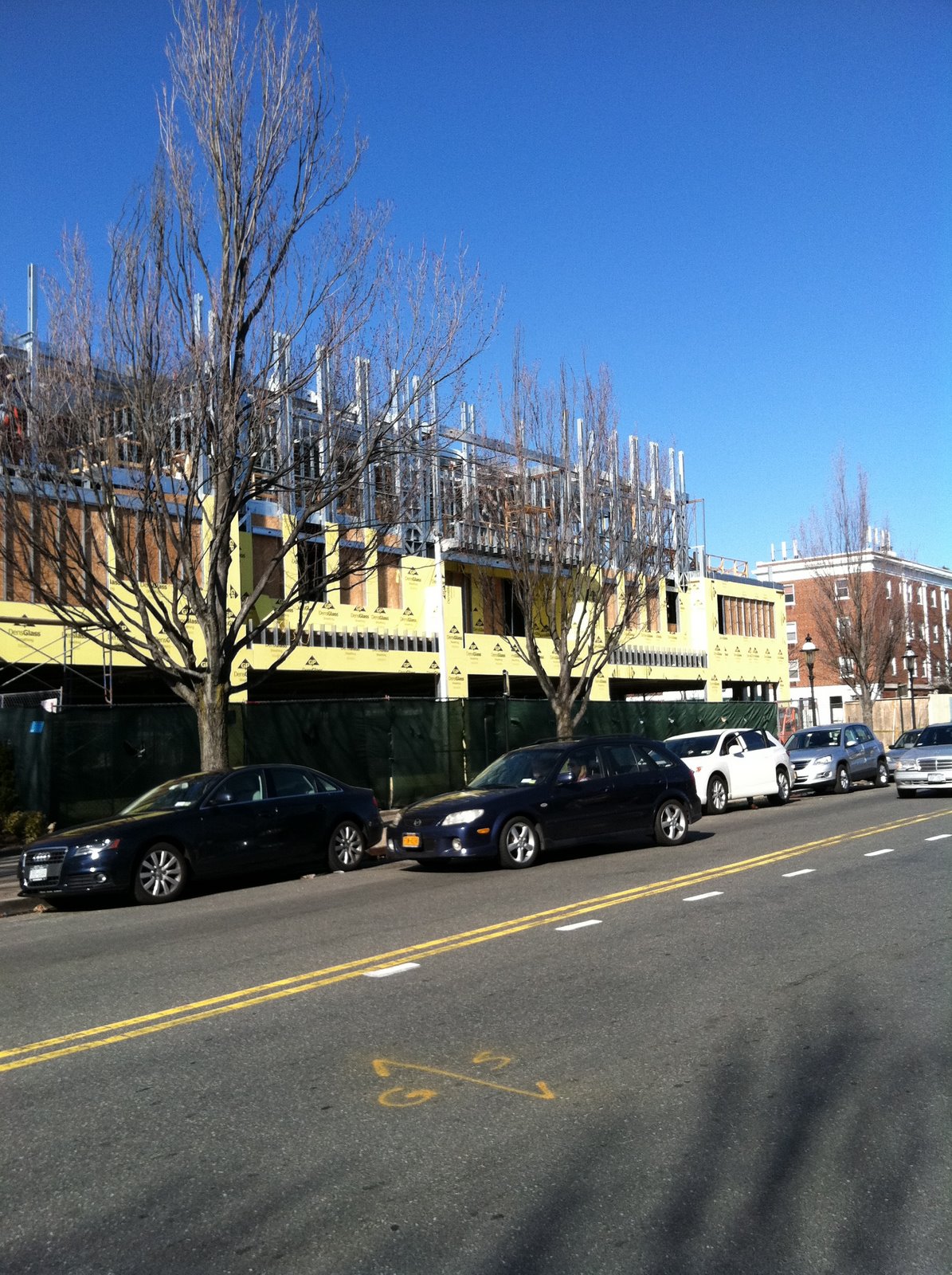
Last week we were in Garden City, NY. Back in 1996, DANTH had recommended that the site of a gas station on the very important corner of Franklin Avenue and Seventh Street would better serve the community’s needs if it were redeveloped by a project having retail on the ground floor and residential units above. I was happy to see that our recommendation finally was being implemented (see photo on right).


The fact that close to fifteen years had passed between recommendation and implementation strongly reminded me that downtown revitalizations seldom occur quickly and usually require patience. Some downtowns have been in the revitalization business for 40 or 50 years. For example, the formal revitalization effort in the Jamaica Center commercial district in Queens, NY, started back in 1968. The improvements have been steady over these years, with the total amount of investment attracted to this district totalling well over $1 billion by 1987 and the investment flow continuing on to this day.

Other downtowns seem to be overnight successes, but years of unnoticed hard work usually precede their rocketing economic upswings. In the mid 1990s, for example, downtown Englewood, NJ, attracted a significant number of national retail chains and eradicated a 20% retail vacancy rate. Many outside observers noted how quickly this downtown had turned around. Mayors and council members in other NJ communities envied this quick success and wanted to replicate it in their downtowns. Few of these observers knew of the 10+ years of prior planning, improvement projects and coalition formation that enabled Englewood’s “overnight success” to occur. 


One of the most important things that Englewood’s political leadership did was to form a common strategic outlook among the city manager, mayor and city council. This took time to forge and energy and attention to maintain. Unfortunately, many local political leaders in other communities do not understand the need for such a strategic coalition and/or do not have the political time or patience to create them. 


Sadly, the need for a revitalization effort to have some patience can slip into lassitude, inaction and redevelopment doldrums. Then, impatient local political leaders can give the downtown revitalization organization a badly needed kick in the butt.


As a general rule, DANTH recommends that clients treat a downtown revitalization effort as never ending, not something that in a few years they can strike from their To Do lists. Success not only has to be won, but then also maintained.   
Posted by Picasa

AFFORDABLE DOWNTOWN RETAIL RENTS


Introduction. As we slowly emerge from the Great Recession the time has come for downtown organizations to work hard on encouraging small independent retailers to seek affordable rents and for landlords to offer them. If they do not, downtown retail will contract and street level storefronts will be occupied even more by financial and personal service operations – or remain vacant for long periods of time.

True, in many downtowns retail rents have declined during the Great Recession, often substantially. In one I recently visited, for example, asking retail rents have dropped from $45/SF to $30/SF and in some instances even $25/SF. But, as we creep out of recessionary conditions, it is critical that in most downtowns retail rents do not regain their unaffordable levels.

In the new normal, small downtown retailers will be facing increased pressures to keep their operations lean and mean because capturing sales from today’s deliberate consumers is far more difficult than from the abnormally free-spending shoppers of the 1990s and 2000s. One budget line item they can focus on is the cost of the spaces they lease for their stores. This is a major long-term business expense and it is important that these retailers do not pay more than they can afford. It is also a business cost where “newbie” retailers dominate those going astray, though badly inept or unscrupulous merchants also tend to pay a lot more than what savvy merchants would deem affordable.

Looking at the other side of the coin, it is also in the interest of landlords to offer rents competent retailers can afford. In the new normal, far fewer stores will be opened by national chains and, among those, a smaller percentage than in the past will be placed in downtowns. Landlords, as a result, will need many local independent retailers to fill their storefronts. This will also be true to a significant degree for those who have built new mixed use buildings with expensively constructed ground floor storefronts. Additionally, as their rents reach ranges considered unaffordable by savvy merchants, the more likely they are to attract incompetent or sleazy businesses and also more likely to have storefronts stand vacant for long periods of time.

Defining Affordable Retail Rents. A useful formulation for determining an affordable retail rent is roughly 15% of the shop’s annual sales. DANTH’s merchant surveys and personal interviews with merchants over many, many years as well as the work of other firms, such as Urbanomics, found that downtown merchants generally felt that they could afford total rent costs that were 8% to 12% of their annual sales. However, more recently merchants say they are OK with 15%. While there is certainly some error factor present here, 15% is probably plus or minus just a few percentage points off the correct number. The major thrust of the analysis presented below is not affected by this error factor.

In a typical medium-sized downtown, independent retailers with annual sales of $500,000 to $1 million are relatively rare. Most independent downtown retailers would be quite happy with sales in the $300,000 range and joyous with sales around $450,000. Though in large downtowns the sales happiness range can be higher, the 15% rule applies everywhere, so I’ll stick with the retailers in medium-sized downtowns to simplify my argument.

The table above depicts information about:

  • How much rent is affordable to retailers with $250,000, $300,000, $350,000, $400,000 and $450,000 in annual sales. You can do the calculations for higher annual sales
  • How many square feet of space this “rent money” can buy at various prices per square foot.

The table also shows how with increased rents more and more of a downtown’s most successful merchants cannot afford to occupy the amount of space they might even minimally need for their operations. Look at how quickly even “small” spaces in the 1,500 SF to 2,000 SF range become unaffordable. At $40/SF not even a retailer with sales of $450,000 can afford a 2,000 SF; at $50/SF even a 1,500 SF storefront becomes out of reach. Of course, for the $300,000 shopkeeper, that happened at lower rents: a 1,500 SF shop is unaffordable at rents of $31/SF and 2,000 SF at $22.50.

Affordable rents should be tied in with balloon leases, where rents increase at an agreed upon rate as the retailer’s sales grow. Some savvy downtown landlords are already using balloon leases.

To The Groaners. To the downtown managers and Main Street managers who groan that is impossible to deal with landlords:

  • Dealing with downtown landlords and doing it effectively is part of your job. If you are not doing it, start doing it. If you do not know how, learn how. If after all that you still can’t deal effectively with landlords, get another job.
  • Every occupation has jerks; but they also often have a lot of reasonable, effective and even innovative people. This applies to landlords, too.
  • Find the landlords you can work with to implement an affordable rents program, then use them as a model to recruit others
  • One thing is certain: if you do not try, nothing will happen.

To landlords and developers who groan that they need high incomes from their new and expensively constructed retail spaces to pay off their loans:

  • You are big boys, you like to brag that you are big boys, so act like big boys
  • You either goofed in your calculations or you really did not understand that in most downtown mixed use projects outside of places like Manhattan and downtown Chicago, etc., the residential and office rents, probably for some time, will have to subsidize the retail spaces. This is especially true of unproven, revitalizing downtown locations
  • Given the current economic conditions your options are really either affordable rents that will diminish your losses or long-term vacancies and continued lack of retail rental revenues

To landlords who believe they should get market rate rents as defined by the highest asking rents they’ve heard about in the district:

  • Your unaffordable rents are likely to produce vacancies, because so few accomplished retailers would be interested, or perpetual churn, because you are likely to attract inept or schlocky merchants who are prone to failing or disappearing
  • This will affect the resale value of your property and this is not a great time for any commercial property
  • Have you really calculated the difference between the income that an affordable rent will yield and the zero dollars you will likely reap from the months your stores stay vacant because you want higher rents?
N. David Milder

Repositiong For The Future During The Great Recession: The Bayonne Town Center

This posting was updated on 12/10/09.
 

Bayonne, NJ is the kind of place that folks form deep attachments to. Even when they move away or find another workplace, those warm feelings remain.

Last week I had lunch in Bayonne with an old friend and colleague, the city’s planner. It had been almost a year since I was last in the Bayonne Town Center and I was eager to see how it had held up during the Great Recession. After walking around the district for about an hour and a half, taking photos and shopping in some of the new stores, I was impressed by what I saw. Here was a perfect example of a downtown that, while experiencing higher than usual vacancies, was repositioning for the future by working to attract and create strong new assets.

Back home, I quickly sent Mary Divock, the district manager, an email message saying:

“…during the Great Recession the Town Center managed to make some really strong retail additions that will be even more important as the economy improves. I have attached snaps of the stores I feel are good additions. Most other downtowns I’ve visited recently cannot say the same. You should be proud.”

Here are some of the things I found:

  • A new and popular green grocer
  • ShopRite, located very close to the district, has doubled its size to 70,000 SF. I am hopeful that the district will be expanded to include the ShopRite and other nearby establishments. See: Article
  • A new shop featuring silver products had opened
  • So had a hearing aid shop
  • Another firm featuring medical equipment had moved from a side street to Broadway
  • GameStop and Petland had opened. According to a report in the Leisure eNewsletter, between 2007 and 2008, nationally, annual household expenditures for pets, toys, hobbies, etc. increased by almost 26%
  • Plans for a nursing home, across from the Bayonne Medical Center, with Class-A retail space on the ground floor had obtained city approvals
  • Plans for adding 14 residential units and renovating the store facades on an existing building were proceeding and there are expectations that some other buildings may follow suit
  • There were more than normal vacancies, but really not that much more and certainly their perceived impact was more than offset by all the new shops. As the economy improves the vacancies will ebb, but the new shops will only get stronger.

After my visit I learned that with the bottoming out of the economy merchants were again applying to participate in the BTC’s Jump Start Facade Improvement Program.

Here are some relevant photos:

An Audacious Small Town BID

For over a year now, as a response to our current recession, I have been urging downtown organizations to focus on repositioning their districts for future growth and encouraging them to take on new financial activities.

The Washington BID in Warren County, NJ, is a good example of a district organization that is doing this. Also, it is in a town, Washington Borough, with a small population of 7,000 people.


The BID is borrowing money from a nearby community bank, Skylands, to build a badly needed downtown parking lot. Few BIDs, large or small, borrow from banks for capital improvement or program purposes.


The BID obtained a USDA loan guarantee that made the private bank loan possible. This was a smart move and tapped a government source many other BIDs might not have thought about.


Impressively, the BID will bring in a completed project for about half of Washington Borough’s estimated project cost.

I can think of many BIDs around the country that would benefit from emulating the Washington BID’s audacity to assume financial risk and willingness to play a lead role in a downtown redevelopment project. Too many BID managers and board members are straight jacketed by a comfort with reliably safe programs such as street sanitation, security and promotional events. But, by their very nature –and usually by their state’s enabling legislation– BIDs are tasked with economic development roles. Unfortunately, too few perform them.

N. David Milder

Downtown Vacancies: Let’s Get Real

________________

A slightly different version of this article appeared as a Perspectives Column in the May 15, 2009 issue of the Downtown Idea Exchange

________________

Far too often, concern about the number of empty storefronts in a downtown reaches distorted and needlessly injurious proportions. This was true before our current recession and now it threatens to become an even more serious problem. It’s critical for downtown leaders to view the vacancy rate issue from a realistic perspective.

For example, a few years ago, when I was managing a district, the mayor and I often would go around the block about our vacancies. My protestations that our vacancy rate of 2.6% was very low, and one that most other districts would love to have, were dismissed – the mayor wanted a zero vacancy rate. I tried to explain that a zero rate actually would be unhealthy for the district because it would keep out new business blood and thus make the district stale, perhaps even ossified. This argument, too, gained no traction. And this mayor is a very bright and likeable guy.

Today, many downtown leaders and local politicians are seeing growing vacancies as omens of doom. In past recessions, DANTH Inc. had projects in downtowns where the vacancy rates were in the 18% to 20% range. Looking just at the vacancy numbers is deceiving. High numbers are not a death warrant:

  • Within a year, the downtown with the 20% rate recruited several trophy retailers and substantially reduced the number of vacancies. A few years later it was being cited as a veritable model of downtown revitalization.
  • Similarly, the other downtown reduced its rate to 12% in less than a year and to 6% after 18 months. Today it reports having few vacancies.

A recent canvass of 14 downtowns showed four with vacancy rates of 10% or higher. But:

  • Two of those downtowns had actually reduced their vacancy rates substantially during 2008 from 2007: one dropped to 11.2% from 14.1% and the other to 11% from 15%.
  • Another of the canvassed downtowns reported a 13.3% vacancy rate. On the other hand, it still had at least six new stores open, some of which promise to be strong. Moreover, a supermarket is doubling its size, a new nursing home with new ground floor retail space is about to be built, 14 residential units are being added to the floor above an existing 15,000-s.f. retail space, and McDonald’s will be renovating a 100-plus-foot façade on the main drag.
  • Most of the canvassed downtowns reported new shops were opening, even when the district managers felt the vacancy rates were much higher than they would like.

In the vast majority of downtowns a very significant proportion of the storefronts normally are occupied by marginal operations. Very often, marginal businesses are badly managed and do little to foster a positive image of the district. In a recession marginal firms have a high probability of failing. Some marginal firms are not small – many national retail chains are now out of business because mismanagement put them on the financial brink and the recession pushed them over.

The vacancies that result from this economic pruning can – and I would argue should – be viewed as opportunities. In tough times like these, there still is “creative destruction” and many district managers are reporting that some attractive new businesses are opening. If these firms survive the recession, they probably will really thrive when the economy rebounds.

Many would argue that a district is damaged more by a poor business operator who cannot garner customer support than by a vacant storefront. Let us not take our admiration of small business people to the point where we canonize all of them. By definition, half of the small business operators in this country are below average. The challenge in this recession is to fill the downtown vacancies with as many above average operators as we can. The quality of the existing tenants is more important than the quantity of empty stores!

Now is the time for downtowns to survive and reposition. Consequently, there are lots of better barometers than vacancies for judging how a downtown is doing during our current economic troubles:
• Have shops and eateries adapted to the new market realities so their owners can still make a satisfactory living?
• Are quality businesses opening?
• Are store facades being maintained and improved?
• Is land being quietly assembled for development when the economy rebounds? Better still, are projects actually going into construction?
• Are improvements being done to make the downtown a more convenient place to visit?
• Are investments being made to create terrific public spaces?

N. David Milder